The winter in UK has been uniformly wet and miserable and we felt in need of some warmth. Learning the lesson from last year’s cool trip to the Canary Island of La Palma in February, we elected to wait until Easter for some much needed warmth. Our destination was Menorca, the smaller of the two Balearic Islands which lie to the east of the Spanish mainland.
The day we flew was the first day of British Summer Time (BST) and also Easter Sunday. As well as the very early flight, we also lost an hours sleep.
We arrived at Menorca airport following a bumpy flight and after a short drive arrived at our hotel by late morning. An orientation walk of the town and lunch in a local restaurant finished the day.
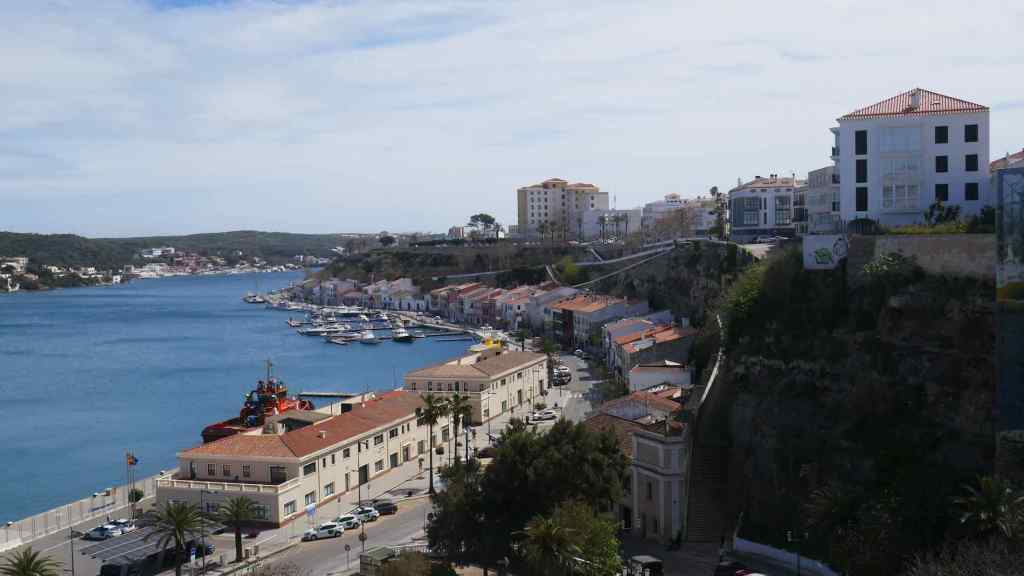


Our first views of Mahon: Top: A view of part of the natural harbour . 2. Us with the harbour behind; 3. Archway into the old part of the city; 4. Gin Factory, one of Mahon’s new industries.
We are here for a walking break and our leader, Neil led us out on our first walk from the hotel. It took us through the deserted town (bank holiday Monday) and into the sunny Menorcan countryside.
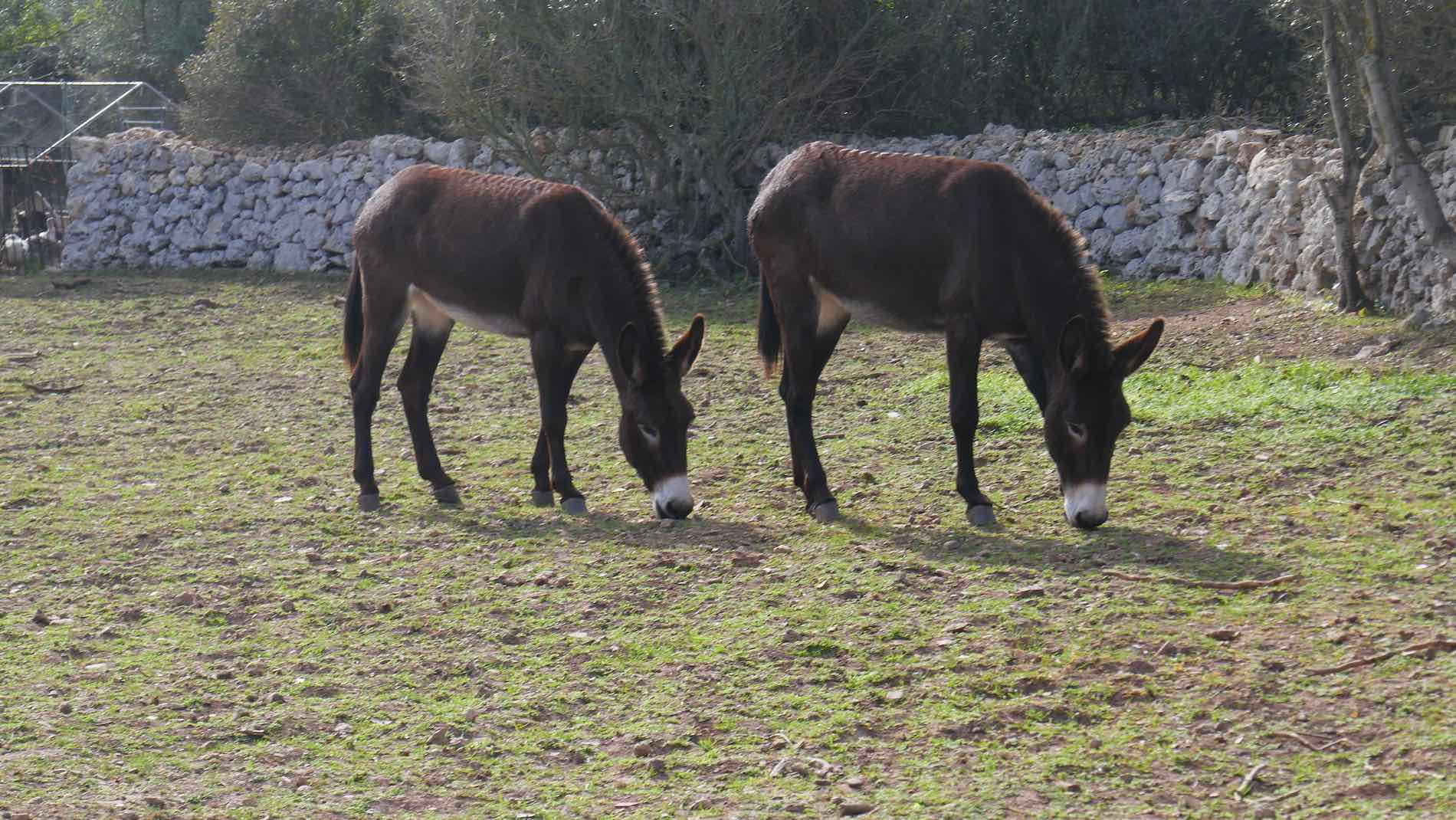


Some of the local residents seen on our walk
Our route continued towards the coast to the SE of our start point and our first stop at Hangman’s Tower. Built by the British in 1796 to defend the bay at Sant Esteve nearby, it was part of a chain of Martello towers around the harbour intended to mount artillery guns to defend it from attack. It gets its name from the site which was known as Hangman’s Hill, and it is where executions took place prior to its construction.


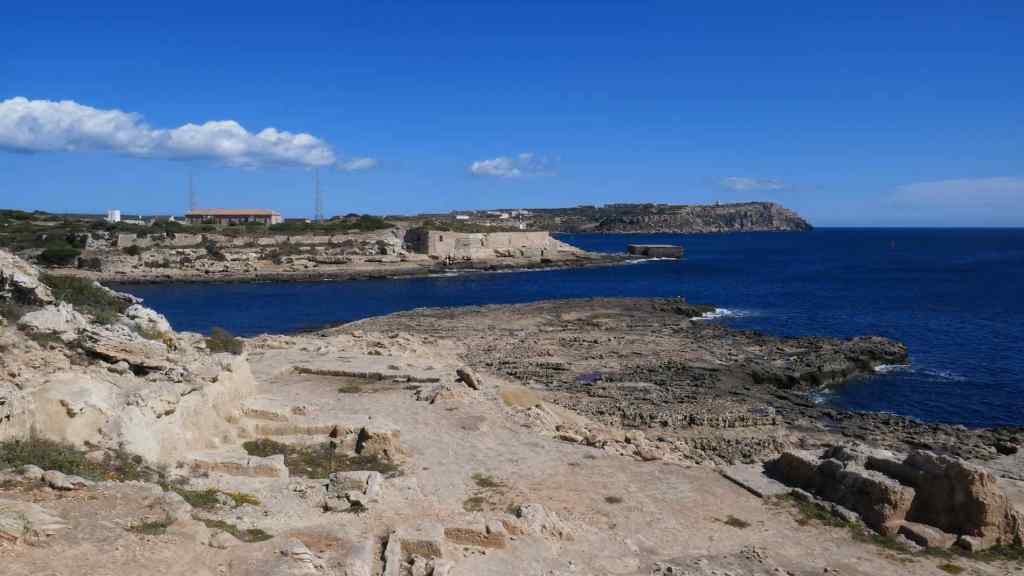
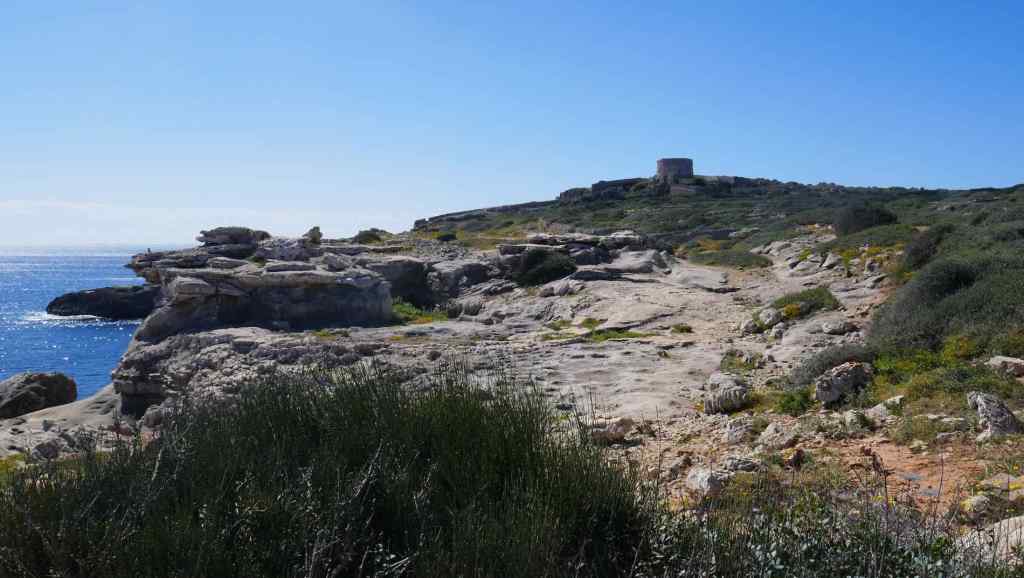
Views of “Hangman’s Tower and the surrounding beaches
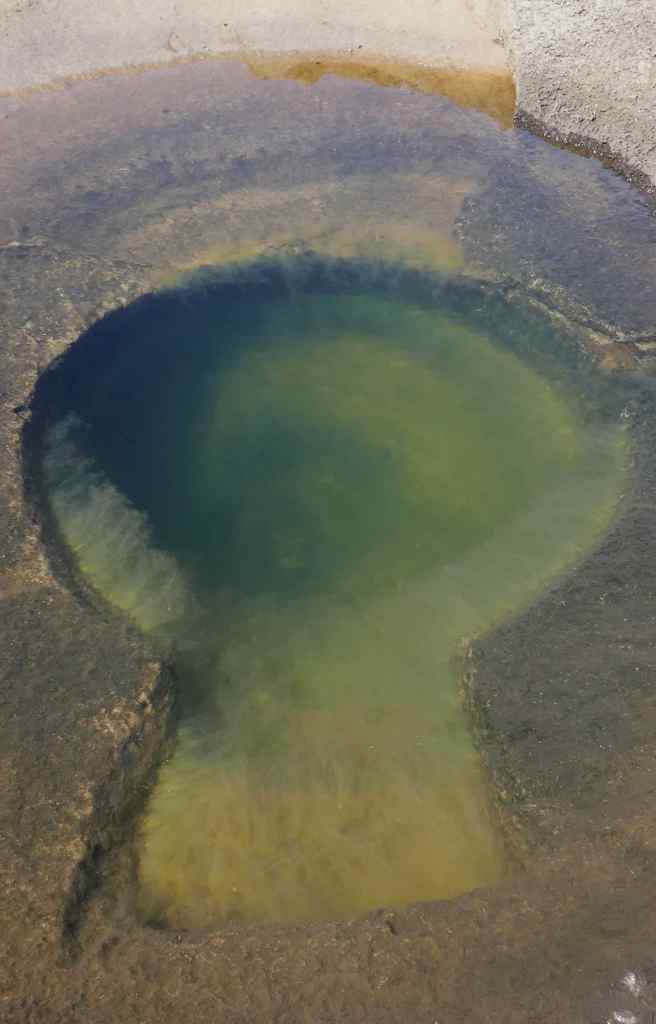
Rock pool or large Key Hole?
Further round the coast there was more evidence of old military workings as we walked into the village of Es Castell which was our lunch stop. From our lunch stop it was a short walk to the harbour at Es Castell where we took the opportunity for coffee and cake at a harbour-side cafe.


Scenes on the path into Es Castell

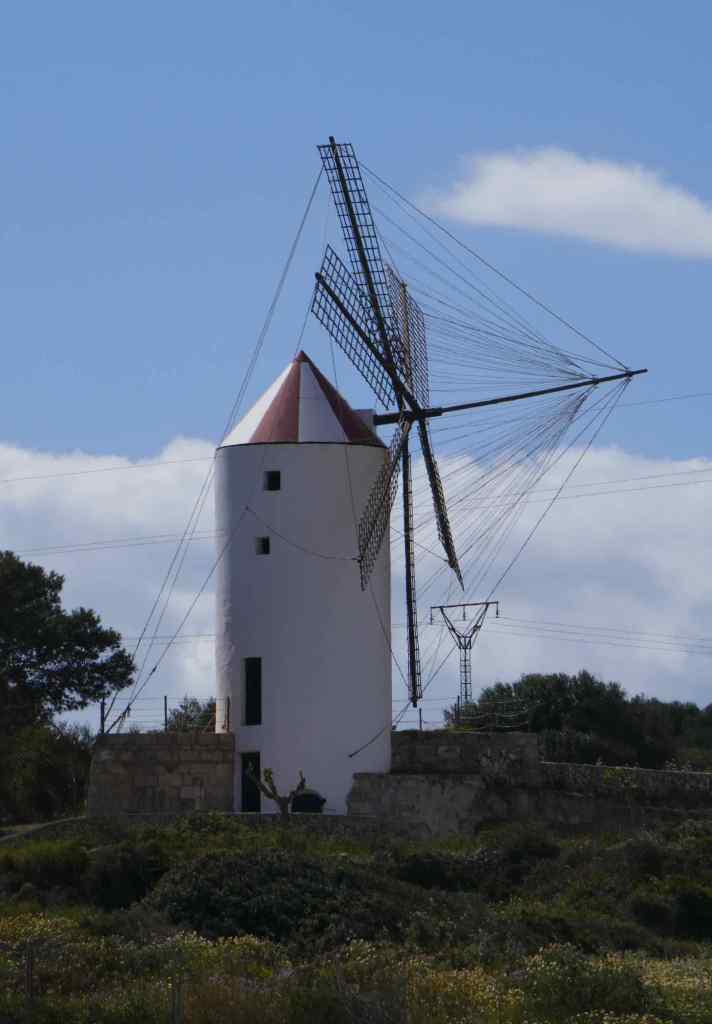
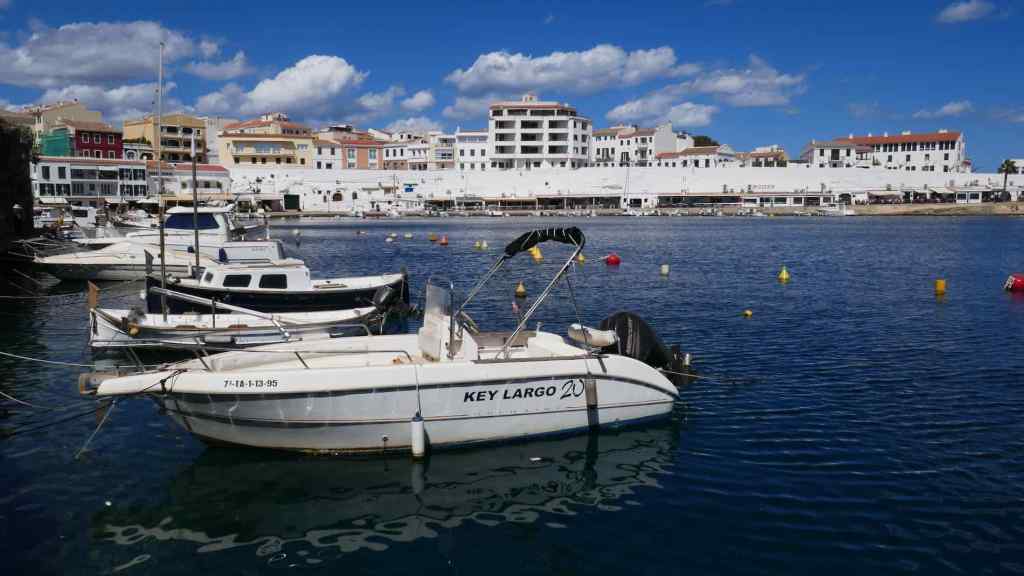
Top: Unusual Weather Vane – Cat on a pole; Centre: Menorcan Windmill; Bottom: Es Castell harbour

Weather Forecasting Stone

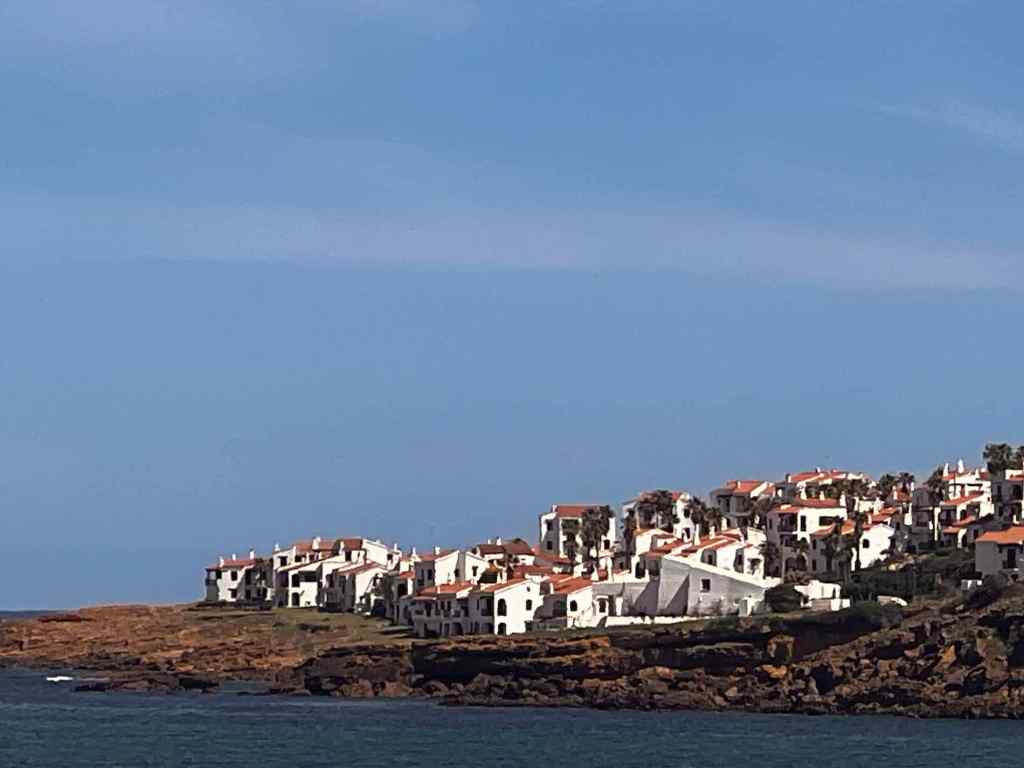
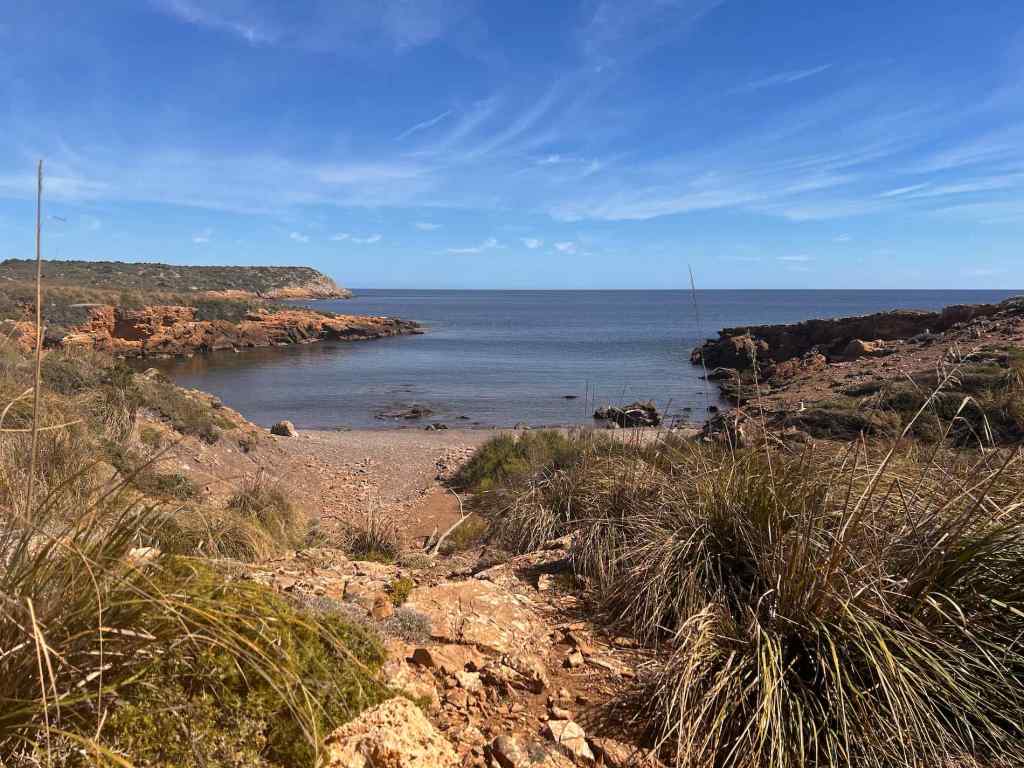
More views of our first walk
The walk gave us some idea of what the island of Menorca was like; no steep mountains to climb, but some gentle rolling hills inland, quiet villages and harbours. However, it is only April and the local are only just “waking up from the winter” and the tourist season has barely started.
Our walks during the week took us to various parts of the island including the highest point on the island, a monastery, lighthouses, ancient talayotyic settlements, valleys, caves and beaches and I am grateful to Lyn for some of the images here. Due to a long term foot problem I was only able to complete three of the walks, but the idea of the break was some spring warmth and in this we succeeded.


Views from the highest point on Menorca – Mount Torro – where we enjoyed the views and a coffee

The Roman ruins (so we were told) at the start of our walk near the village of Santa Teresa (On GR233)
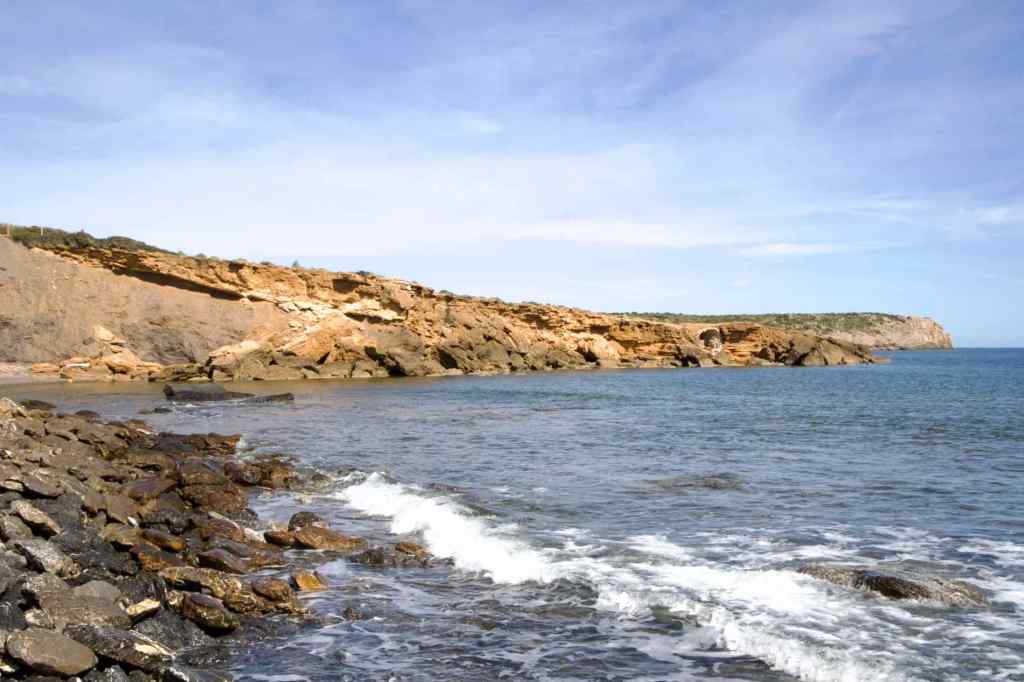


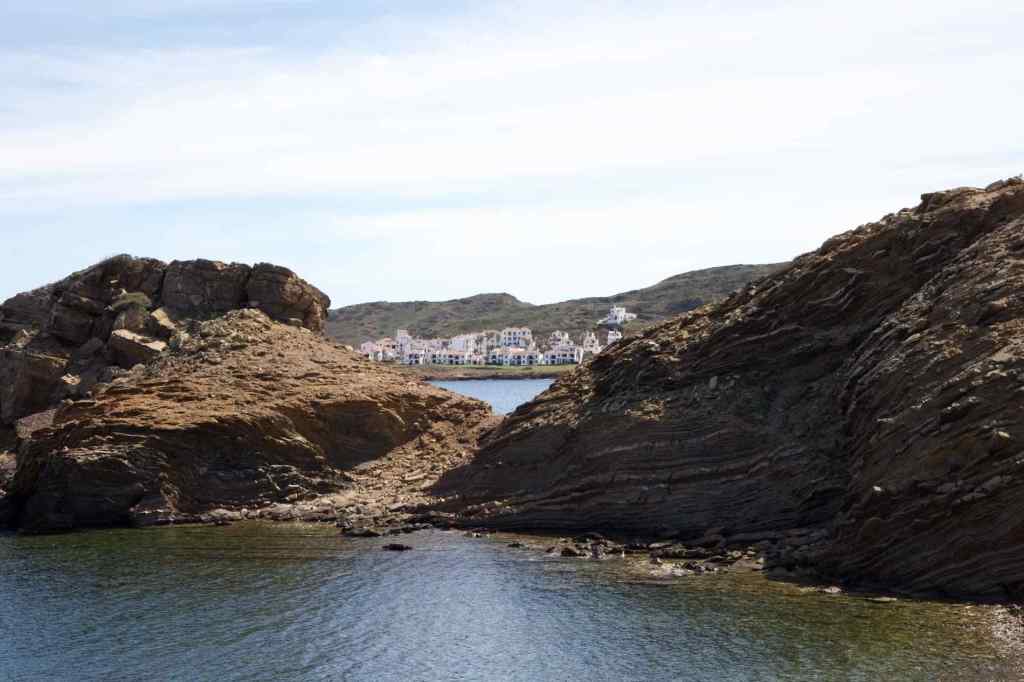
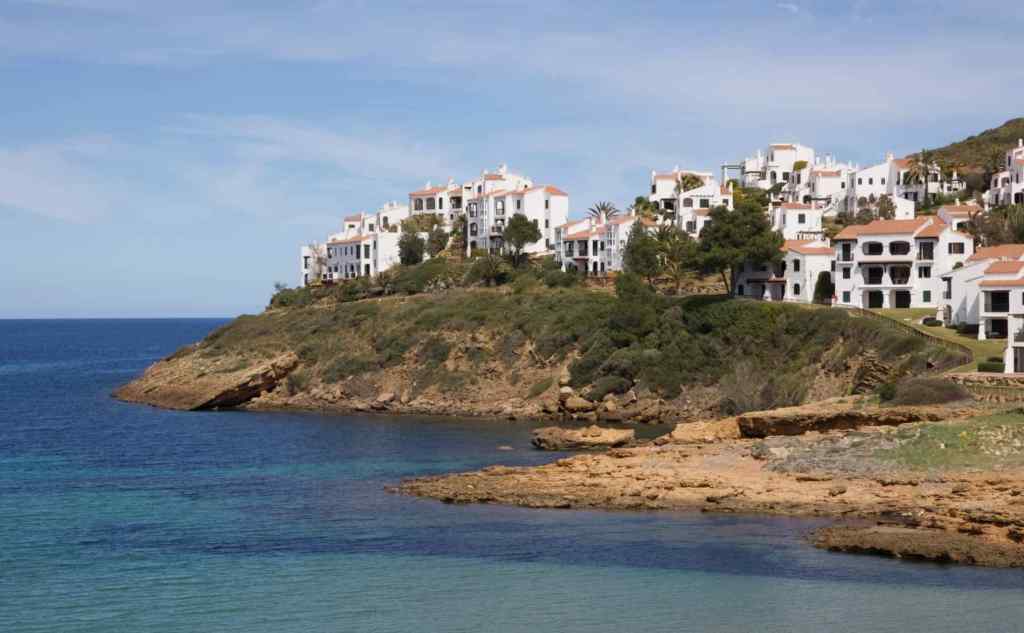
Scenes from our coastal walk from Santa Teresa towards our lunch stop at Cala Tirant

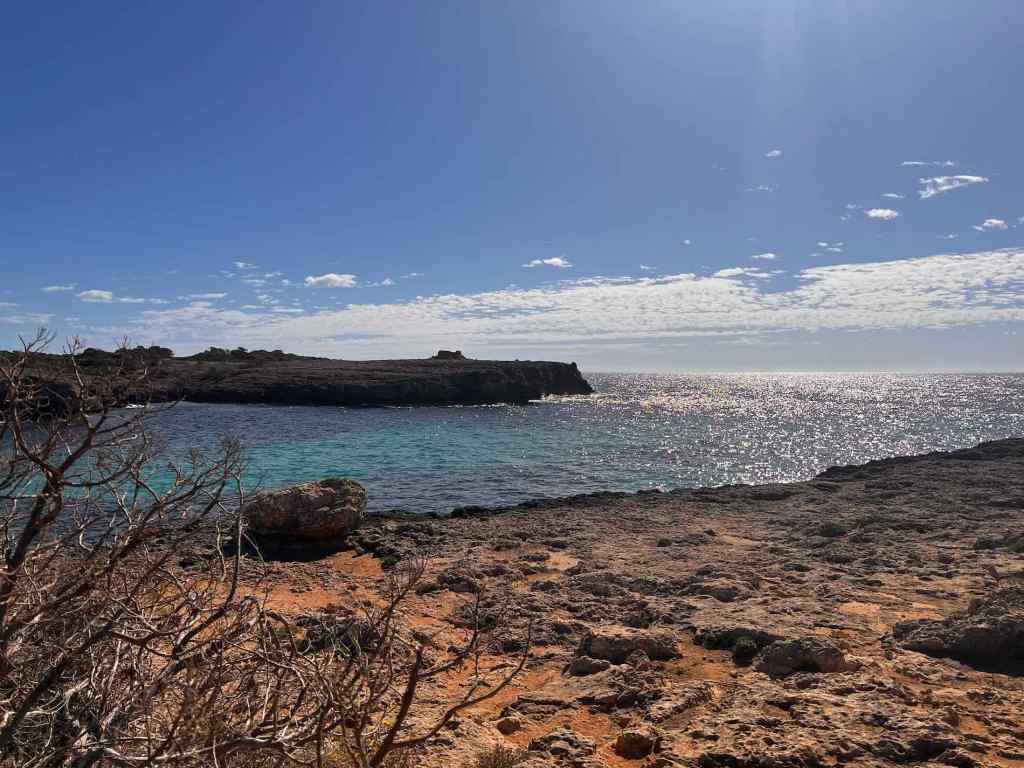
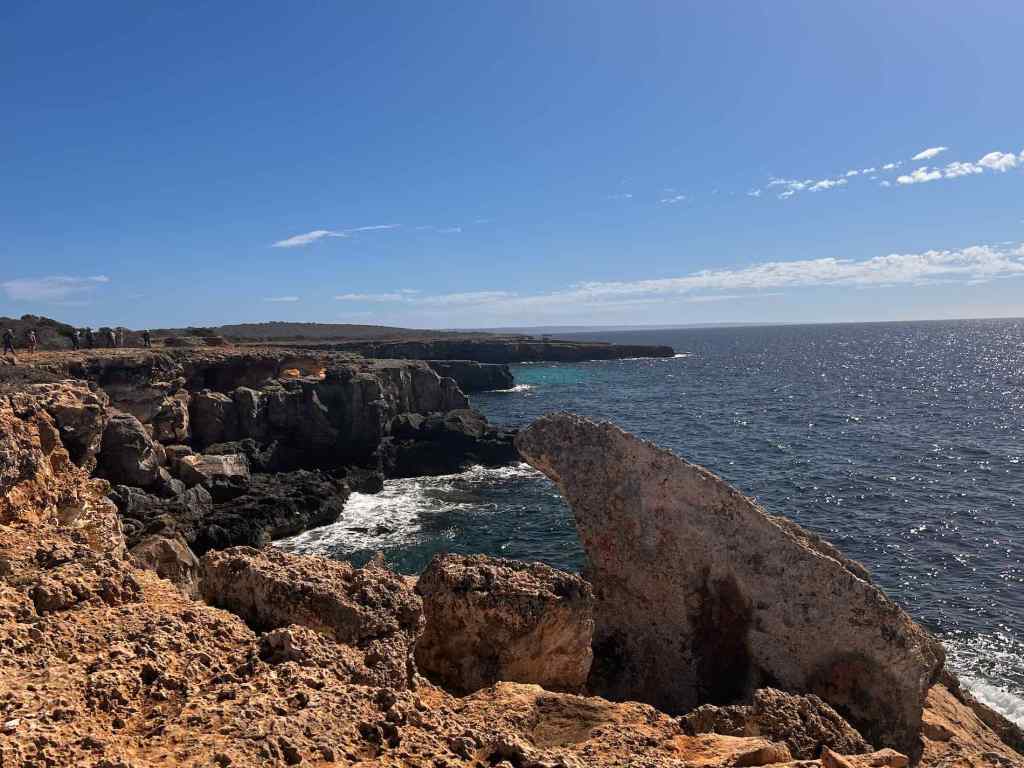
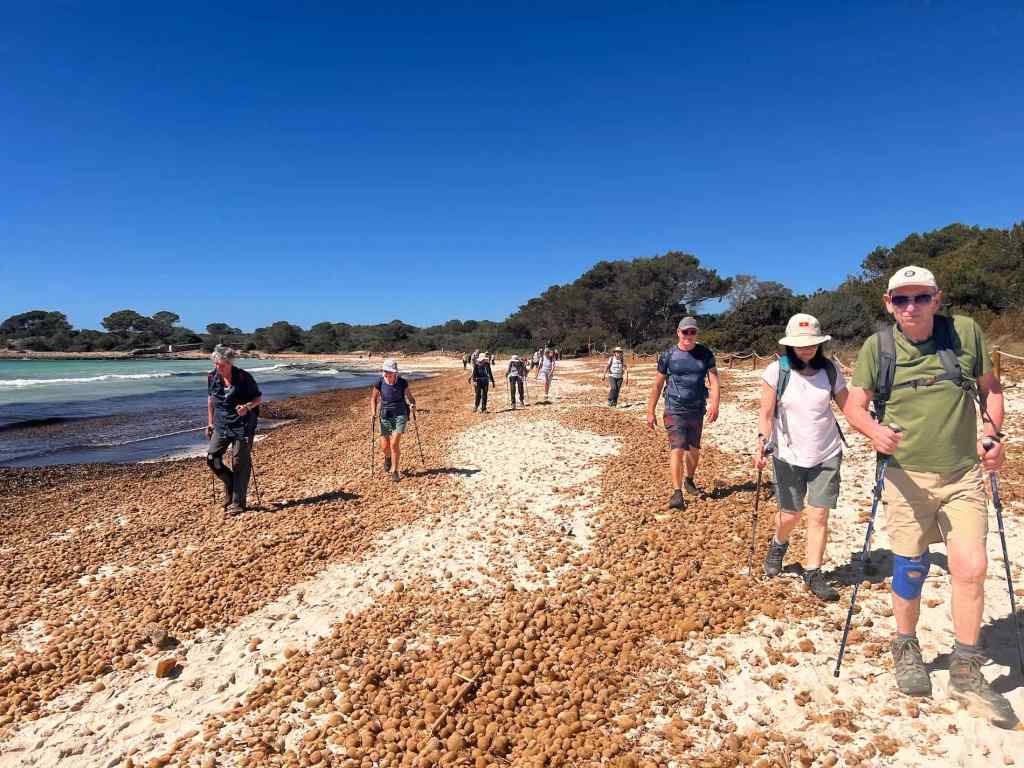
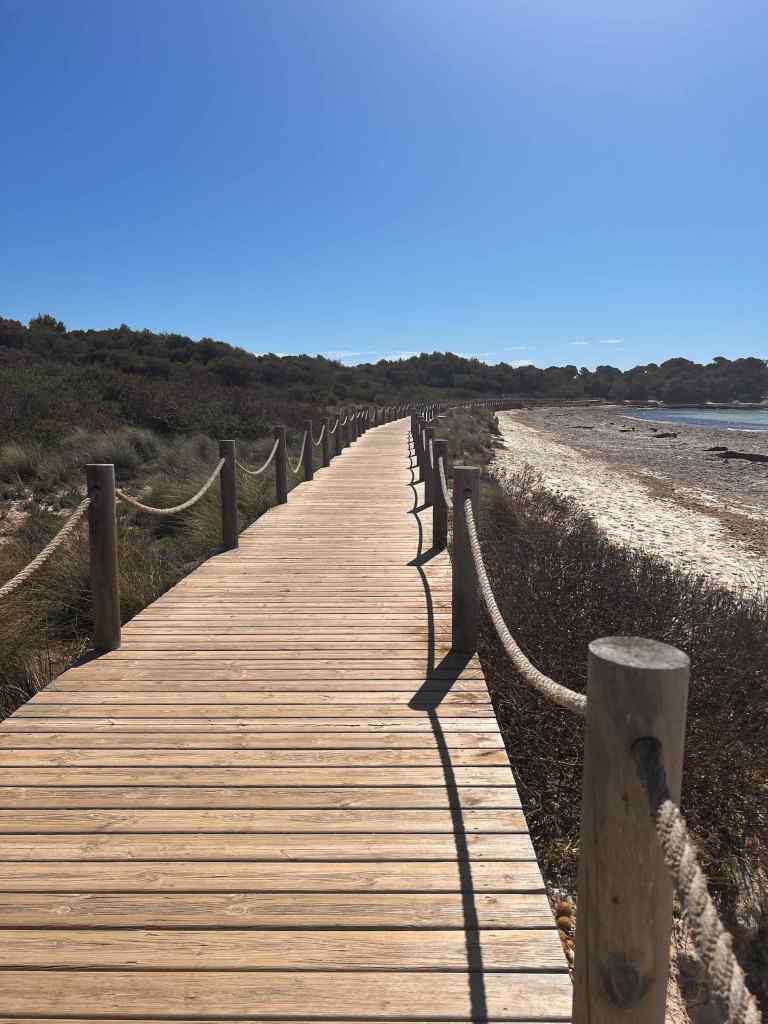
More views post lunch on our walk into our destination of Fornells
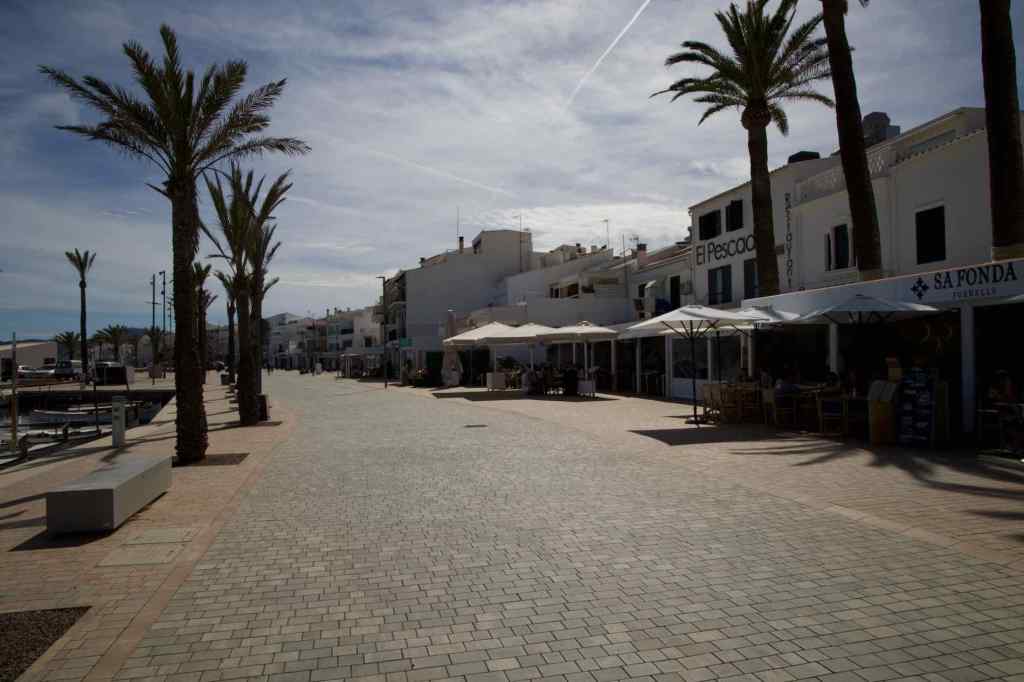
Fornells – Plenty of cafes to choose from!
On one of the days I did not walk I took a boat trip. The blurb advertised a glass bottom boat so tourists could watch the sea life. The boat, a catamaran, was bright yellow so you could not miss as it sat at its mooring.

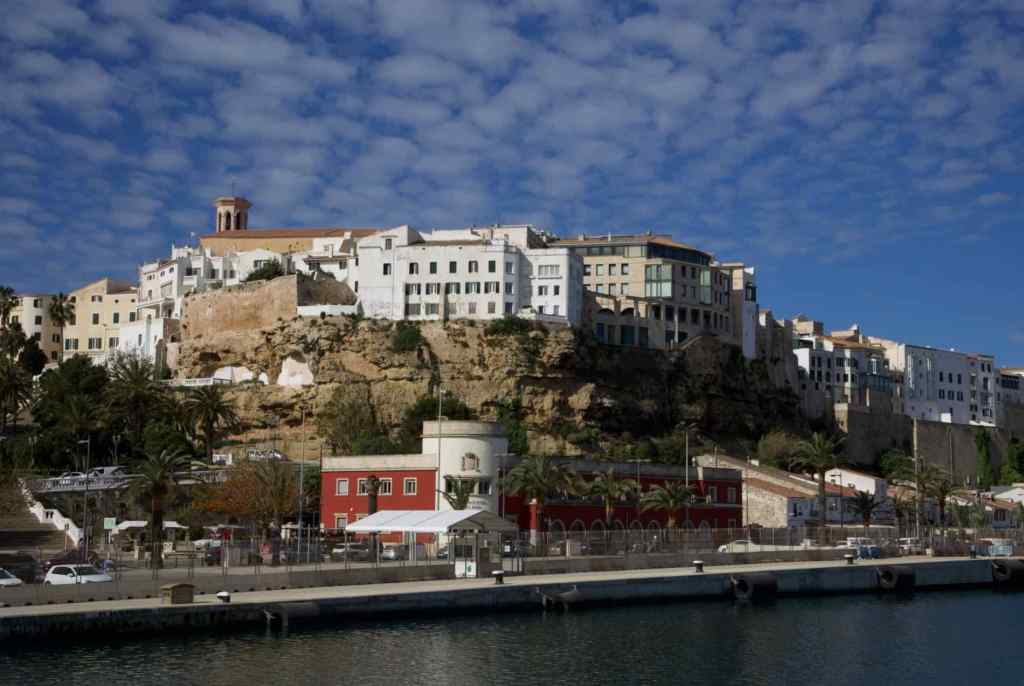
The harbour in Mahon. This was my boat trip day. Lyn walked whilst I rested.

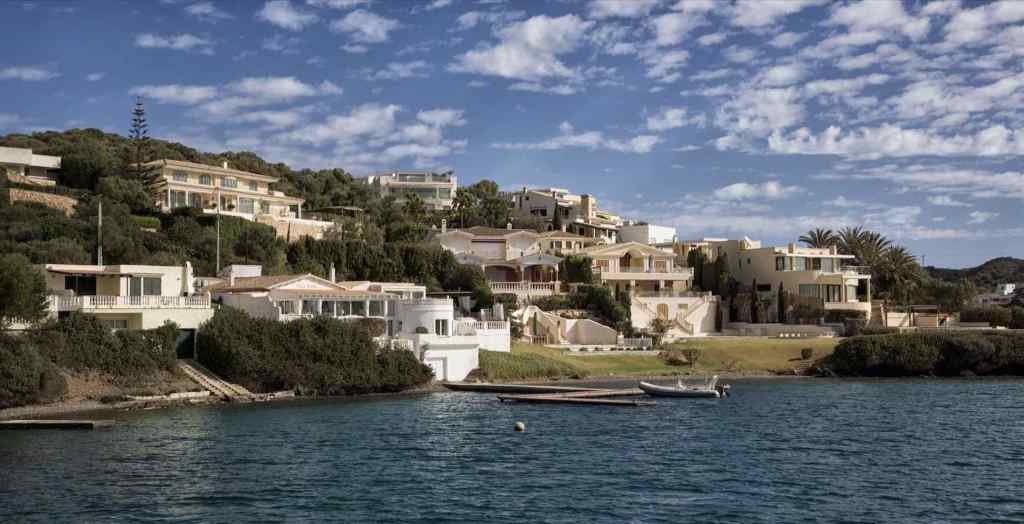
Top: The island on which the Royal Navy built their HQ in the 12th Century: Bottom: A few of the coastal villas on the north side of Mahon harbour
The natural harbour in Mahon is around 900m wide and 5km (about 3 miles) long and our route took us along the northern edge where we saw a number of settlements of modern looking villas overlooking the sea. Menorca has been captured and occupied many times in its history. Invaders have included Romans, Vikings and Arabs. not to mention the Spanish, French and the finally the British Navy who captured the island for the first time in 1708. In 1715 the Royal Navy established a military dockyard on the north side of the harbour, opposite the town, which is still in use today by the Spanish Navy. Further down the harbour the Illa del Rei was home to a hospital built by the Royal Navy in 1715. Its ruins have recently been restored and part of the restoration includes an art gallery. The British and the French continued to fight over the island for the next 50 years until in 1802 when it was finally ceded to the Spanish as part of a peace settlement.
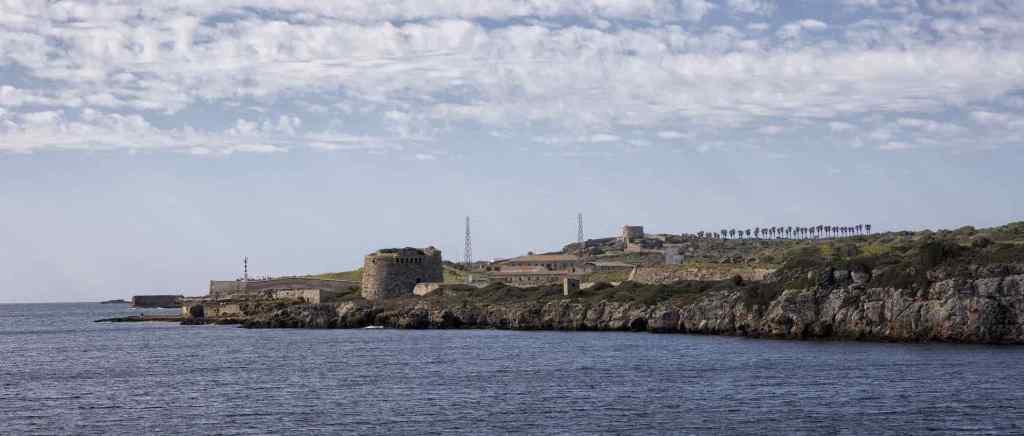


Images of the extensive fortifications built to defend the harbour entrance. Also shots of Illa del Rai, the site of the military hospital
Back on the boat as the natural harbour opened out into the Mediterranean Sea, the boat hove to in a cove so we trippers could view the sea life through the glass sided hulls of the catamaran below the waves. The experience was totally underwhelming as the visibility was poor. Whether that was due to the sea state or the fogged old plastic on the hulls I am not sure! The return trip on the other side of the harbour took us past more defences and the village El Castell, where we had coffee on the first walk. It was interesting to see it from the sea looking to the land.


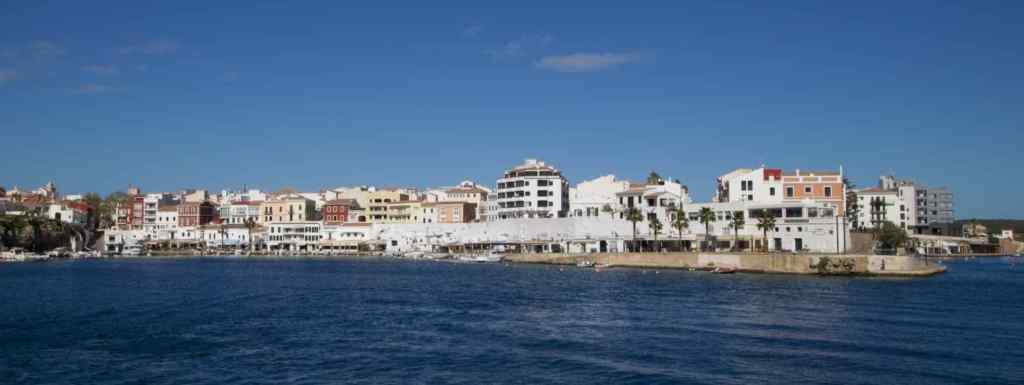
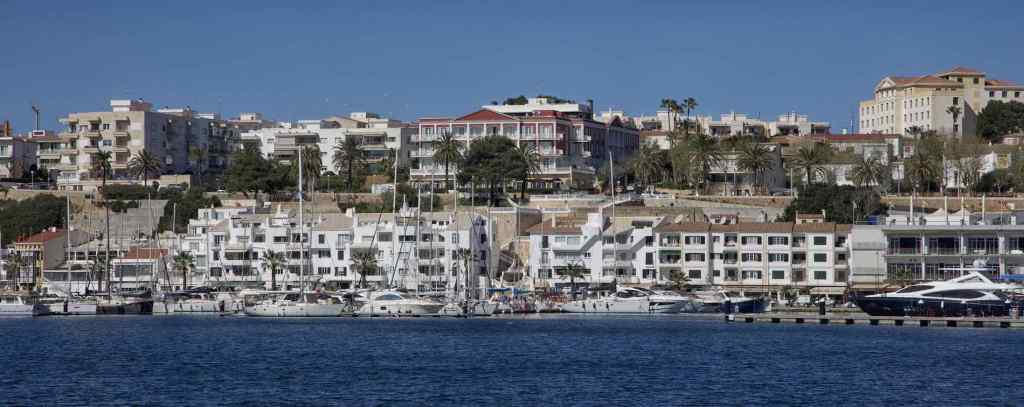
Top: The Island ferry departs; 2: Budding sailors being towed; 3 and 4: Views of El Castell from the boat. We had visited this place two days previously.

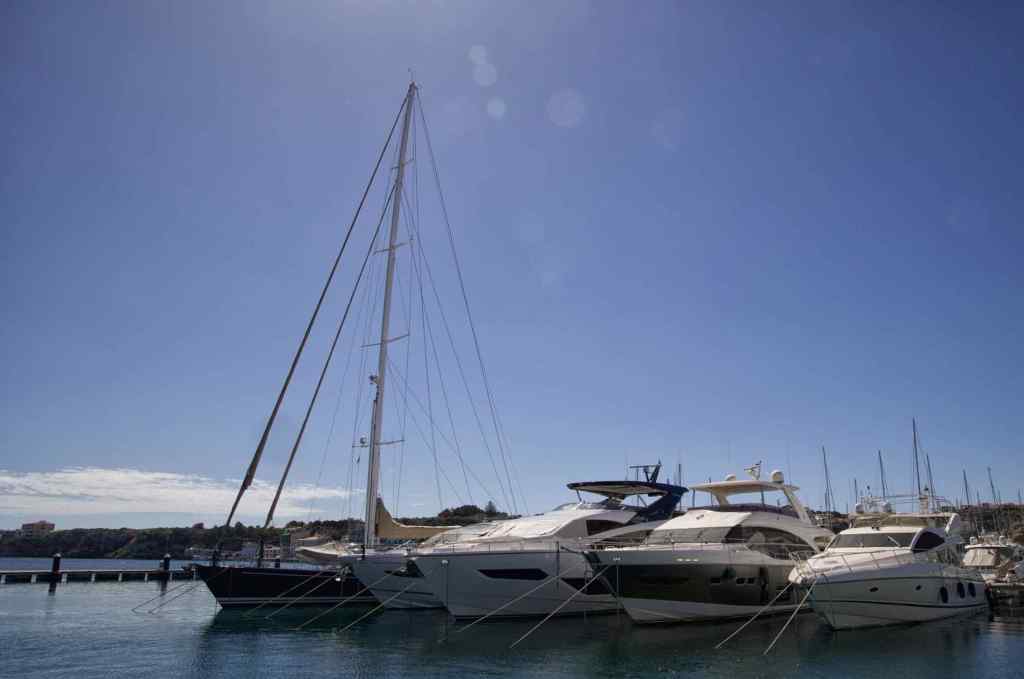
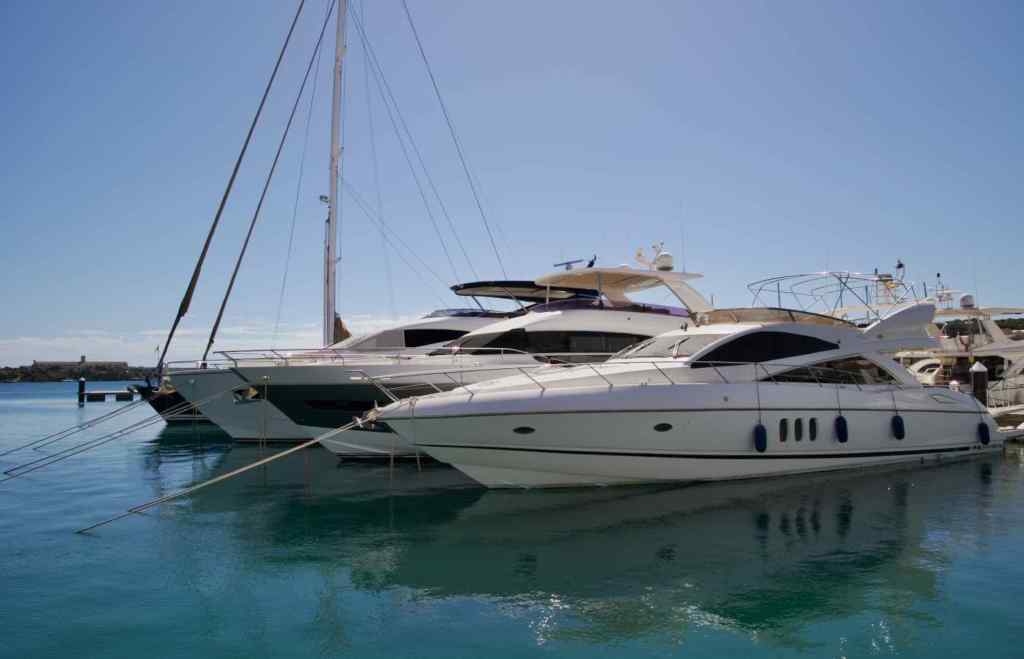
Back on dry land, some of the boats moored up in Mahon harbour.

Not sure what tree this striking flower was from but it added to the colour on the harbour front
Like many Spanish towns there is a mix of old and new architecture and Mahon was no different. Much of the new development was away from the existing town and did not intrude or disrupt the old historic quarter. We had time to explore the old town during our stay as well as travelling past the new on our journeys out.
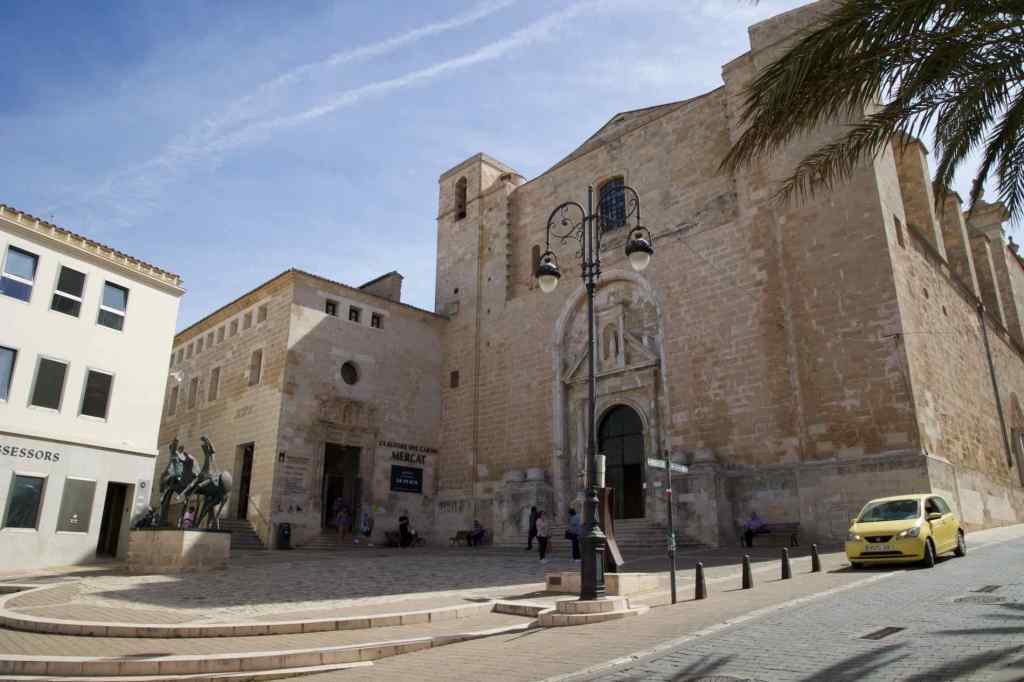
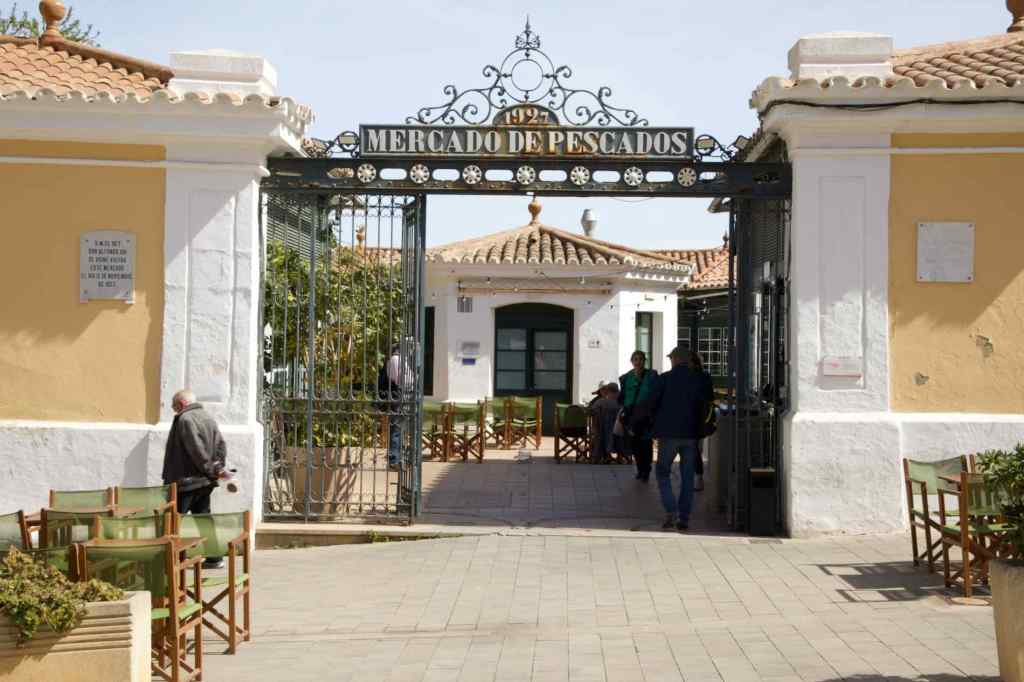


Views of Mahon old town: Top: Main church with the covered market to the left; 2. Entrance to the Old Fish Market, now a collection of cafes, restaurants and bars; 3. A view up the street; 4. A covered walkway in the old town.
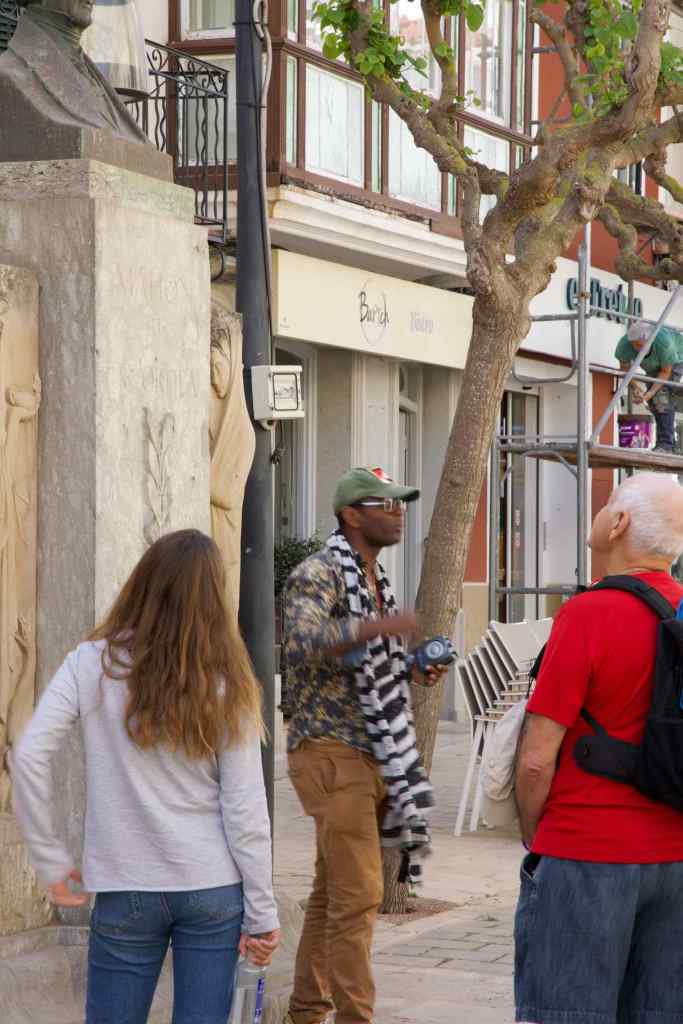

Top: A tour guide with his group in the town centre – about to enter the old town. Bottom: A sculpture outside the main church – Three Horses. Not sure of the origin of this.
On one of these trips I joined the group when they headed to a lighthouse on the northwest tip of the island at Cap de Favoritx. This was the start point for their walk, but for me an opportunity for a bit of photography. Sadly the lighthouse was closed to the public but we had around 30 mins to explore. Those not walking (3 of us) were given a lift back to the airport by the bus driver and from there a taxi into the town square.


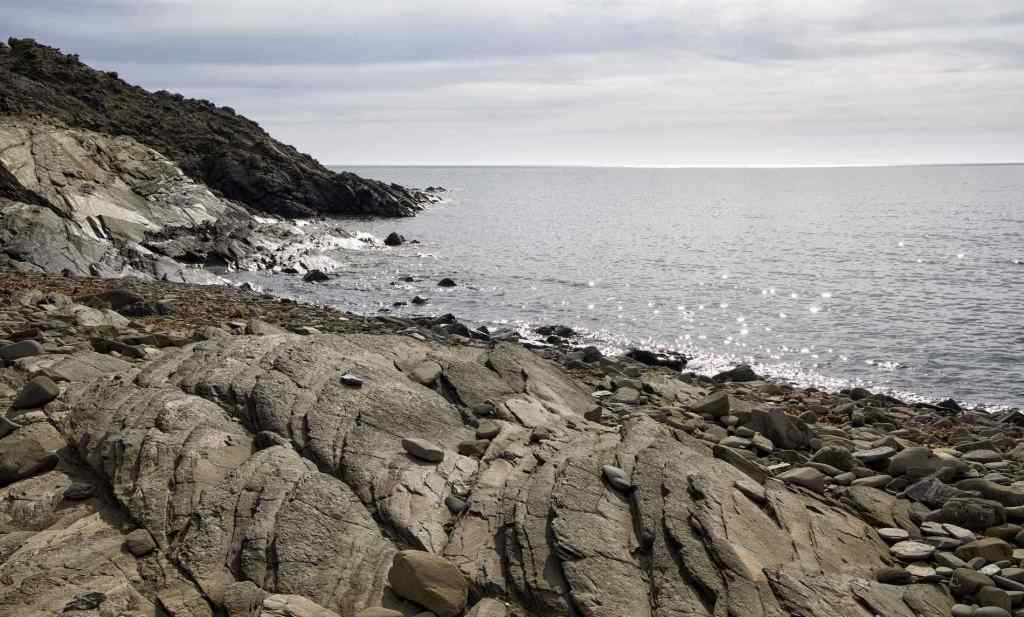


Top and second: The lighthouse at Cap de Favoritx; 3, 4 and 5: Scenes from around the lighthouse; 6. Us on the rocks below the lighthouse.
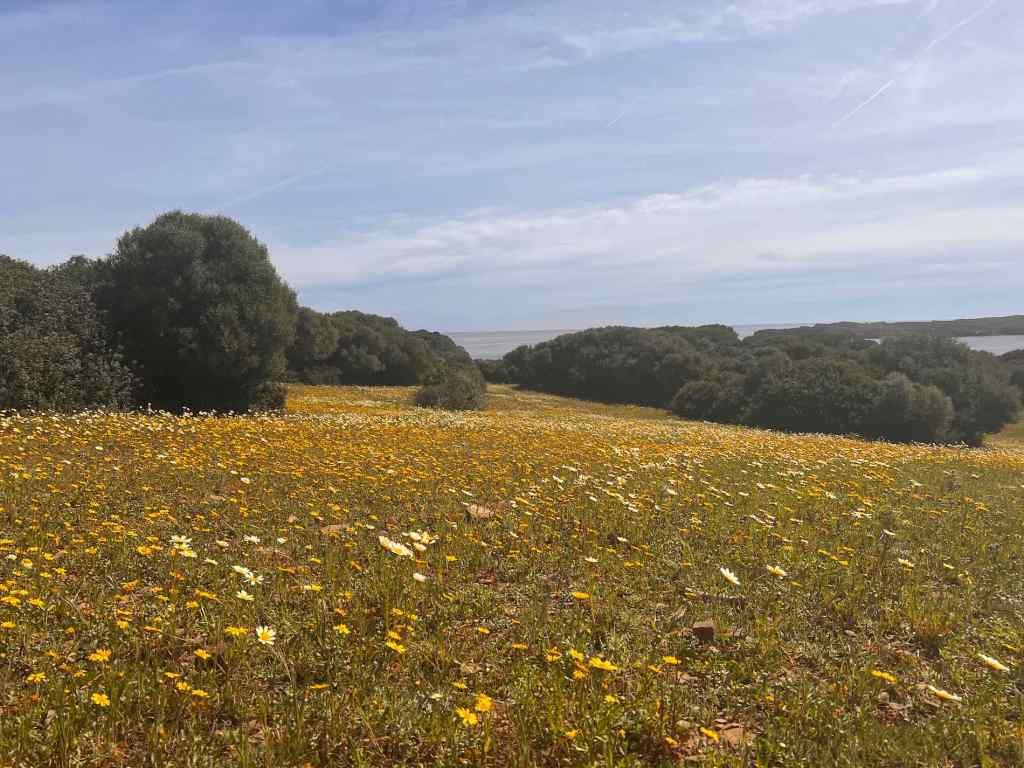
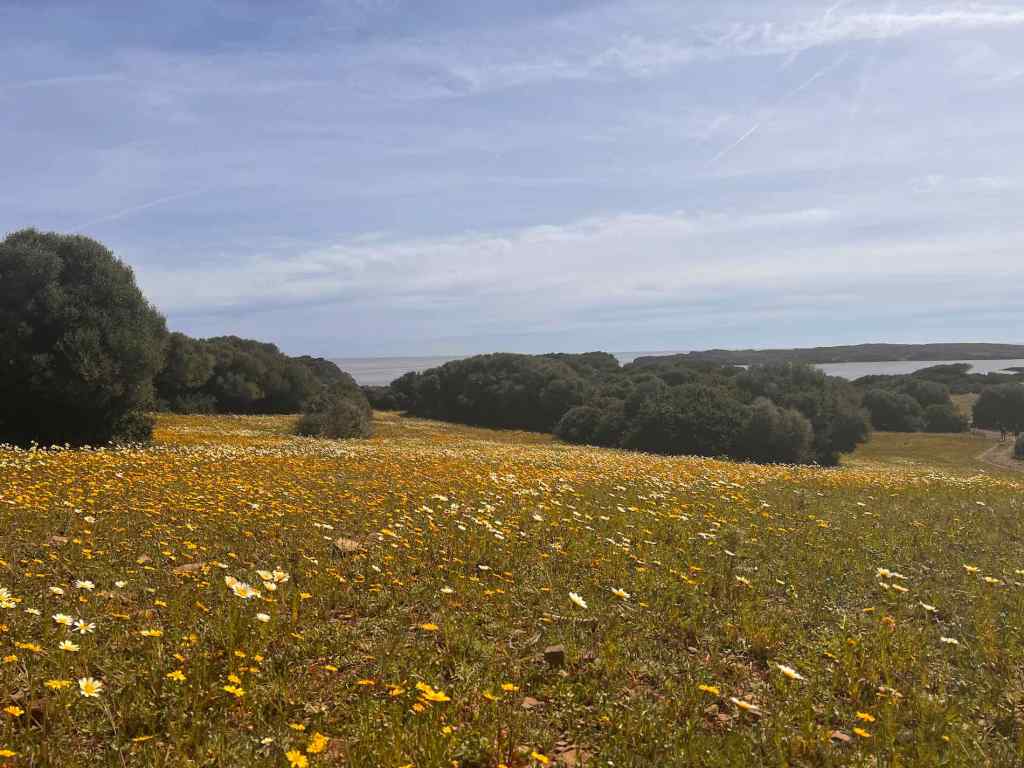
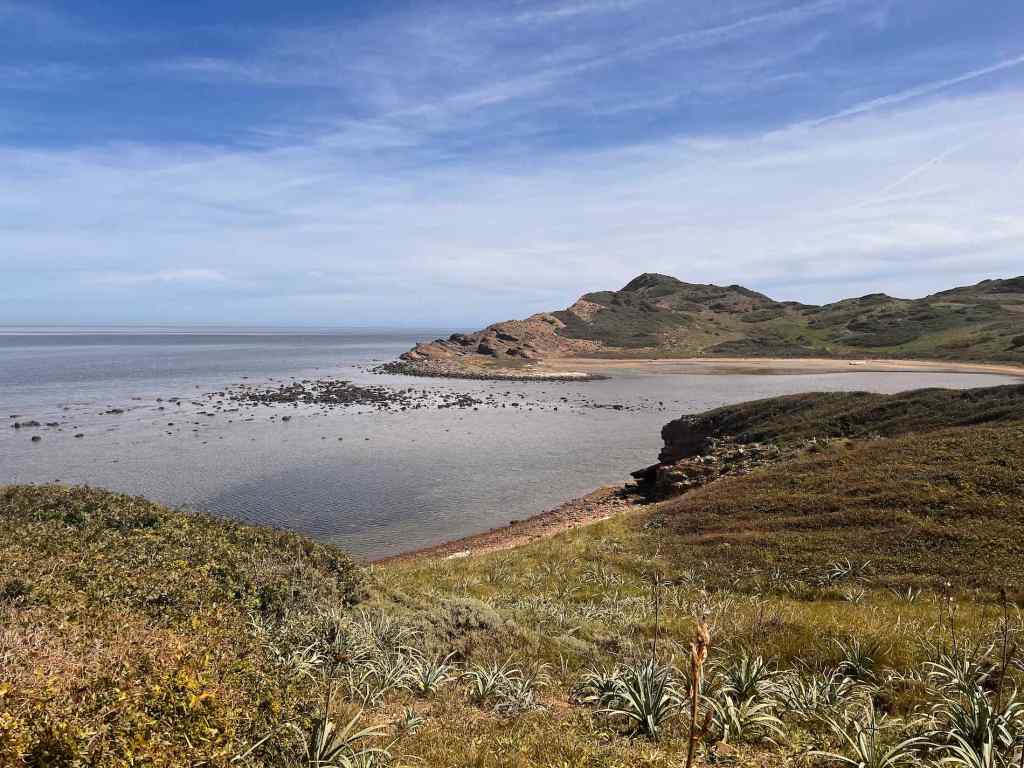
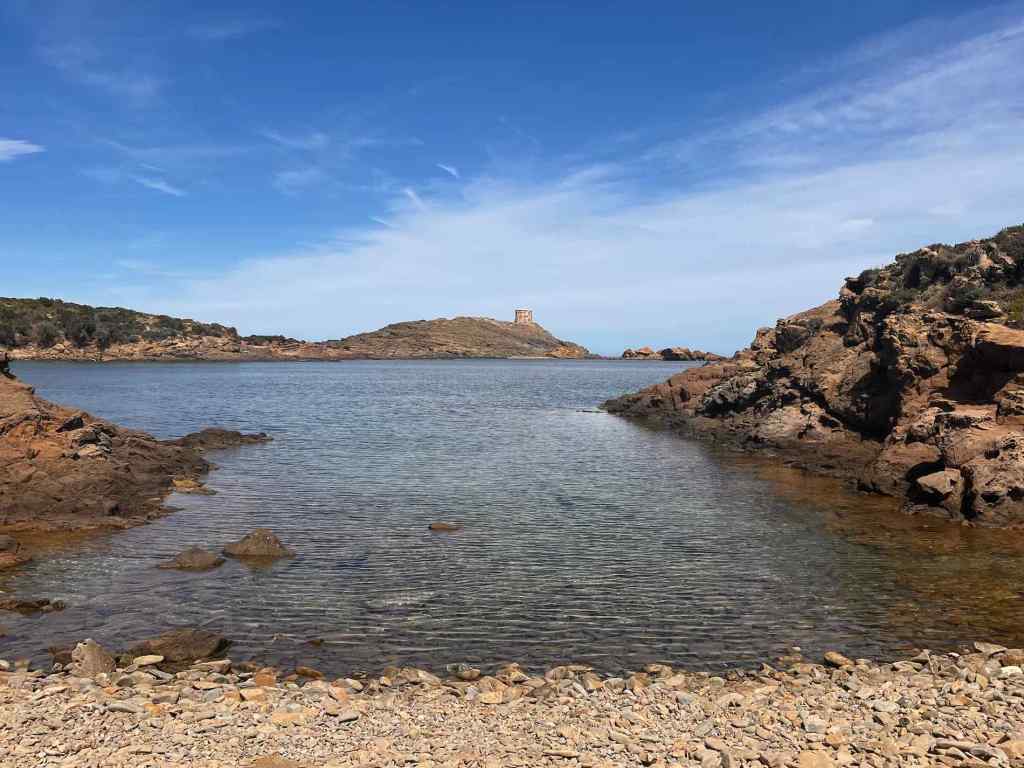


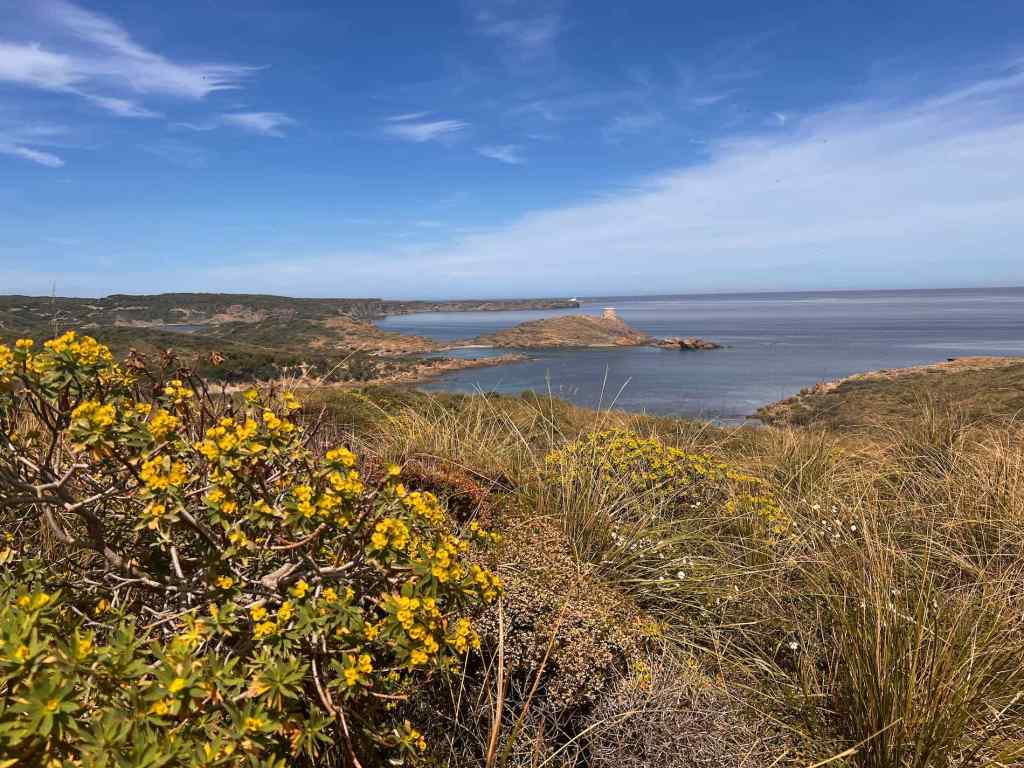

I did not walk from the lighthouse so I am grateful to Lyn for the images of the walk above.
I was able to join the group on our last full day as we headed out to the south of the island and to a large Talayotic settlement close to the start of our walk at Son Bou. There is evidence that the Torre D’e Galmes settlement was in use from around 2000BC and was at its height between 1200BC and 200BC although it appears it was still occupied until the medieval Christian conquest in AD1287.
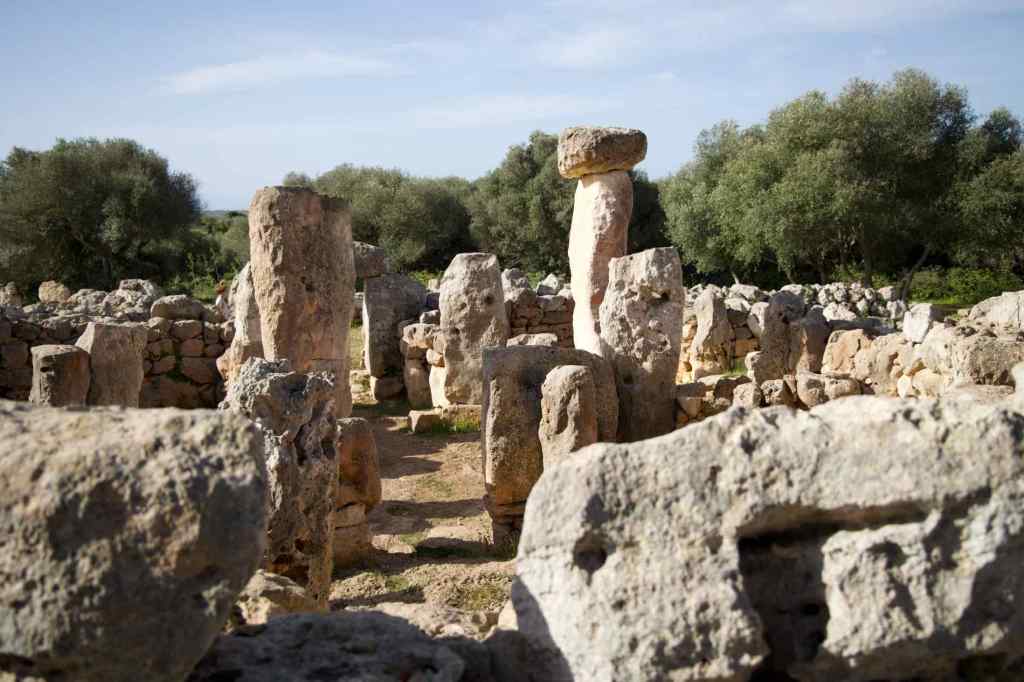


Scenes from the historic Talayotic settlement on the south side of Menorca at Torre D’e Galmes
We spent around 30 mins exploring the ruins before heading down to the start of our walk. The first half was beach walking which was very pleasant. After lunch we turned inland up a valley to a large cave which some in the group elected to visit. I was back marker and elected not to visit the cave, instead waited for the group to return. Our final destination was a short walk up the valley in the village of Es Migjorn Gran where we enjoyed a drink and an ice cream (it was very warm) whilst waiting for our bus back to Mahon.

The start of our walk at Basilica de Son Bou


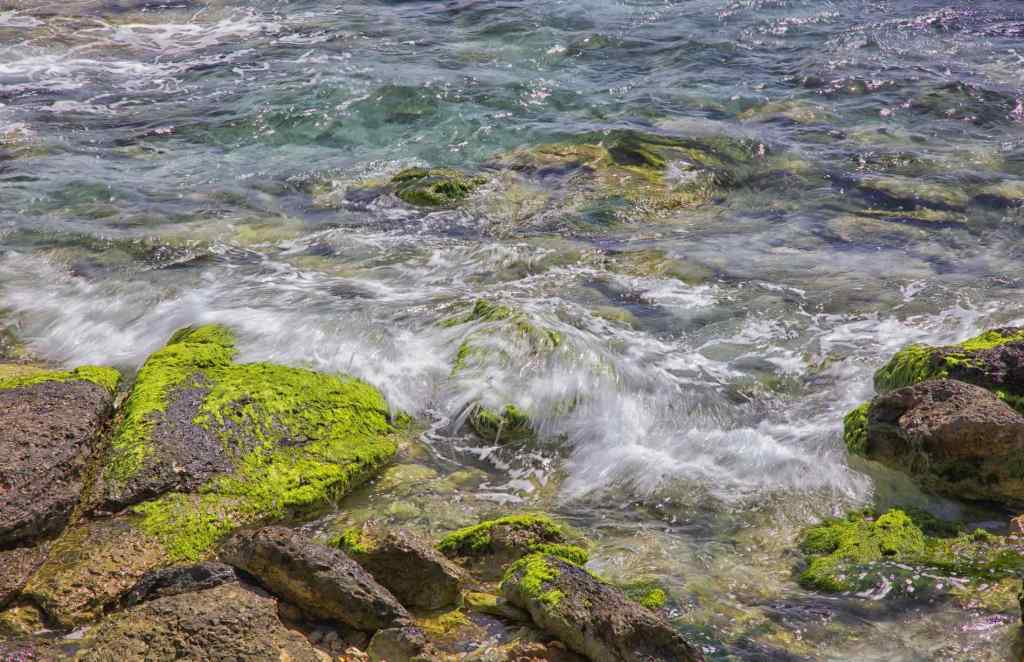
Scenes from the beach walk leading to our lunch stop at San Iaume Mediterrani, a resort complex on the coast.

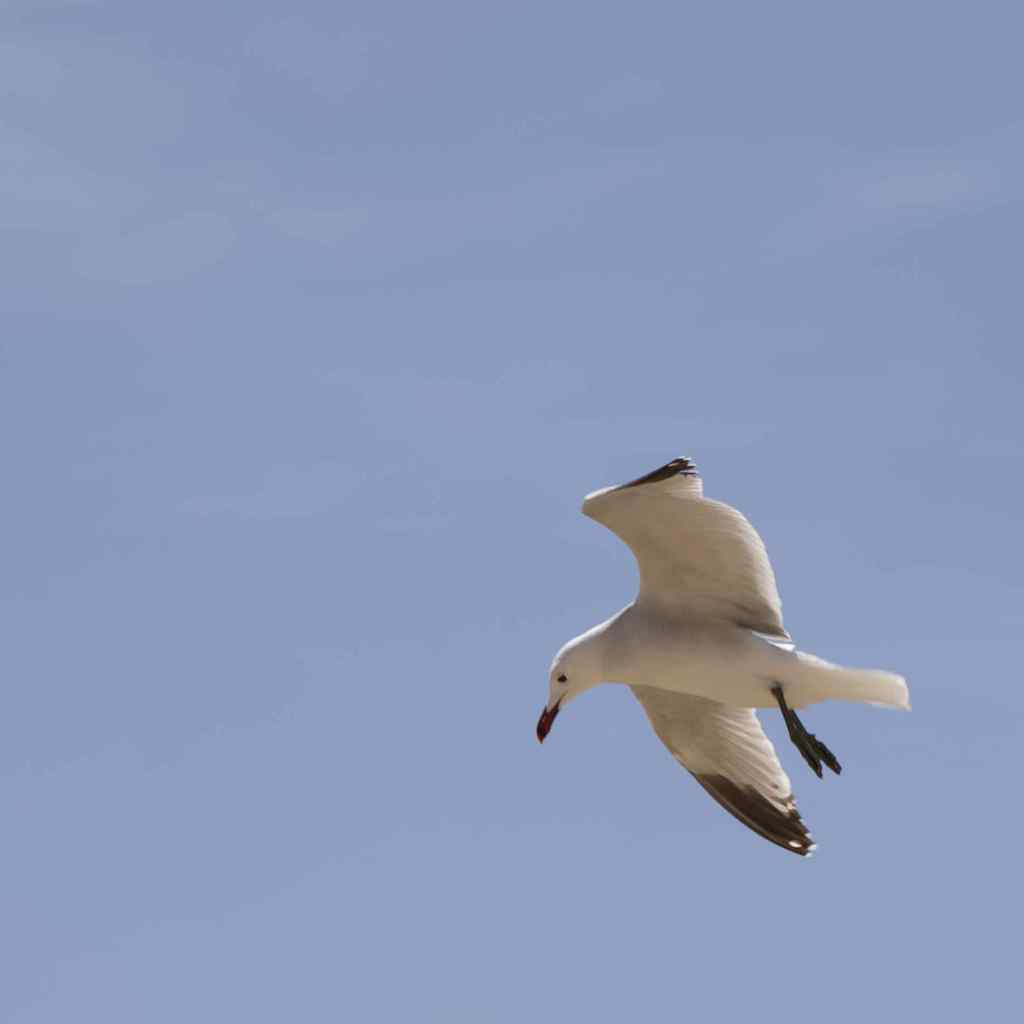
Some of the avian wildlife on our walk
Menorca is the smaller of the two Balearic Islands and has not been developed in the same way as its sister Majorca and the mainland Spanish “Costas”. As a result it is a peaceful, charming island (or at least it was in April!) and we thoroughly enjoyed our short time there.

 davyh photography