I am still playing catch up with the blogs after a busy summer and autumn. This trip took place in September so apologies for the delayed publishing of this piece. Hopefully it will bring some autumn warmth to a cold winter evening especially if you are reading this in the northern hemisphere!
We are back in Spain for our next trip, but to an area we have never been. Andalusia is in the southwest quarter of Spain with Seville as the regional capital. Our destination is the coastal town of Isla Cristina which is about an hour’s drive from the Portuguese border.
Isla Cristina
Although Isla Cristina is a popular holiday destination for Spaniards, the rest of Europe and the UK have yet to fully discover it. The town is primarily a fishing port with a land based fish processing factory nearby. To the north of the town are salt pans which are home to a wide variety of birdlife. The town’s one saving grace is a massive expanse of sandy beach running for about 4km along the coast. As yet there are few beachside hotels which is a good thing as it means there is plenty of space if sitting on a beach is your thing. We were trying something new for us, an all inclusive package, meaning food and certain drinks are available all day. There is still much to do if you find lounging by a pool a bit boring!
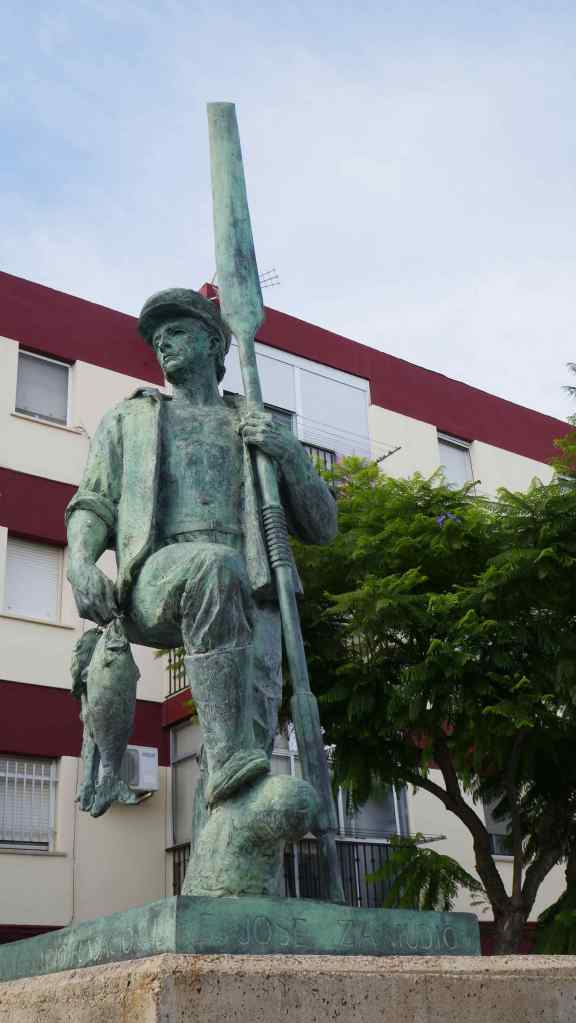
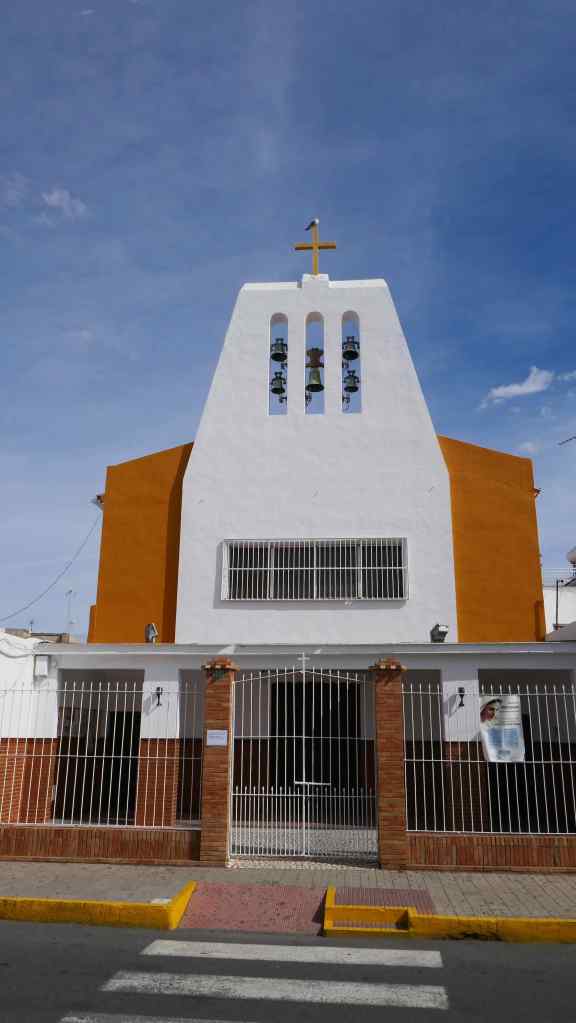
Left: Statue dedicated to the memory of the fishermen who developed Isla Christina as a fishing port years ago. Right: The main catholic church in the town.
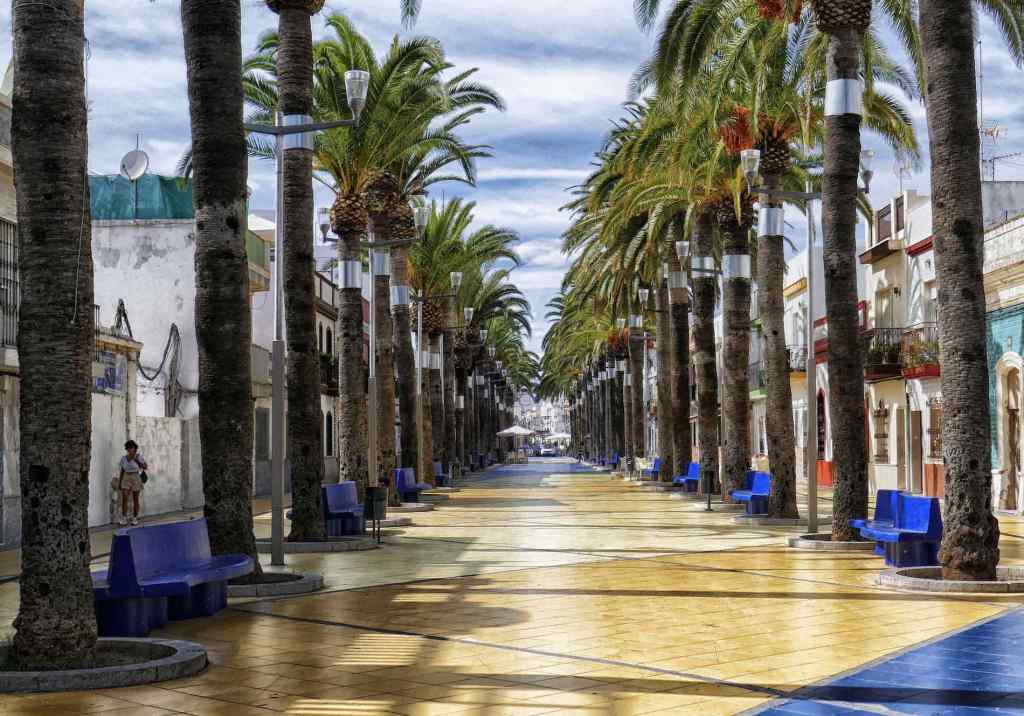
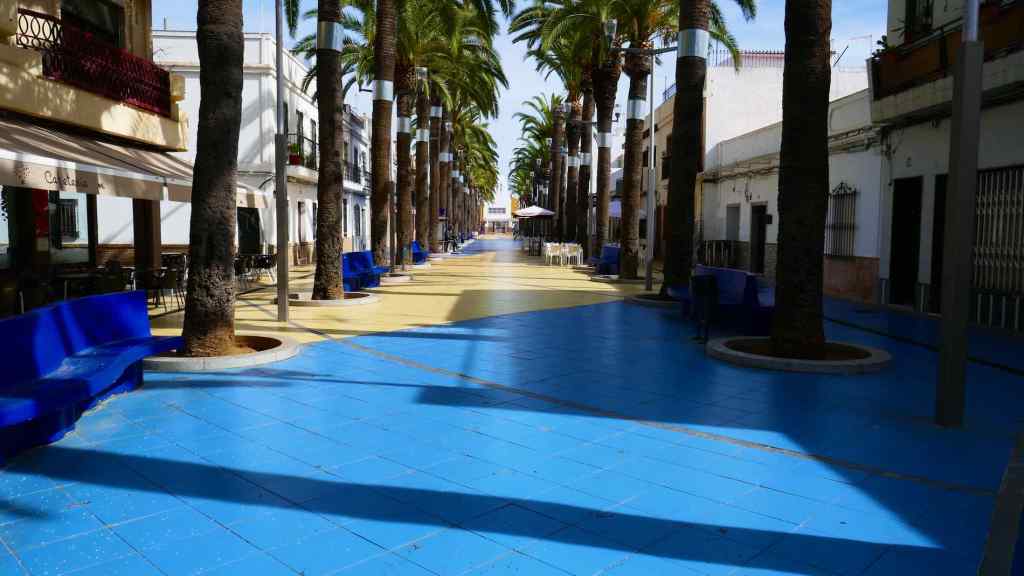
Main Street Isla Christina – shot from either end. Yes those are polished tiles which are quite slippy on the rare occasion when it rains here.
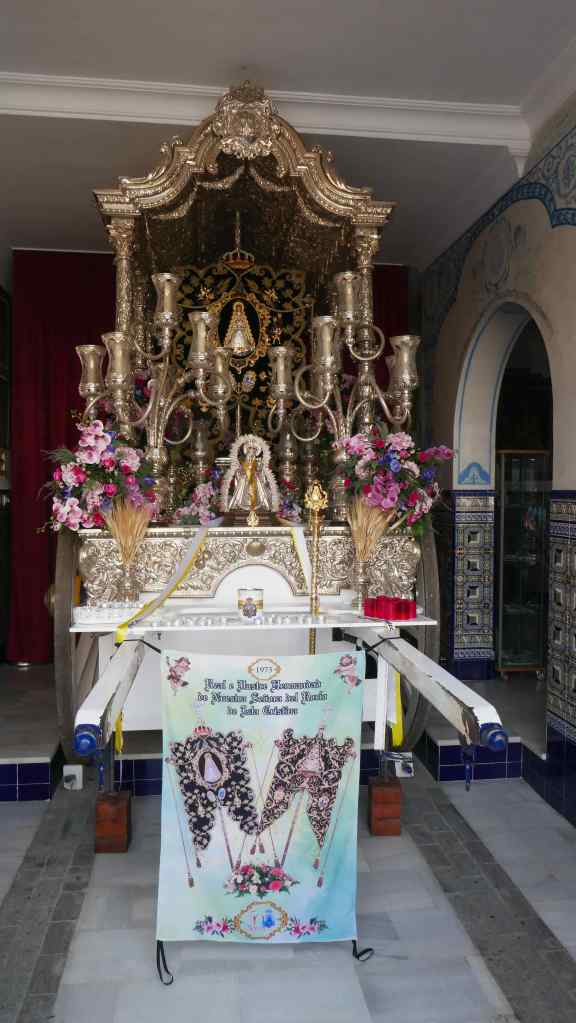
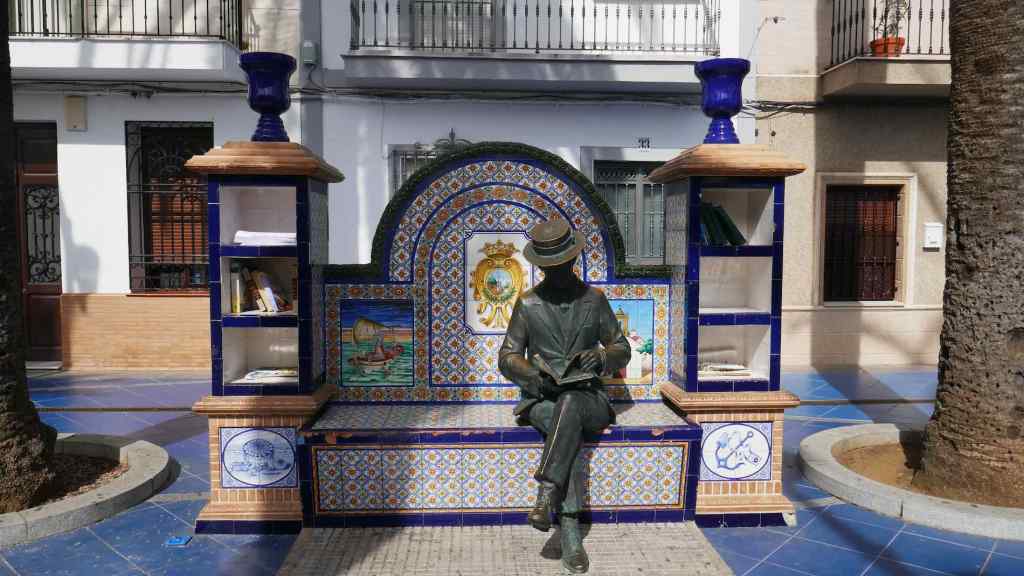
Left: Shrine in an antique shop window! Right: Statue commemorating a local author whose name escapes me.
Cycling
We borrowed two bikes from the hotel and set out for a morning’s cycling trip. The bikes were rustic to say the least. They had not been well maintained; mine had only two operational gears out of a possible 12 and it was not comfortable to ride. Nevertheless it was a bike, I could ride it, just, and we could get out, so we went for it.
We had identified a circular route out of the town then along a long sandy track, returning along a good cycle track and eventually road, back to our hotel. The aforementioned sandy track was a bit problematic as it was impassable in places because the sand was too soft and deep. At these points we hopped off and pushed our 2 wheeled jalopies through the sandy ruts until we found firmer ground. The sun shone and it was a warm day. Despite our difficulties with the bikes it was a good morning out.
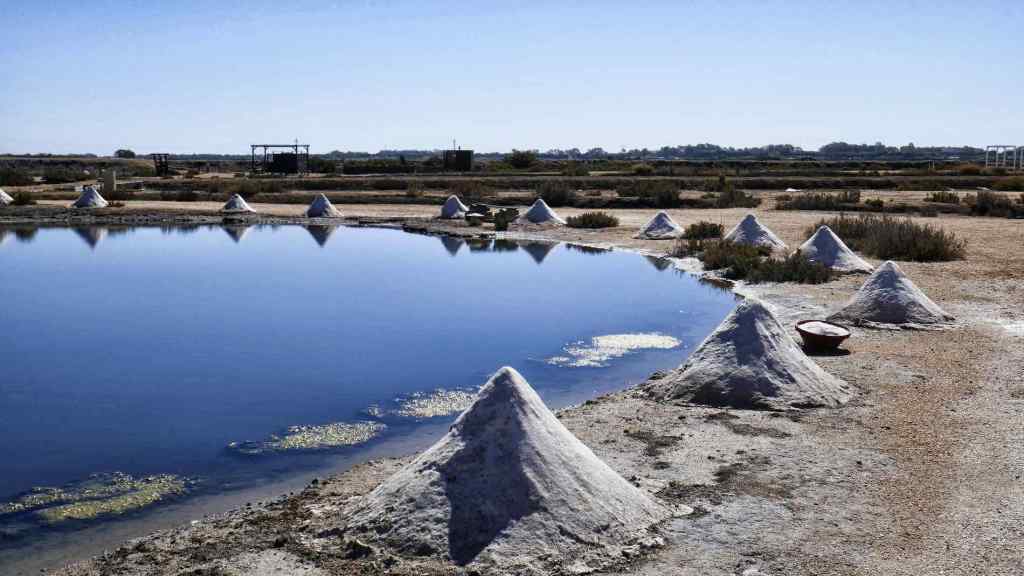
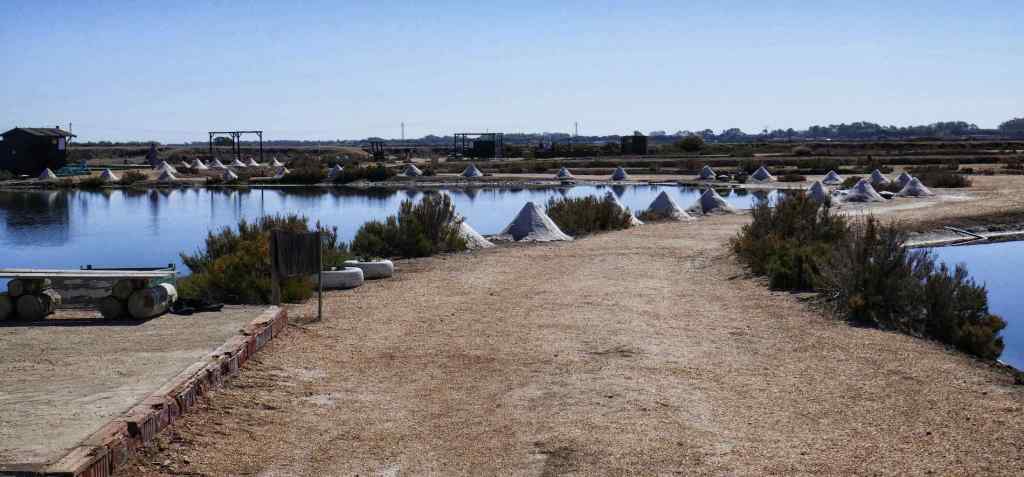
Conical piles of salt, recovered from the salt flats we saw on our bike ride and a wider view of the same.
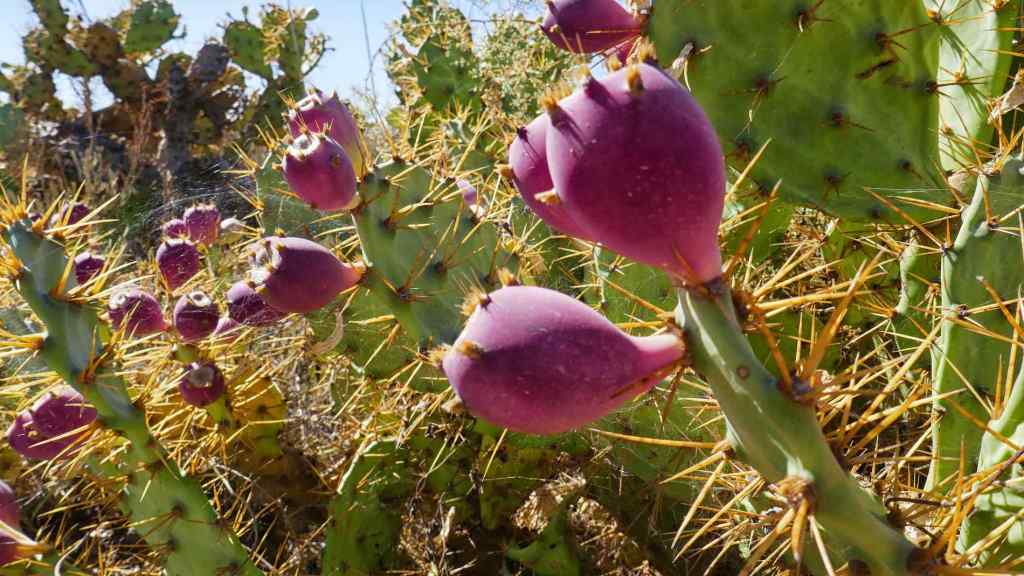
Cactus Flower
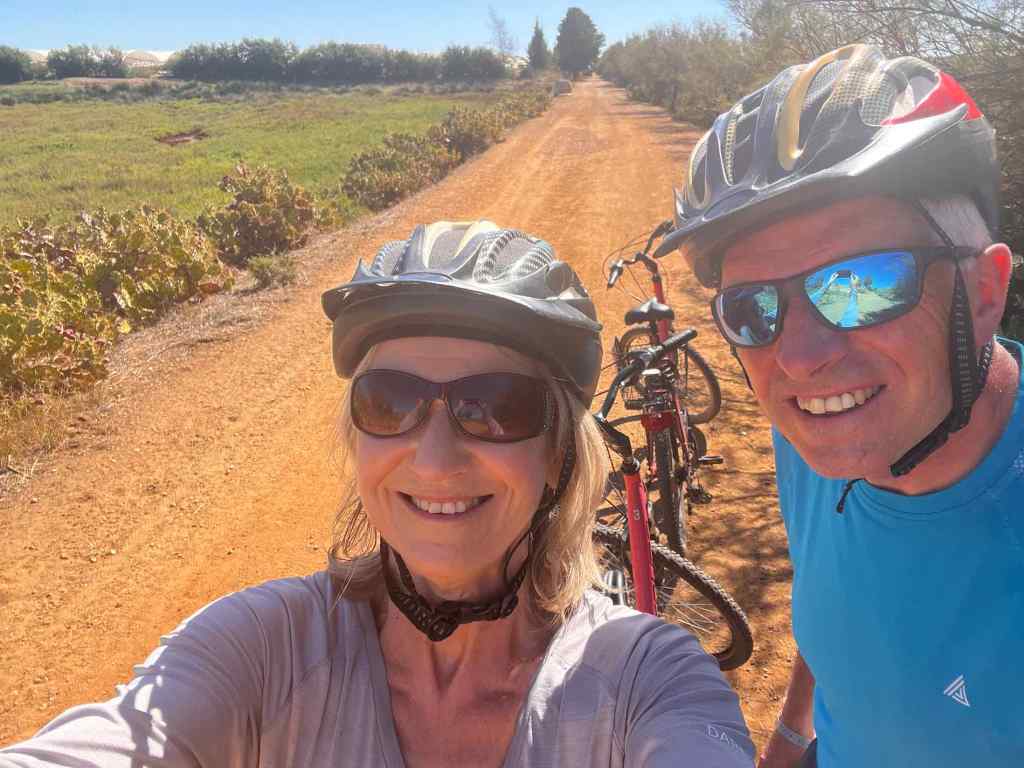
Short rest stop on the dusty cycle track to the north of Isla Cristina. Our ramshackle bikes can be seen behind us
Huelva
The city of Huelva is the provincial capital and lies about 40 mins drive to the northeast of Isla Cristina. The centre of the city is quite compact and the architecture lacks the style and splendour of the regional capital Seville. Our first stop on our “tour” was a large cemetery on the outskirts of the city. It is here that the body of the “Man Who Never Was” lies.
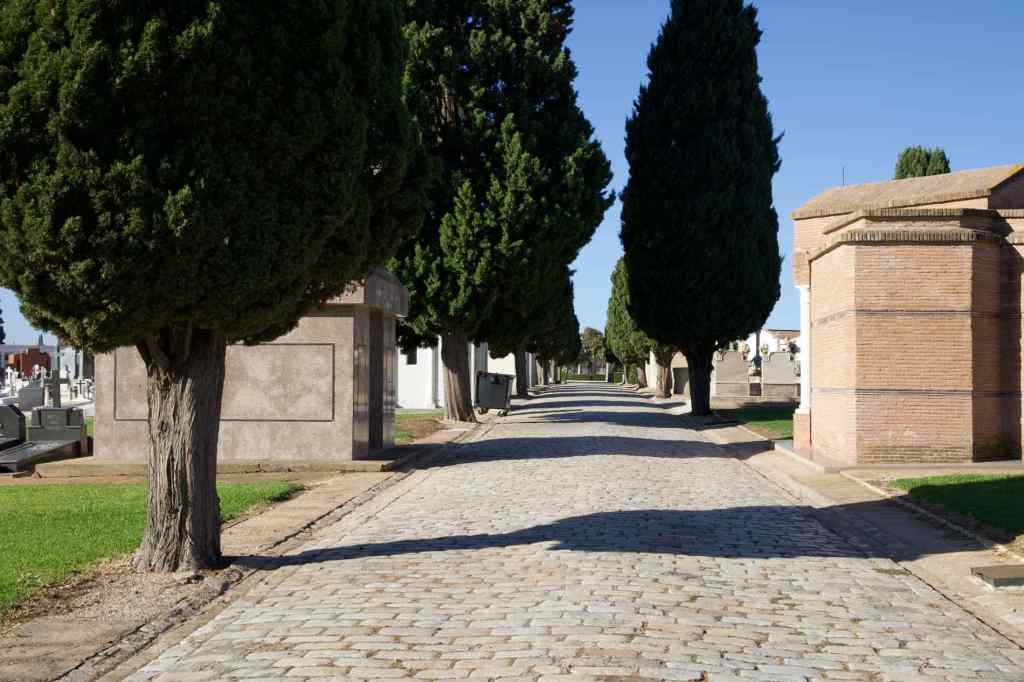
Entrance to the cemetery in Huelva where “Major Martin” is buried.
The story behind Operation Mincemeat in WW2 is one of the greatest deceptions ever carried out in wartime. The story has been told in a recent film and book. The Man Who Never Was, Major William Martin, was actually a welsh tramp and vagrant by the name of Glyndwr Michael, who had died in January 1943. It is the grave of Michael that lies in the cemetery of Huelva.
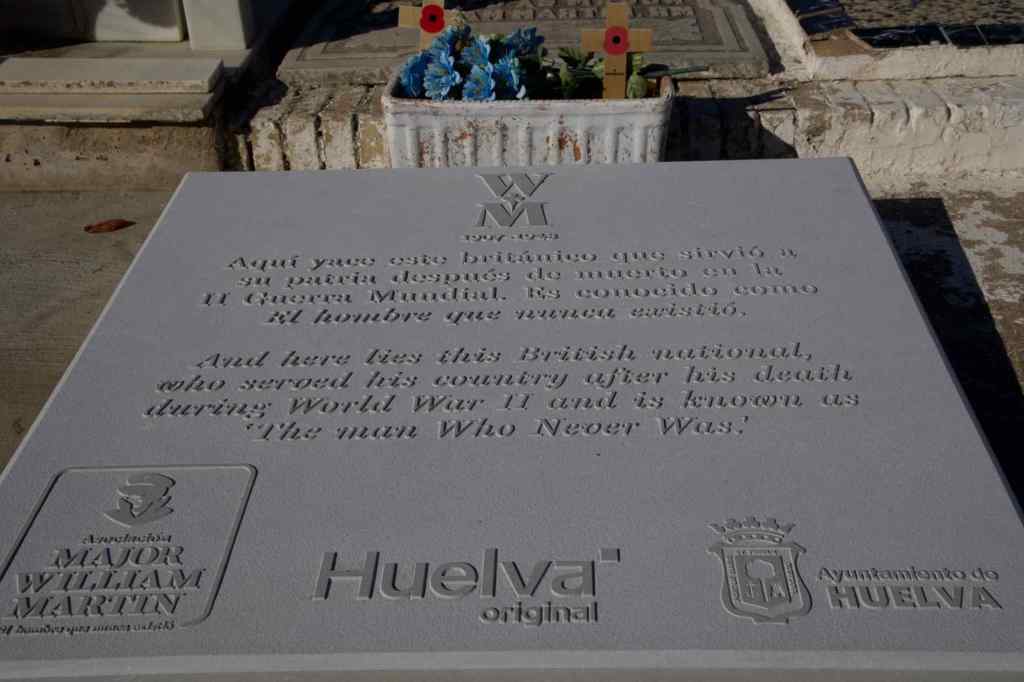
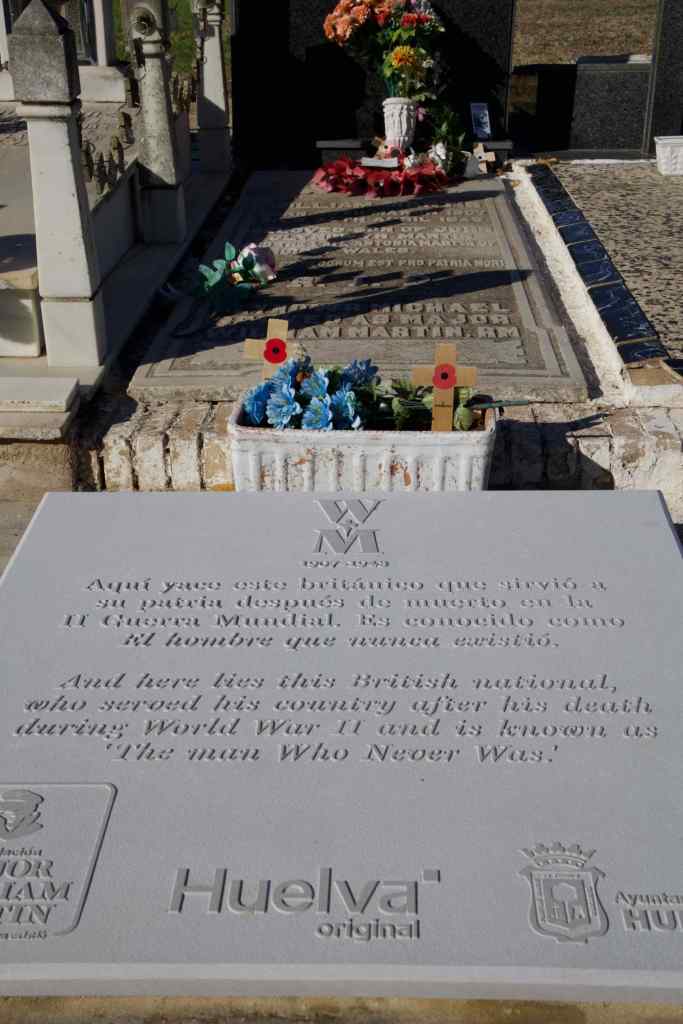
The grave of “The Man Who Never Was”
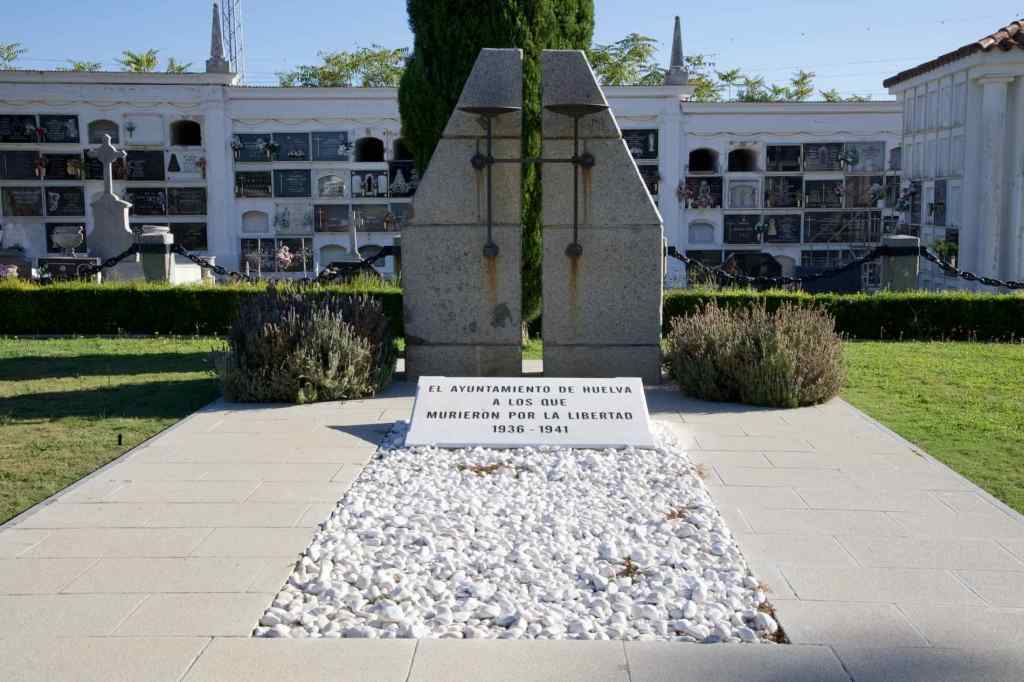
Memorial in Huelva cemetery remembering all those who lost their lives during the Spanish Civil War 1936-1941.
The cemetery sits on a hill above the town and after a short while we made our way down into the centre for an hour or so to explore. As is usual for us we found a coffee shop down a side street and paused a while to people watch and enjoy a coffee. The main streets radiate off a town square with some interesting buildings and decorations. it was a quiet Monday though locals still found time to stop and chat…..and drink coffee!
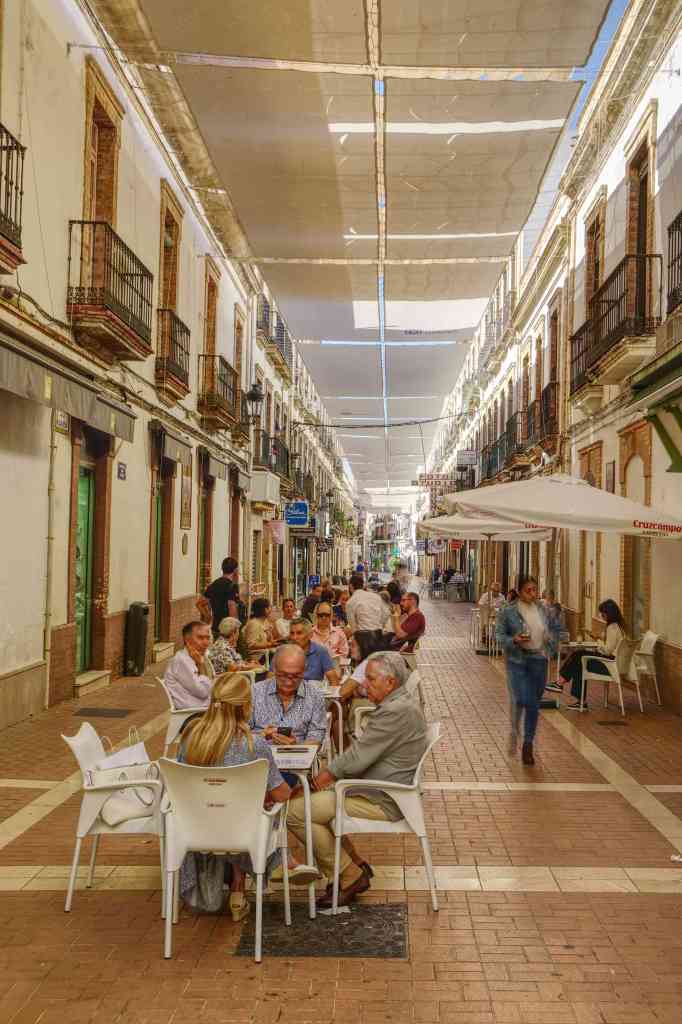
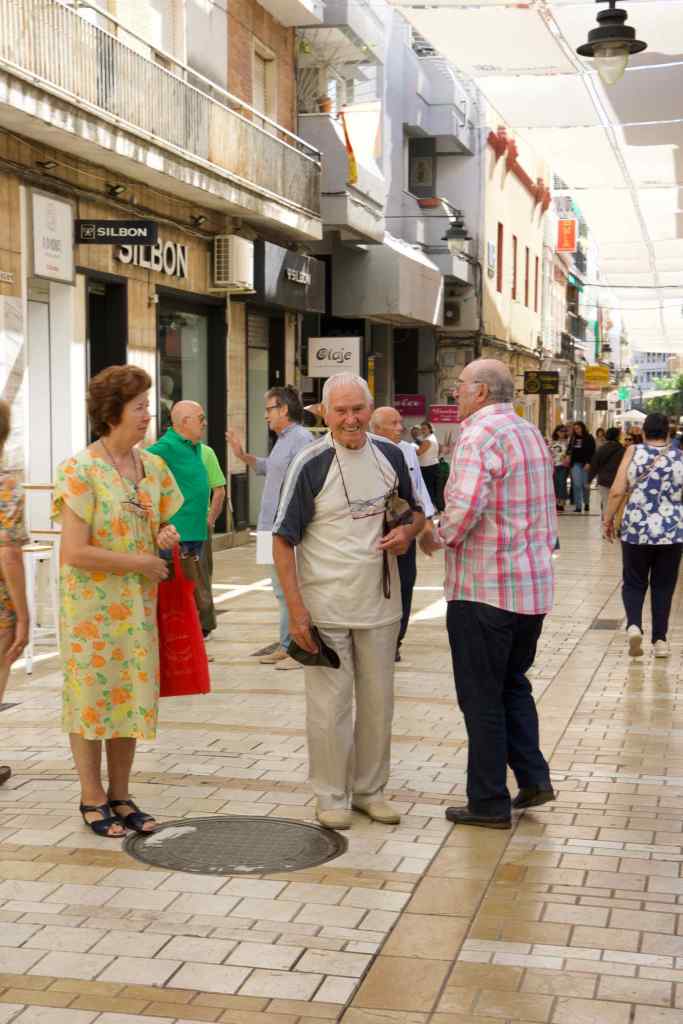
Top: One of the many side streets with a shade across the shield shoppers from the fierce sun, even in late September! Bottom: Locals stop to chat in the street.
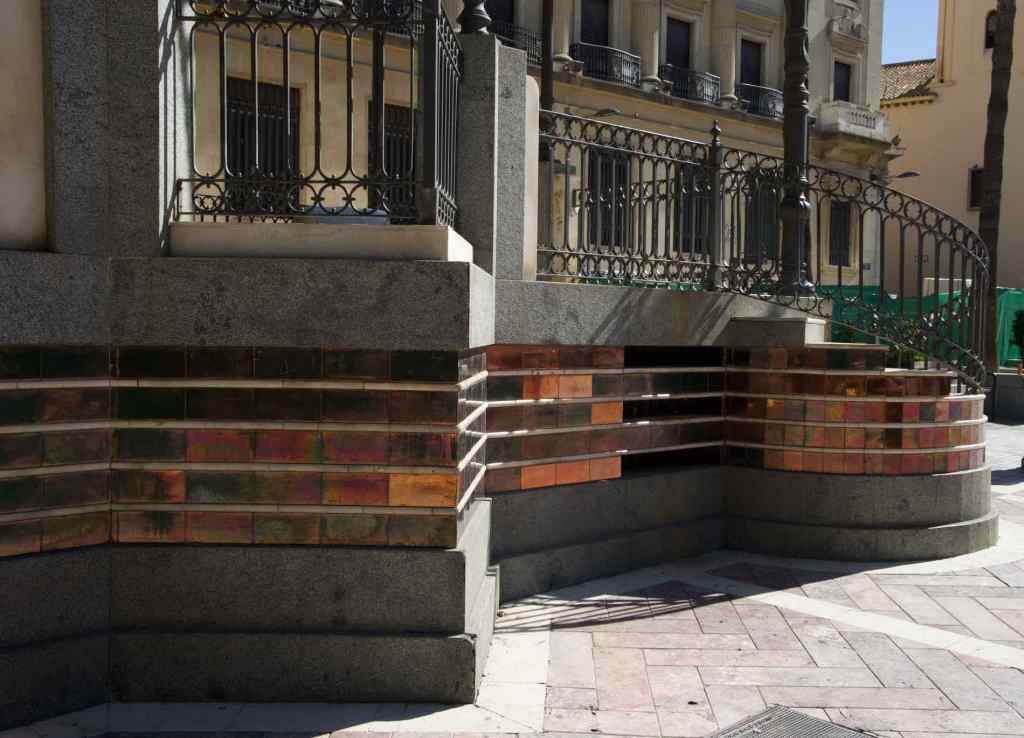
Bottom: Interesting detail in the steps up to the Town Hall
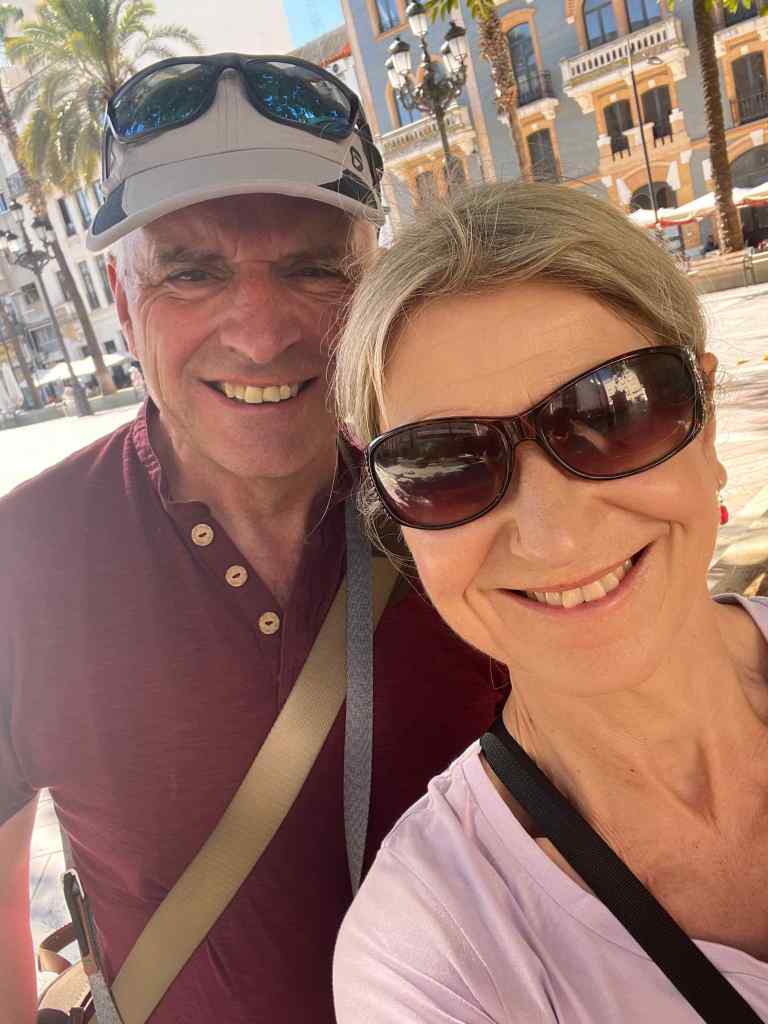
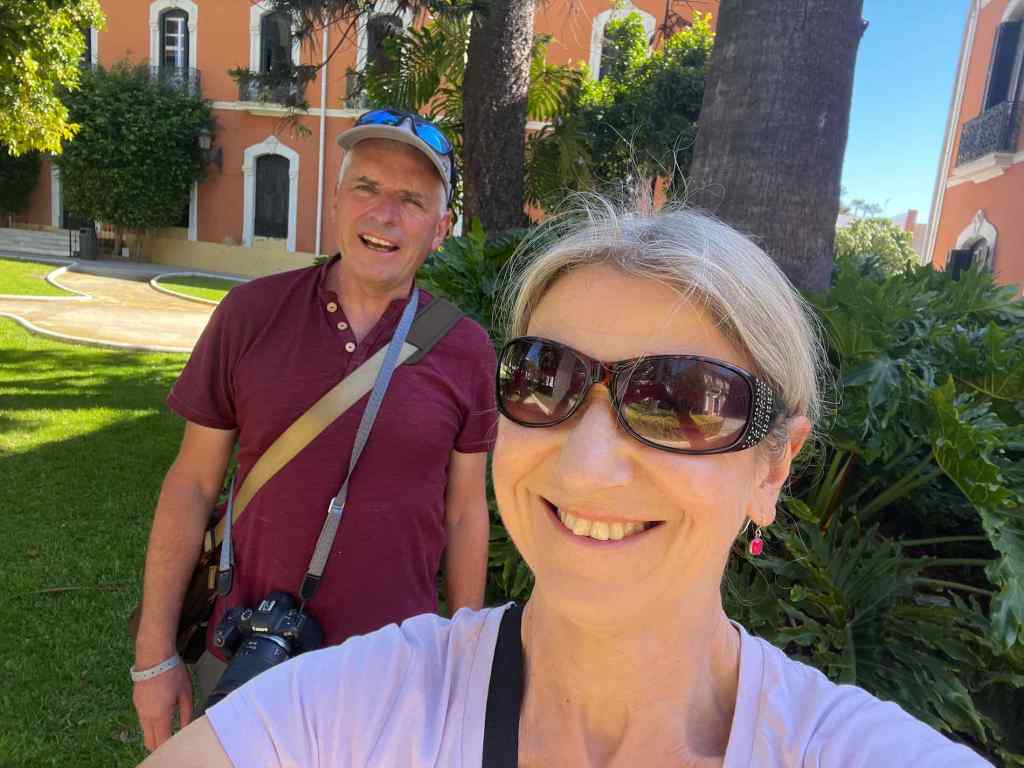
Us enjoying what Huelva had to offer
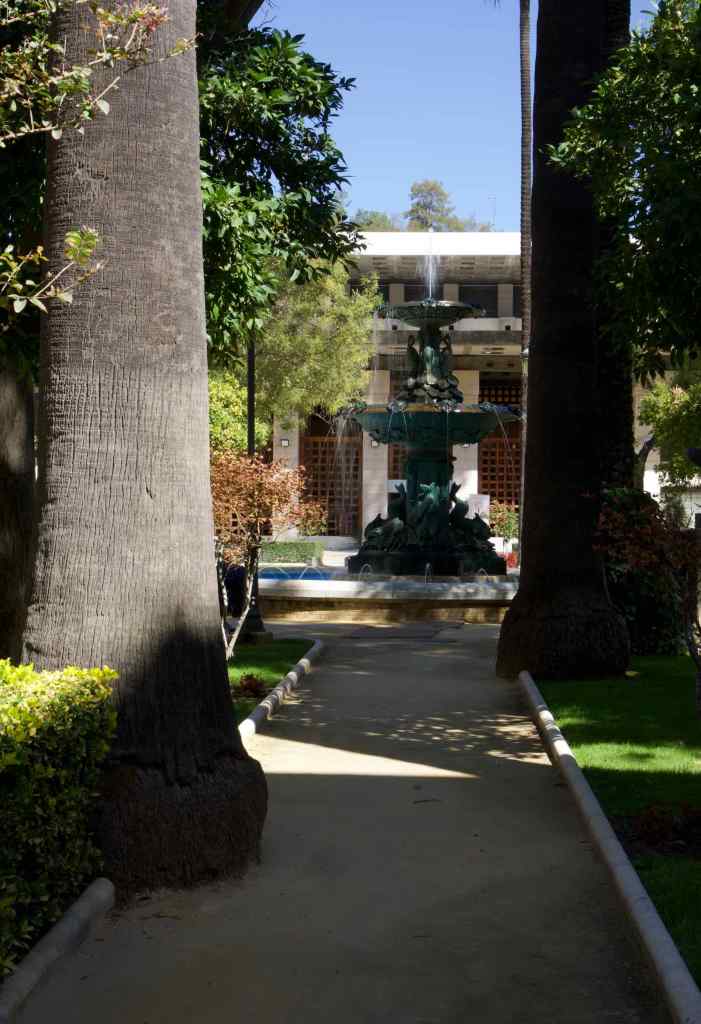
The garden of the former British Consulate in Huelva
Ayemonte
Ayamonte and Villa Real lie either side of the River Guadiana which forms the border between Spain and Portugal in this part of the country.
Ayamonte on the Spanish side is a delightful town full of history and we enjoyed a short guided walk to get our bearings before being let loose for an hour or so to shop, or in our case to find a coffee shop slightly off the beaten track. We settled on a small place opposite a church with outside seating. A lovely choice as we watched the locals go about their business.
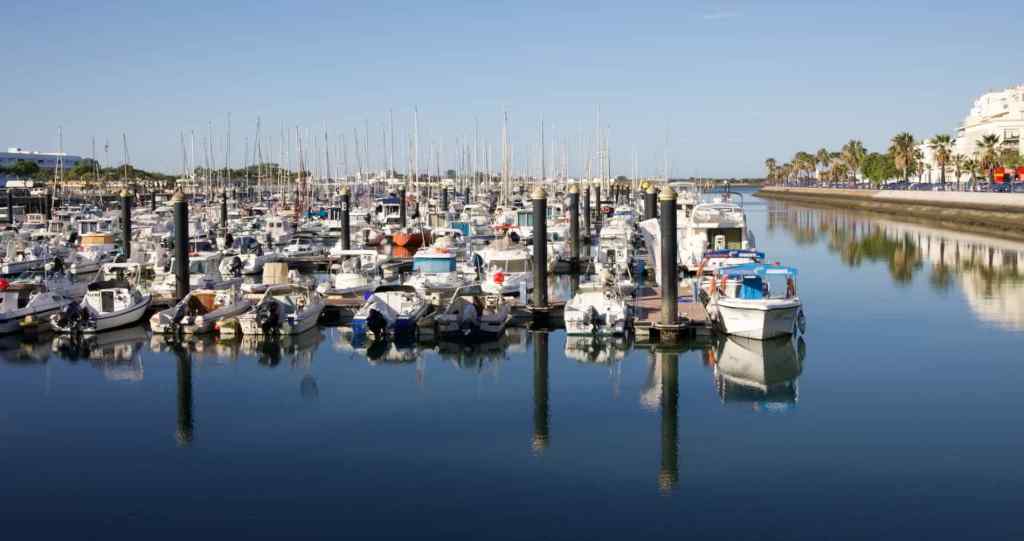
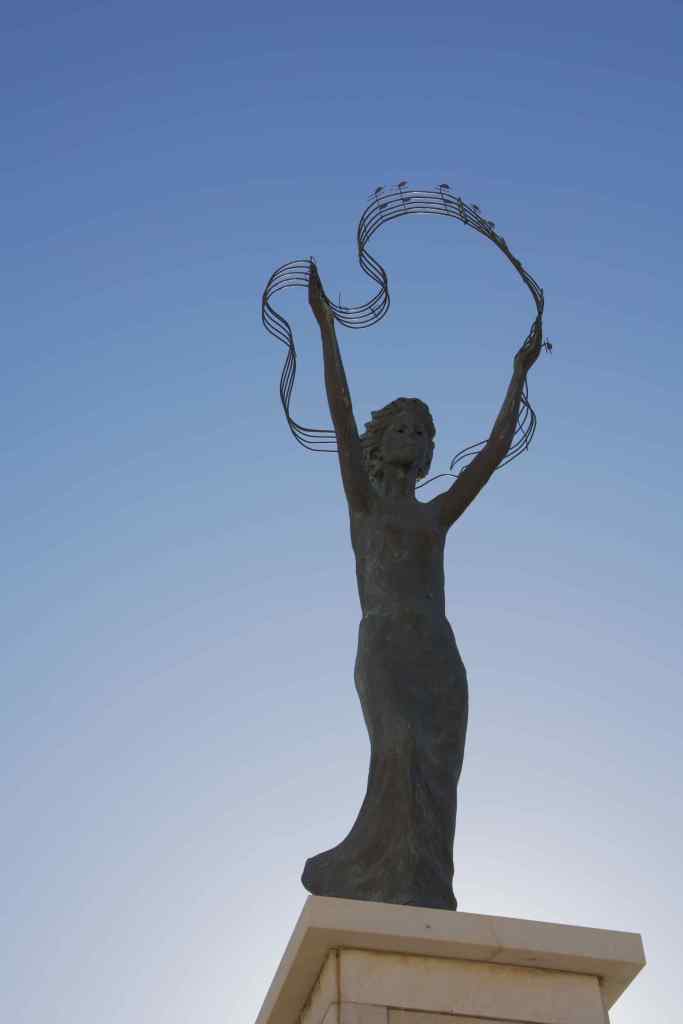
Welcome to Ayemonte – The harbour and nearby art work which greeted us on our arrival in Ayemonte
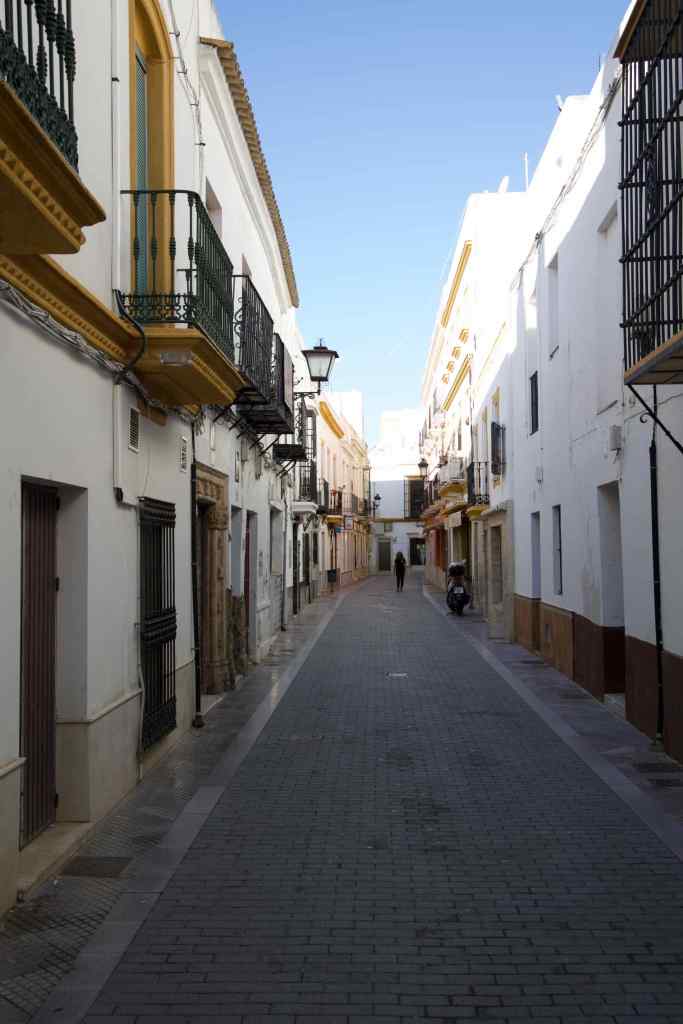
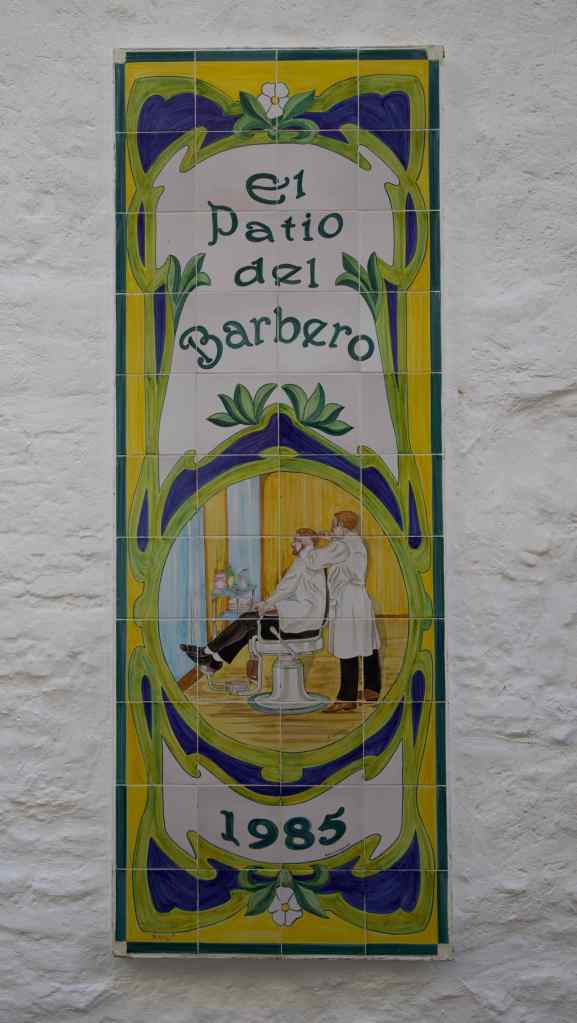
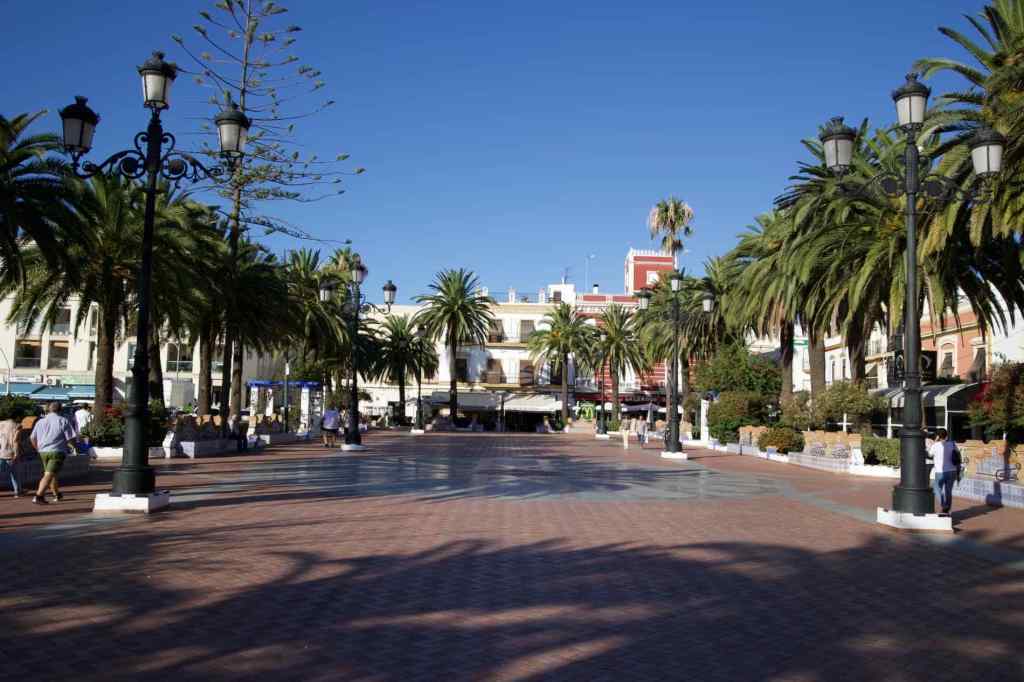
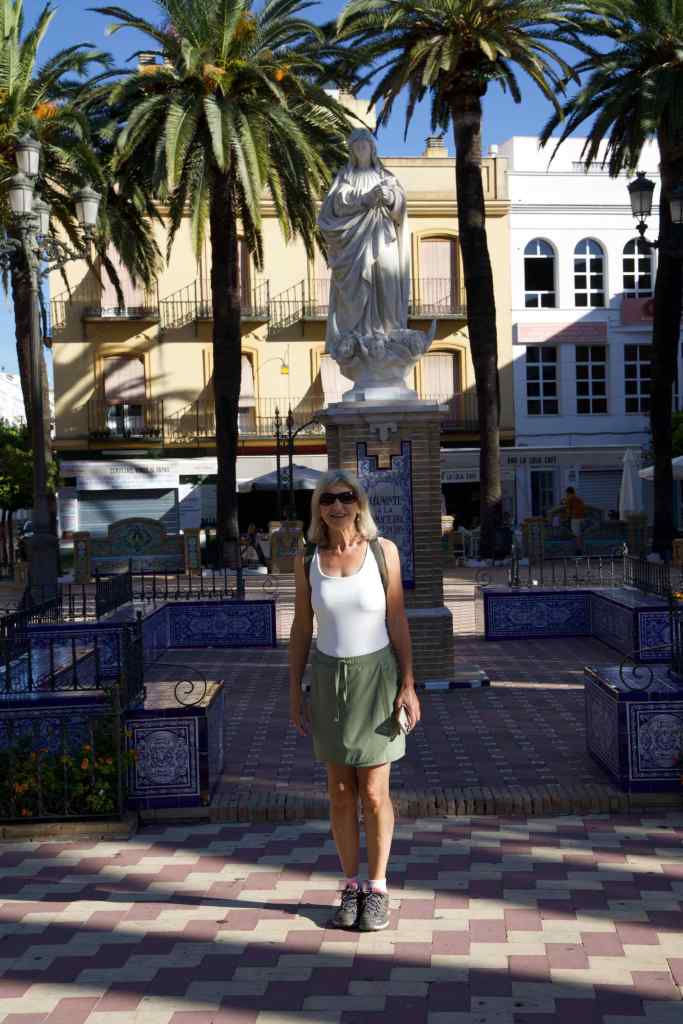
Top: One of the narrow streets leading off the town square; 2. Sign outside a mens barbers shop – may shops had these tiles signs outside, especially in the old quarter of town; 3. The town square; 4. Lyn guards a memorial in the town square.
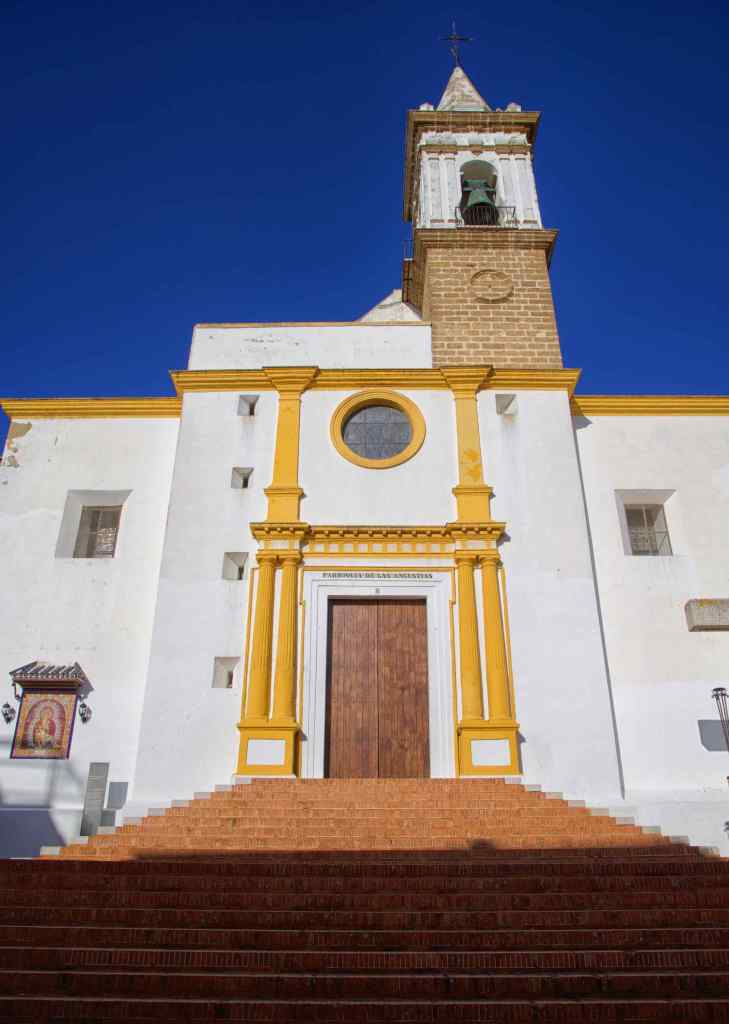
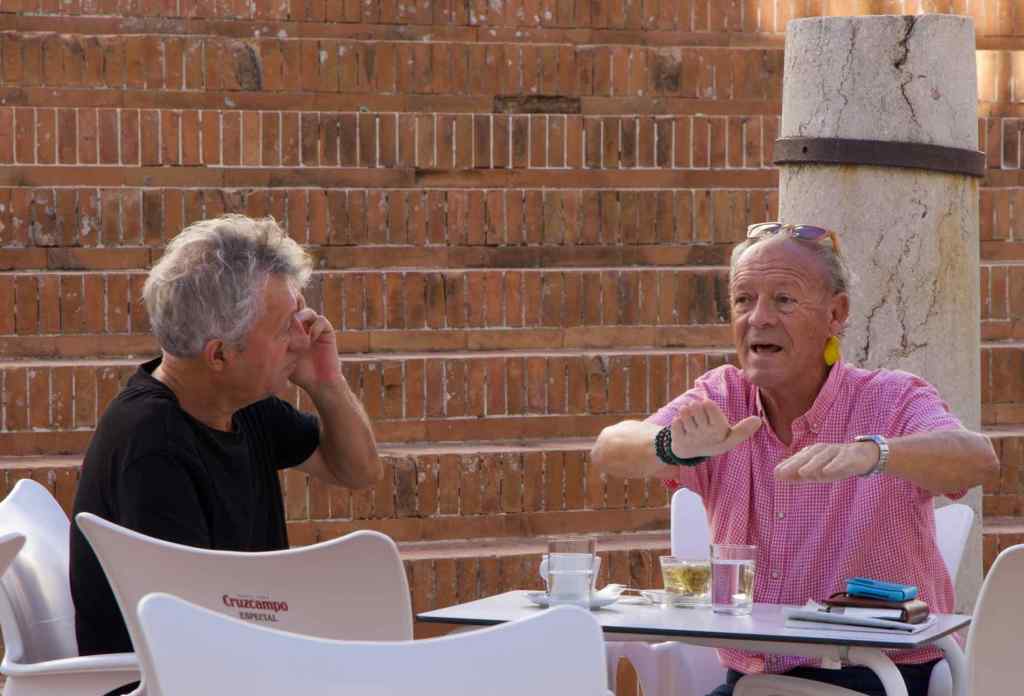
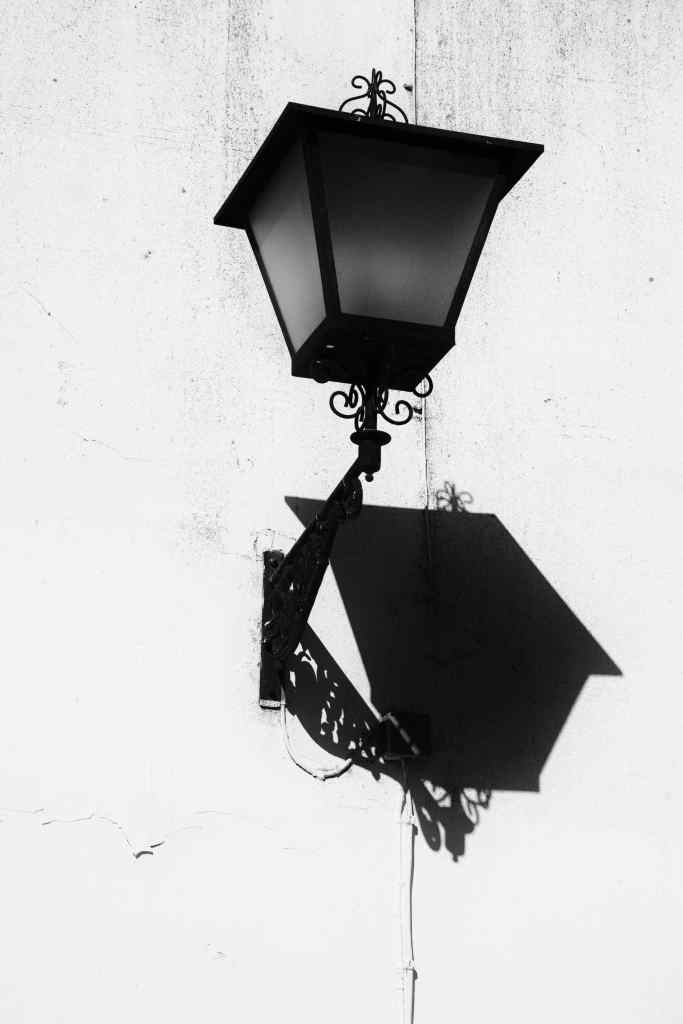
Top: The church opposite our coffee stop; Centre: Two locals enjoying an animated conversation over coffee; Bottom: Replica Gas Light on the church wall, heavily “photoshopped”
Villa Real San Antonio
By contrast its neighbour Villa Real San Antonio, to give the village its full title, is a short ferry ride across the river and lacks the charm and sophistication of Ayamonte. The village streets are set out on a grid system which makes navigating fairly straight forward but the whole place appeared to be a bit scruffy and uncared for. There was an exception though. The harbour front had recently undergone a huge makeover. Smart, even paving denoted the wide footpaths and palm trees lined the roadside as far as the eye could see. All the buildings looked like they had recently been renovated and given a smart lick of paint. Such a contrast with what lay behind.
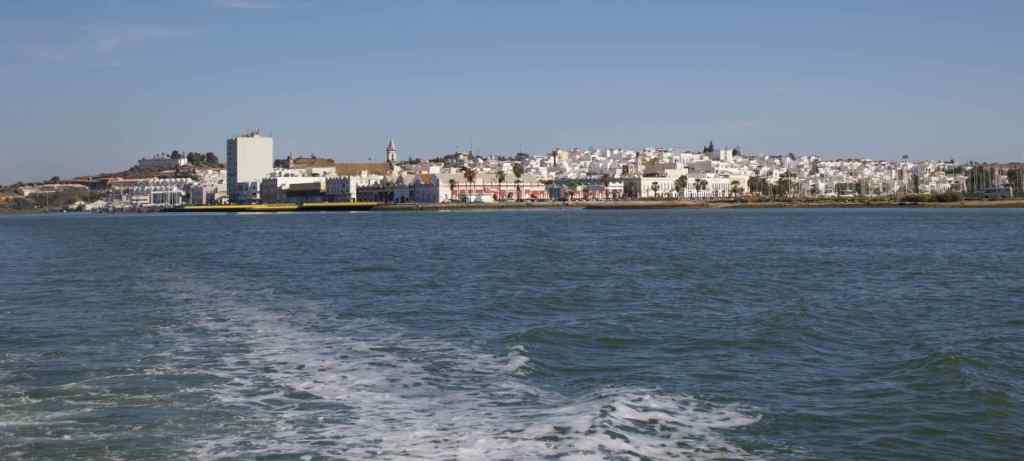
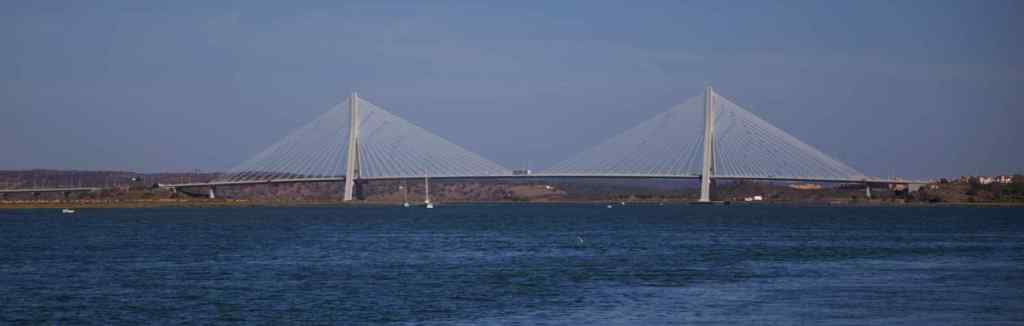
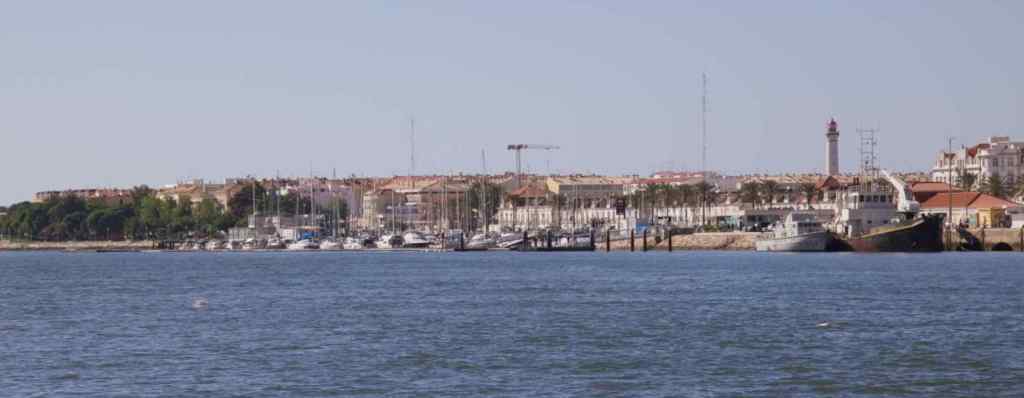
Top: Leaving Ayemonte by ferry; Centre: The bridge linking Spain and Portugal; Bottom: Approaching Villa Real
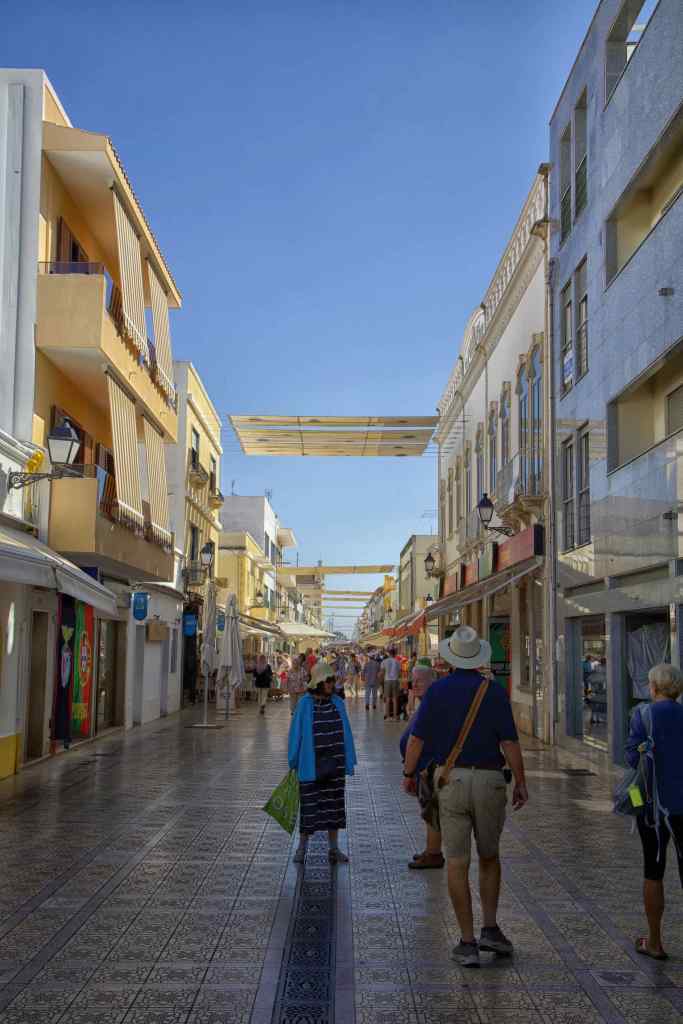
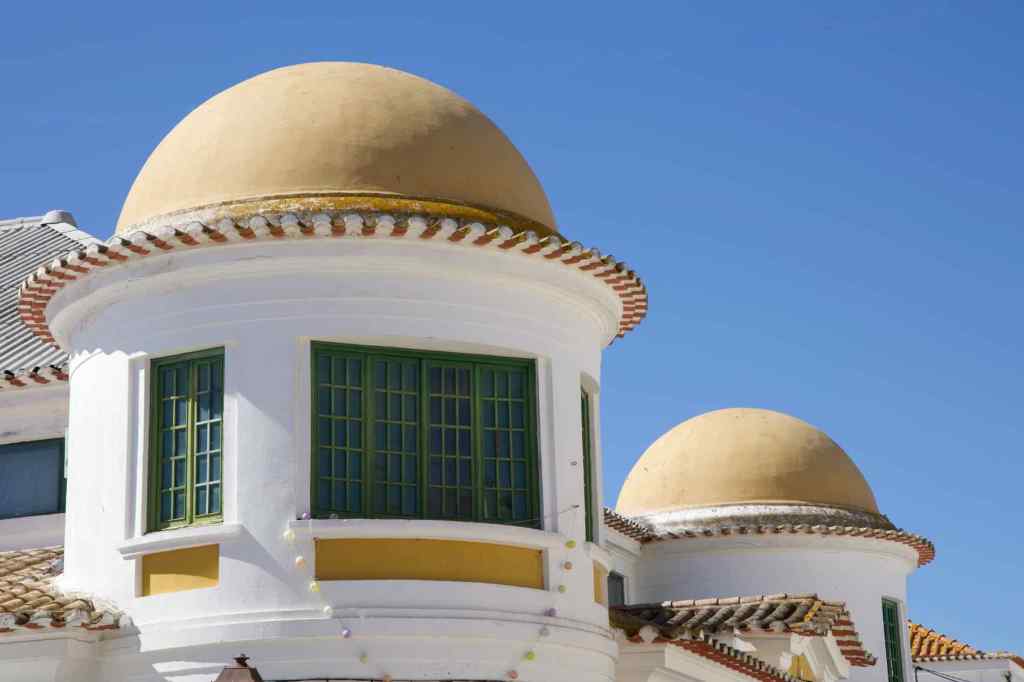
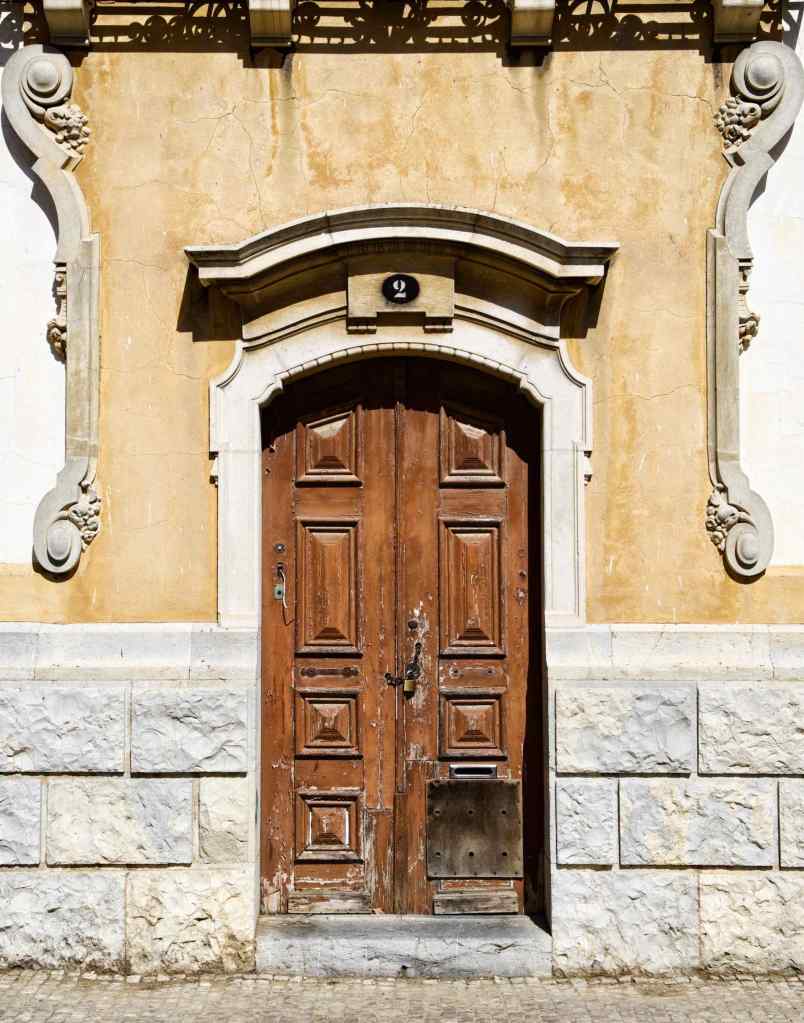
Top: One of the shopping streets in Villa Real; Centre: Golden Domes; Bottom: Battered Doorway adding to the decay
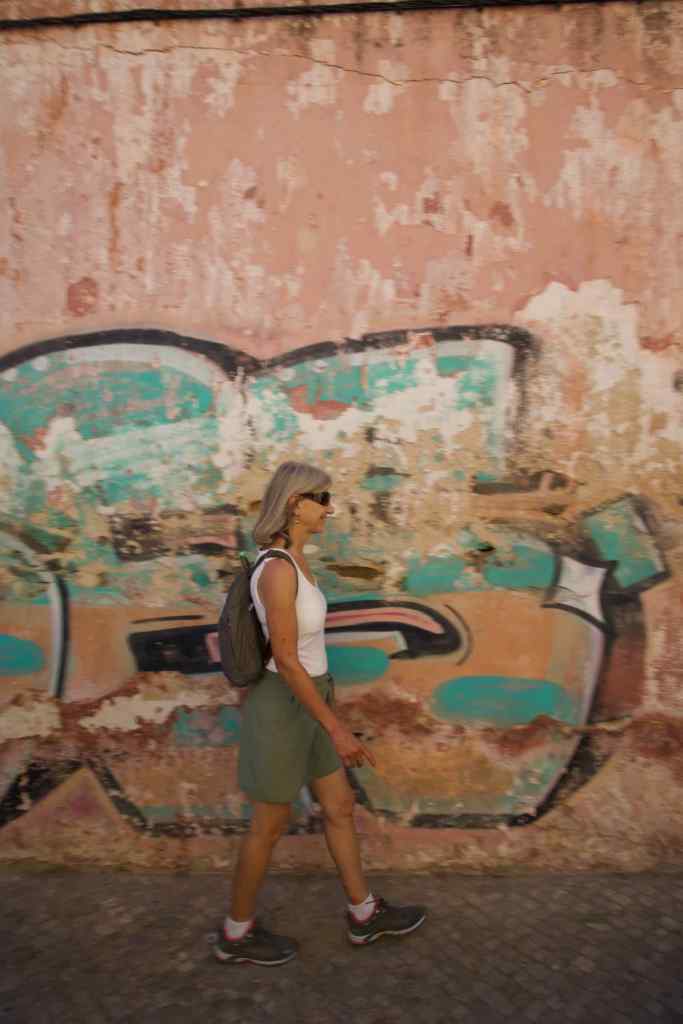
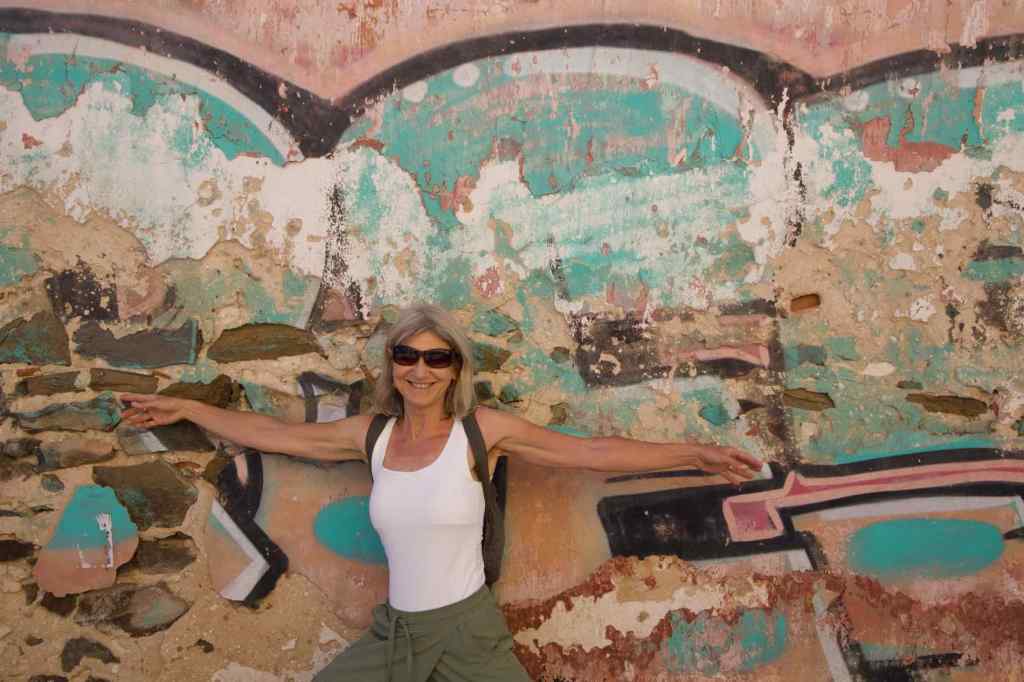
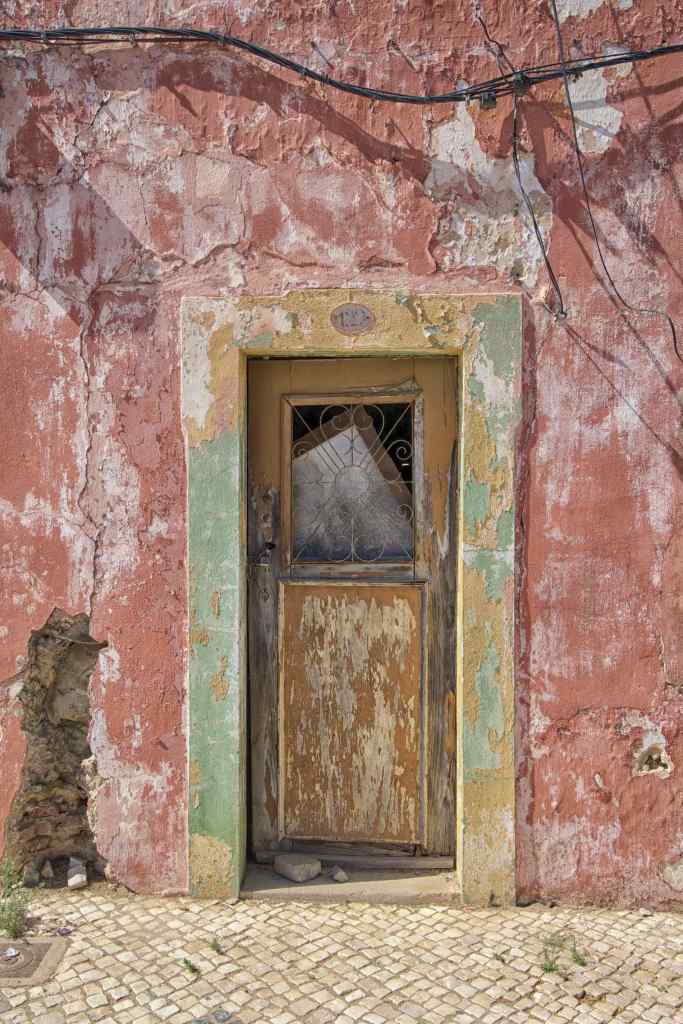
Top and Centre: Lyn poses in front of wall art/Graffiti; Bottom: Another derelict doorway
The Nature Bit
For a small fee, we took advantage of a guided bird watching trip around the salt flats to the north of the town. It was something new to us. Whilst we are both interested in nature, when it comes to birds we have little or no idea of what we are looking at in order to identify what we are seeing. This is where we hoped our highly informed guide Ella, would be helpful. She arrived with a massive birding telescope on a tripod which was good a sign, and a vast knowledge of the bird life on the salt pans and around. We climbed aboard a small slightly ramshackle mini-bus for our introduction to birdwatching.
Our first stop was about half a mile from our hotel on the beach! The tide was out and this revealed an area, of some sand but also some mud flats where we saw quite a few wading birds and wading locals, presumable cockling.
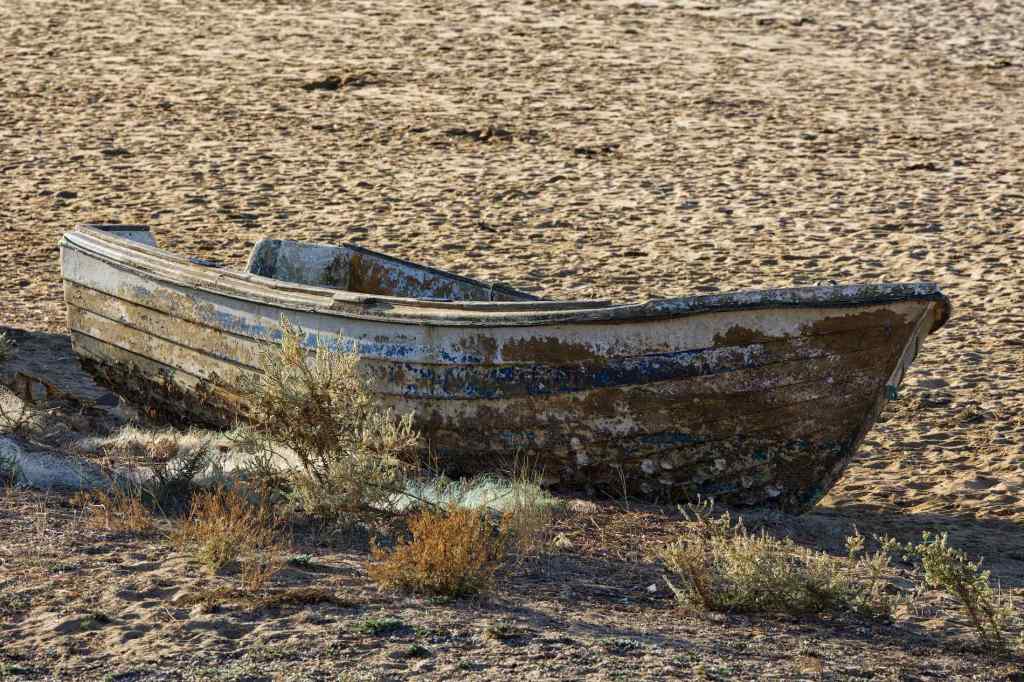
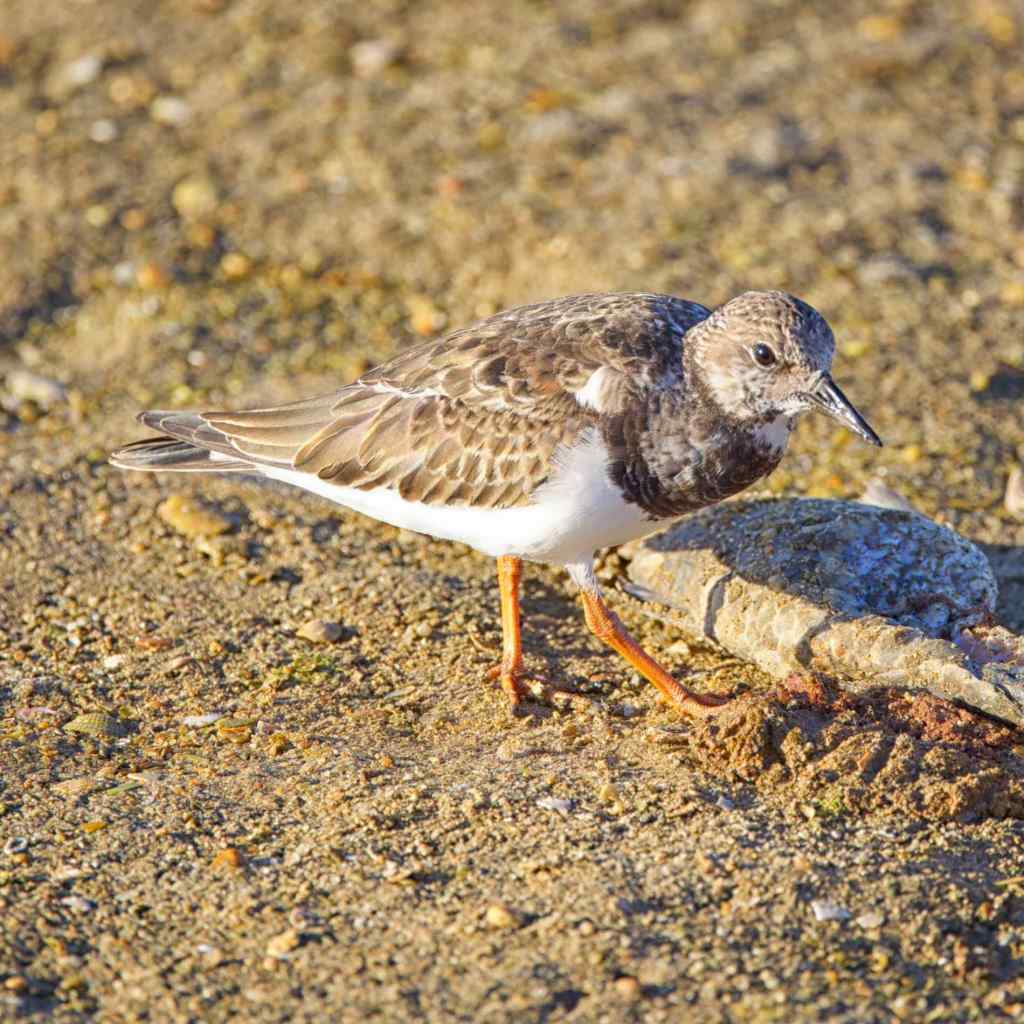
Top: Abandoned boat. I am primarily a landscape photographer and find it difficult to ignore a battered old boat; Bottom: Turnstone with food! This little character was busy trying to eat the fish laying next to him.
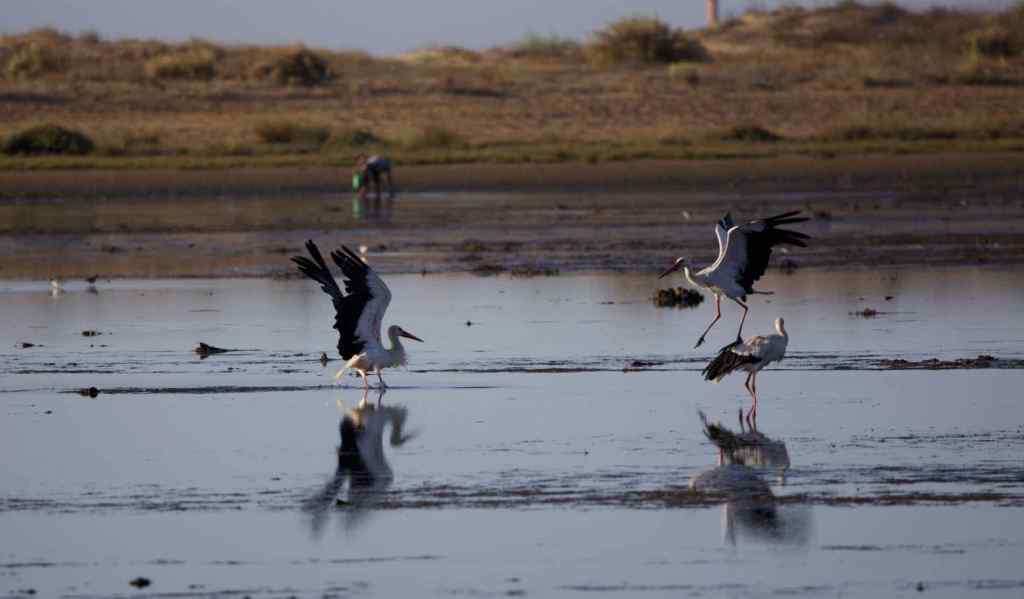
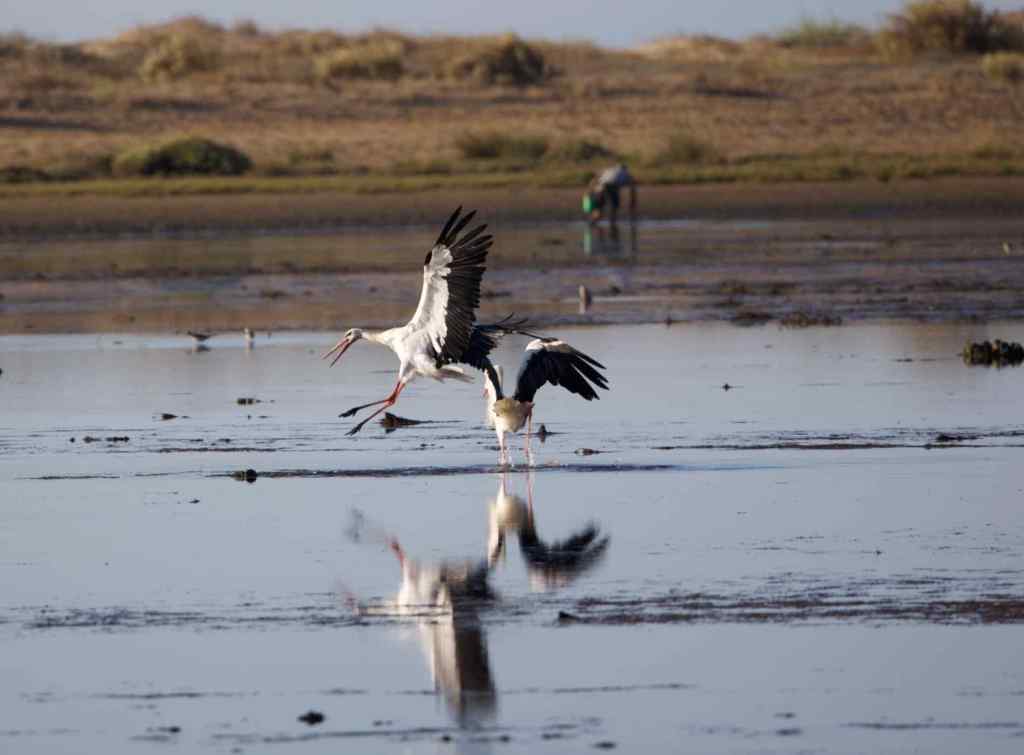
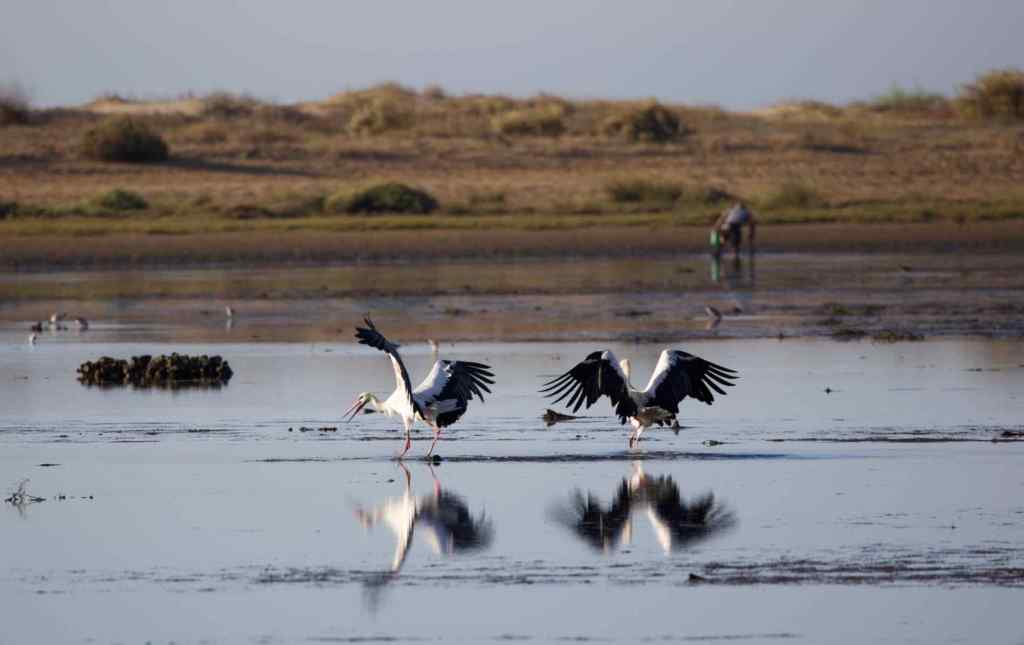
We witnessed a “skirmish” between two Storks. The man behind was oblivious to the drama unfolding in front of him!
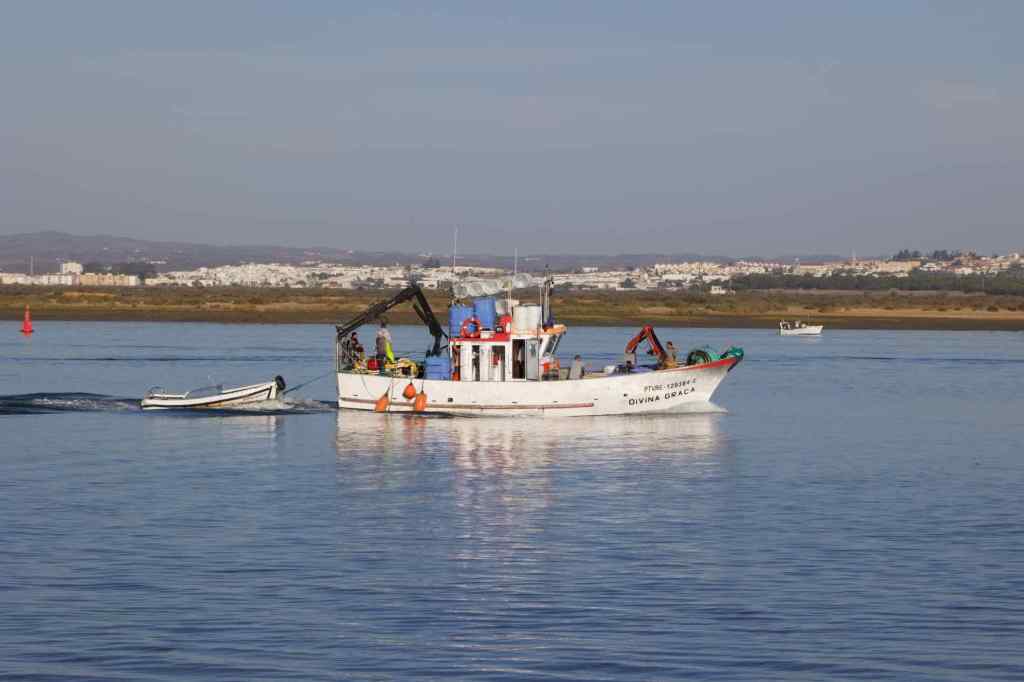
A fishing boat heads back to Isla Cristina harbour with the morning catch
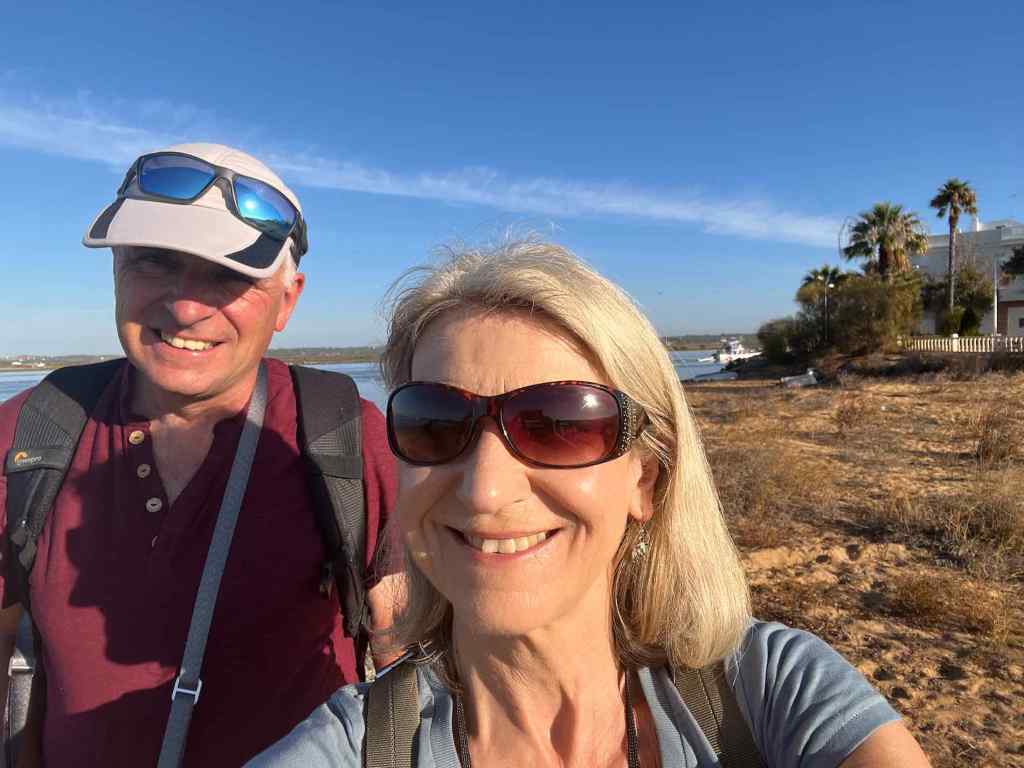
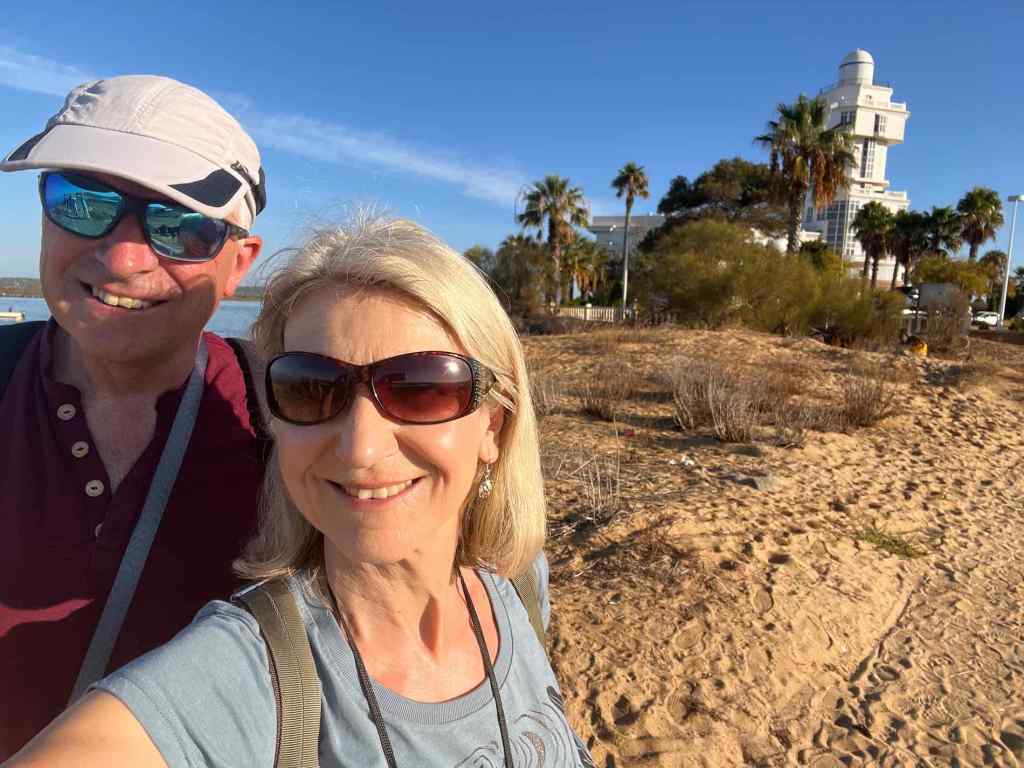
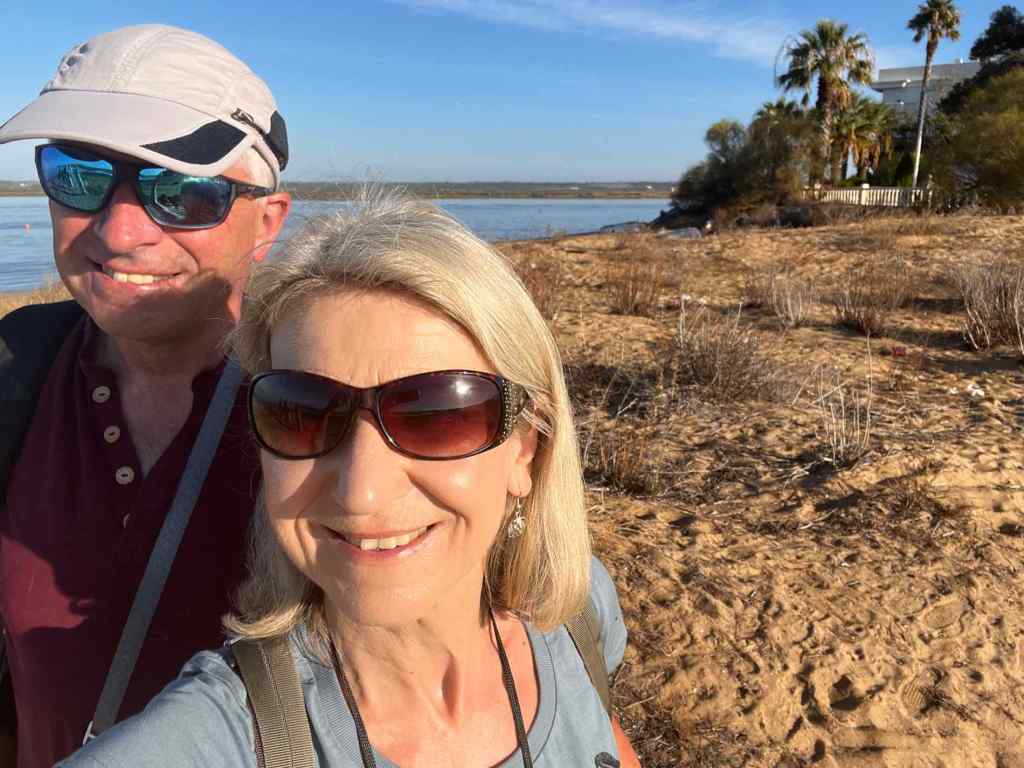
Three images of us on the birdwatching trip. Most of the birds are off to the left
From here we dipped briefly into the salt marshes before turning off along a rough track leading to Ayemonte. Presumably this was the old route for horse and cart. I would not have liked to drive it any which way. For this leg we remained in the vehicle whilst Ella drove slowly carefully along this track and pointed out various species.
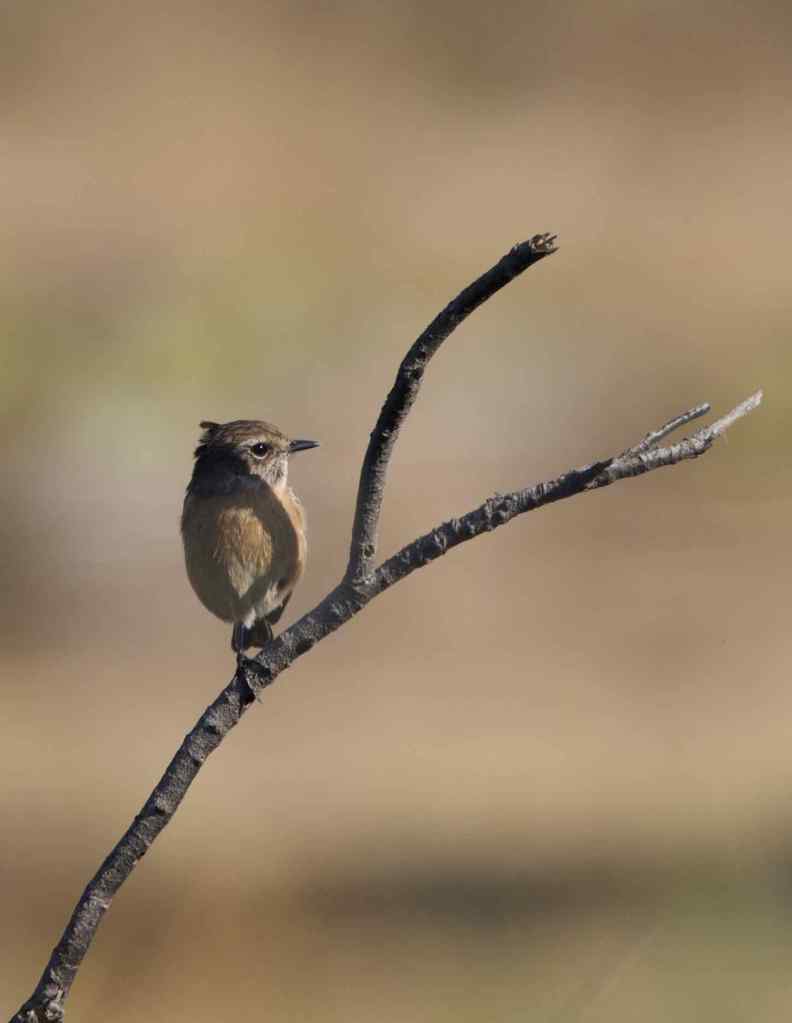
Stonechat (I think!)
We retraced our route along the dirt track to the hide at the edge of the Salt Marsh on the main road into town. We identified (well we didn’t, Ella did) several birds some of which are below. Sadly I have forgotten the names of these species so sadly they will go unidentified.
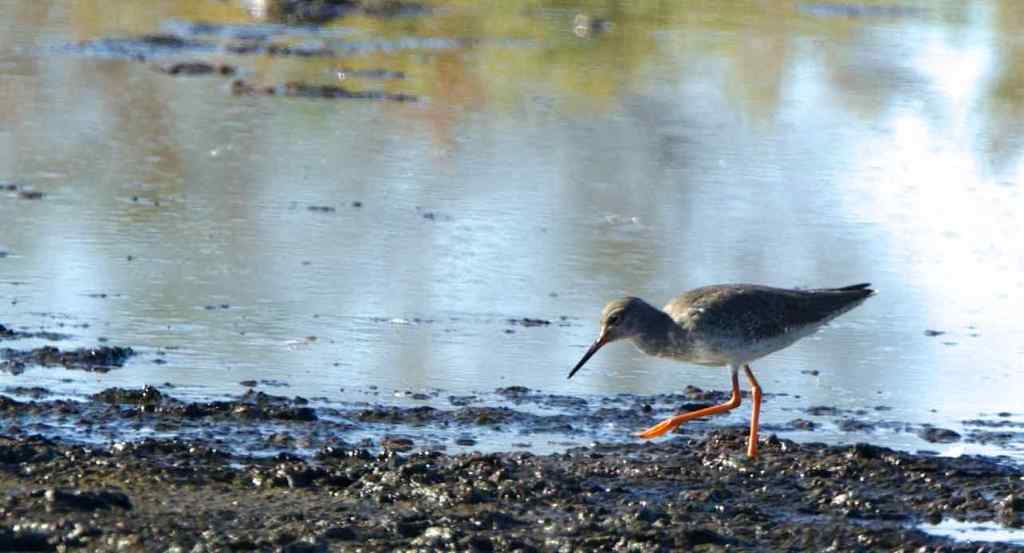
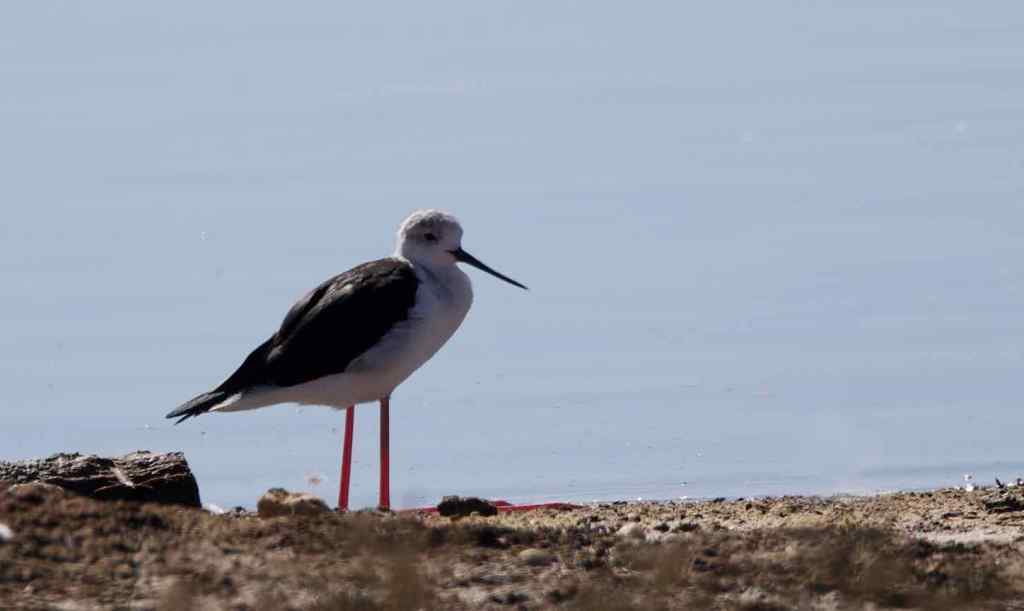
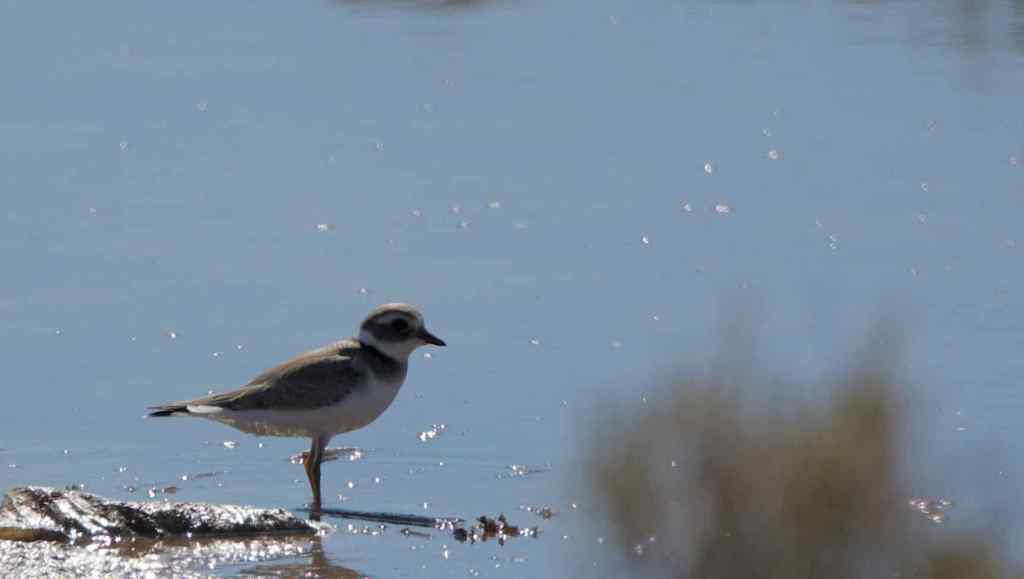
Some unidentified birds seen from the hide at the edge of the salt marsh
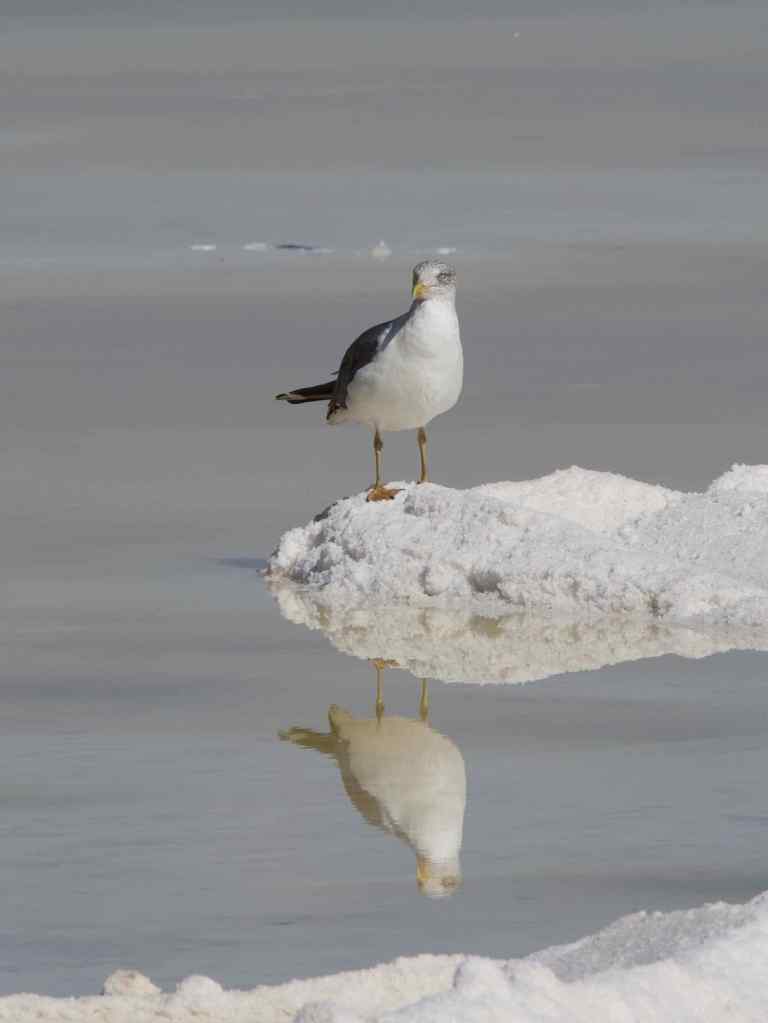
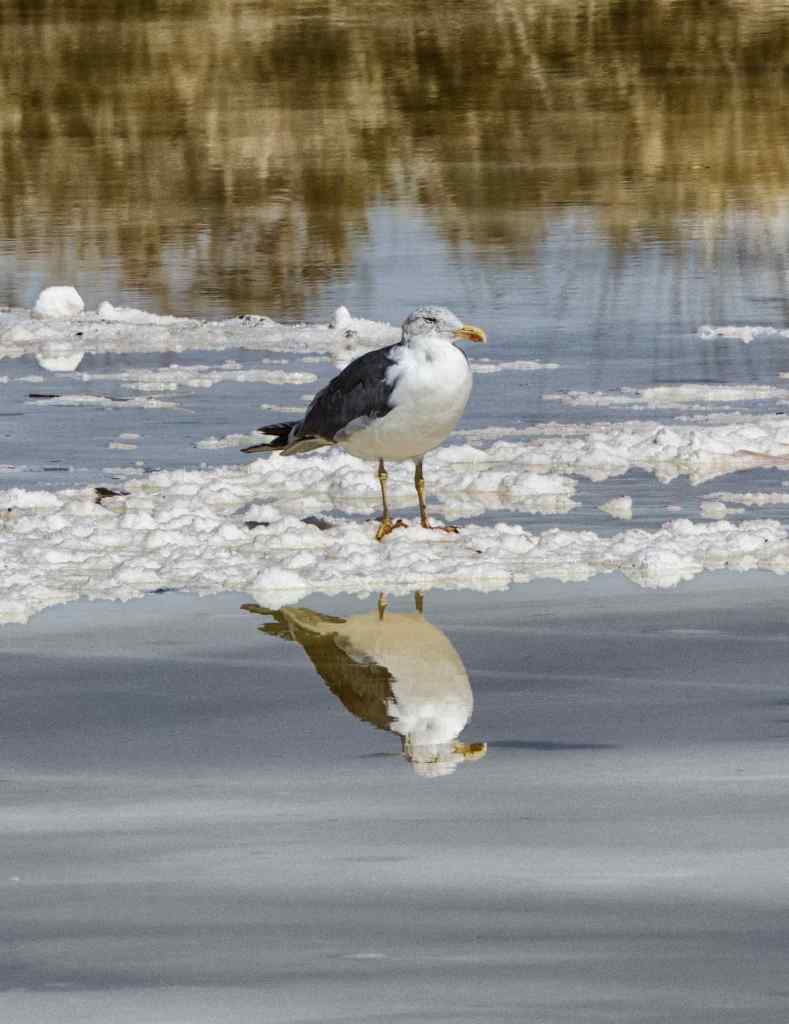
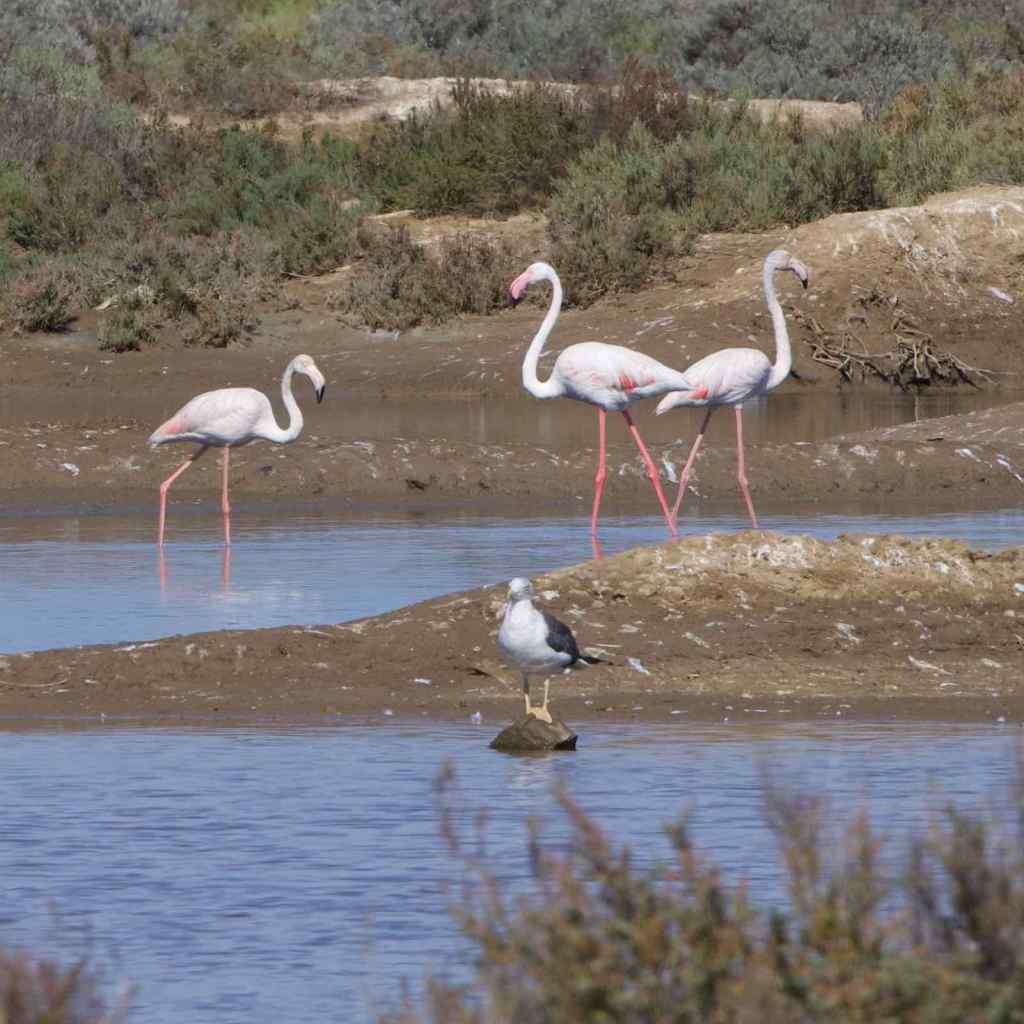
Top and Centre: Audouin Gull. A large gull seen only in Mediterranean coastlines, western coasts of Saharan Africa and the Iberian Peninsula. They are plentiful in the salt pans which is where these were photographed. Bottom: Less common are Flamingoes of which there are a some on the salt pans.
Beachcoming
The beach at Isla Cristina offers the chance for gentle barefoot walks on lovely moist sand and we indulged ourselves with couple of what I christened “beachcoming” walks, just strolling, looking at the wildlife and the folk roasting themselves in the warm sunshine. I did get out early one morning to do a sunrise shoot. All the sunrise images are hand held as I did not have my tripod to support the camera.
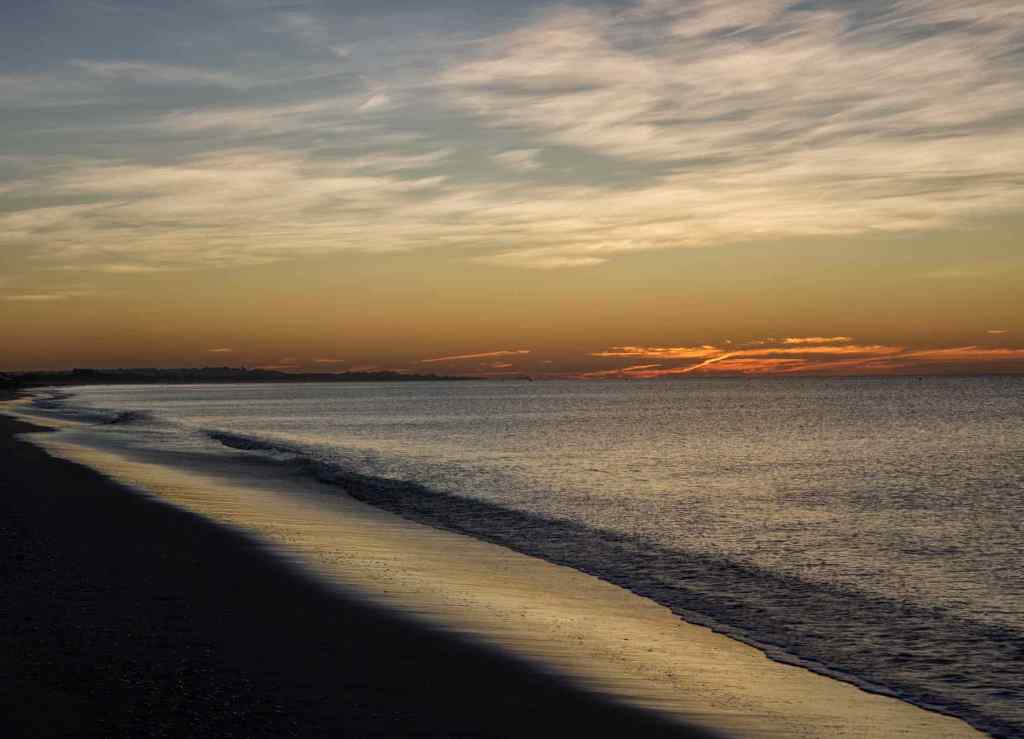
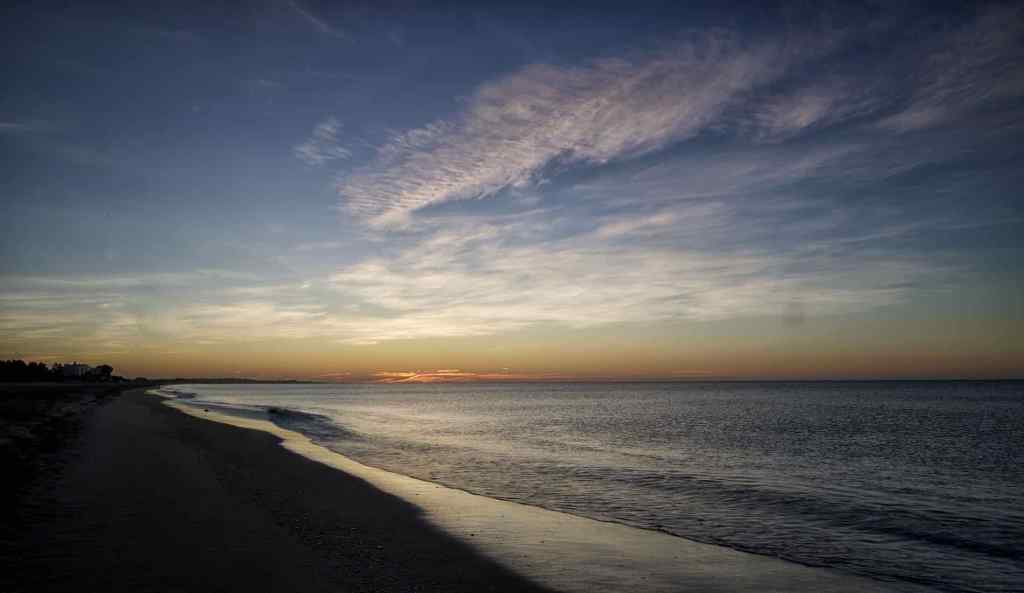
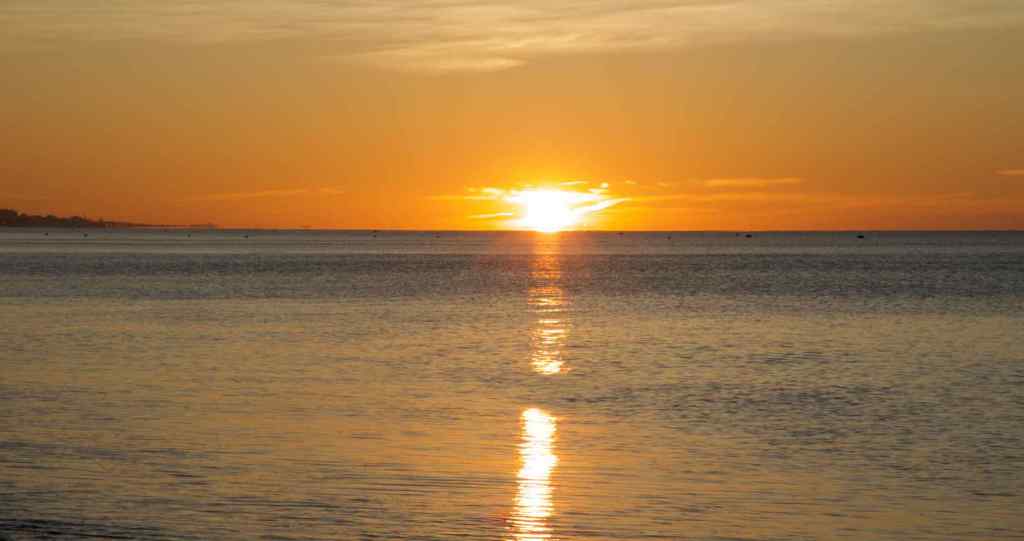
Sunrise over the beach at Isla Cristina
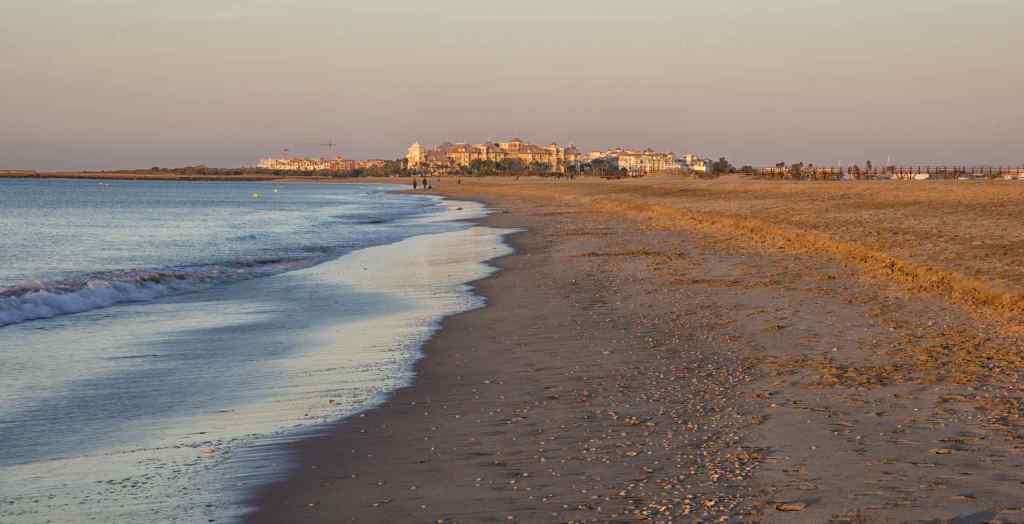
Isla Cristina beach looking back to the town
Later that day we went back to the beach and walked the other way, towards town. It was little more crowded but the tide was out so there was more space to walk on the seashore.
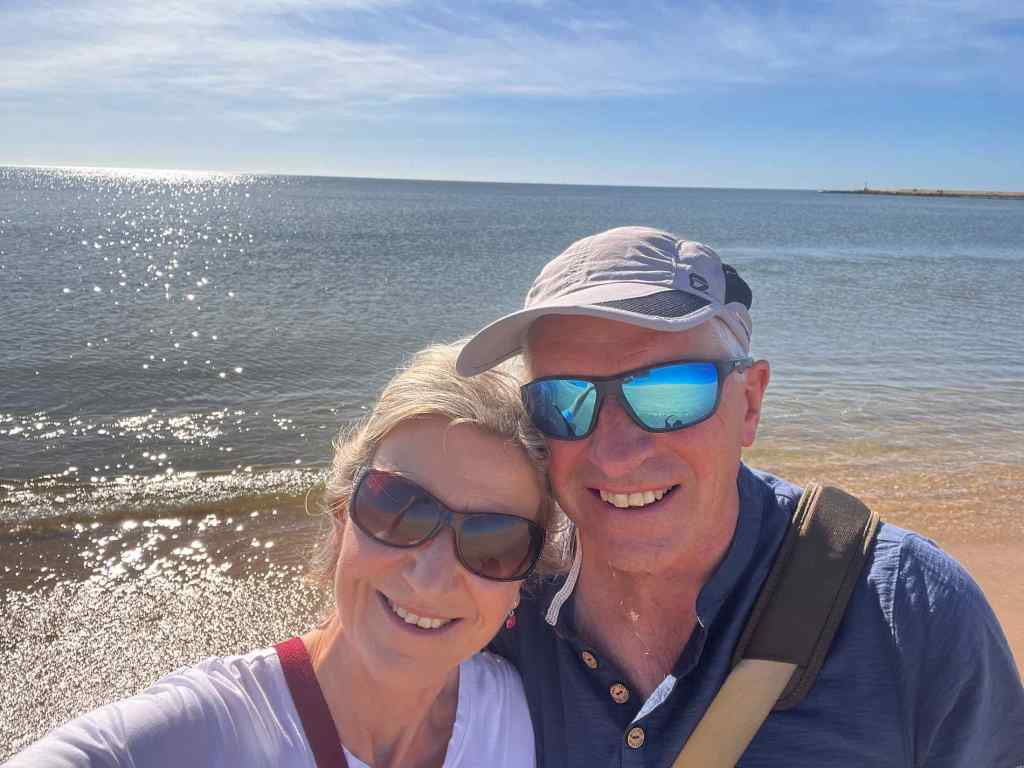
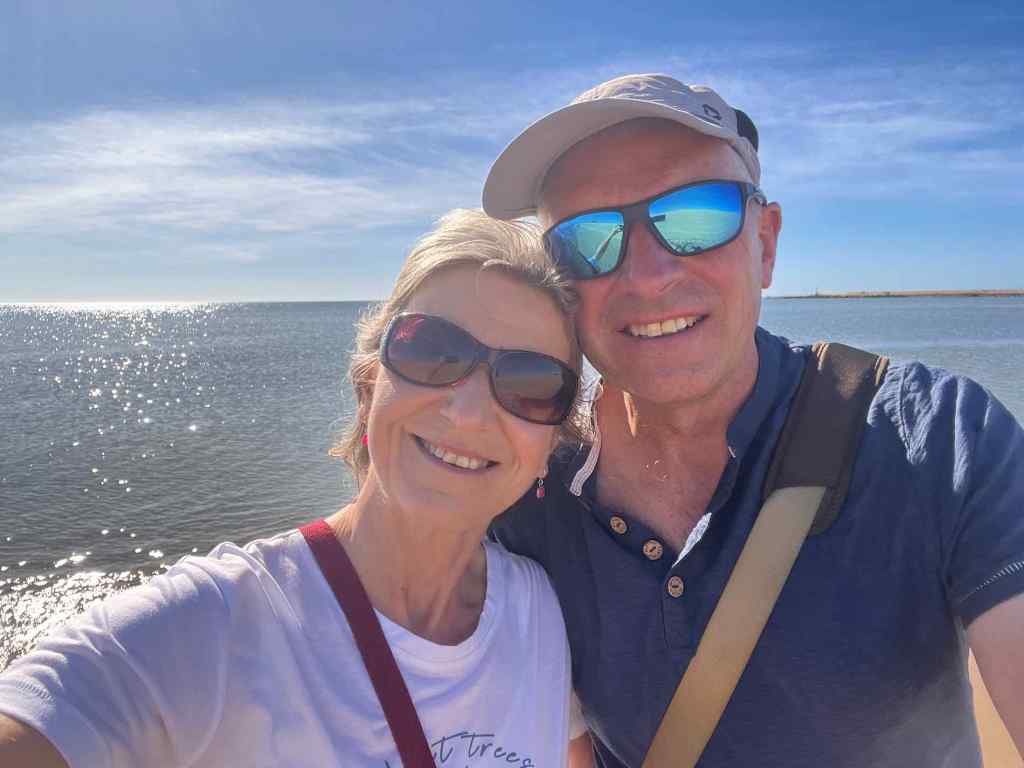
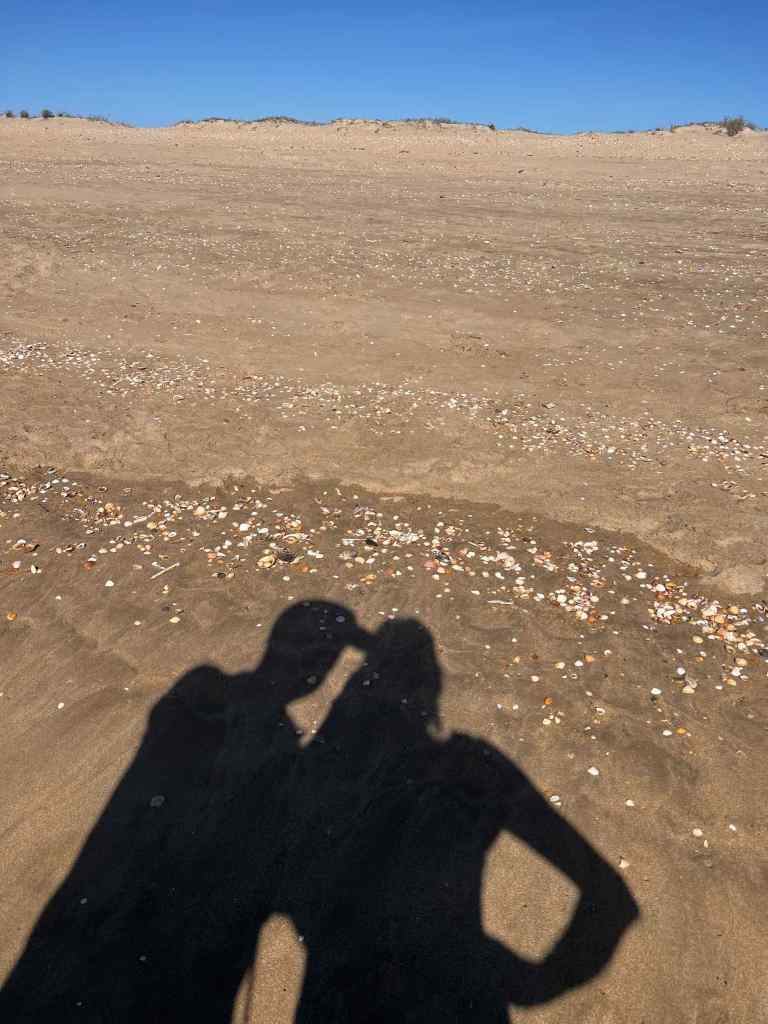
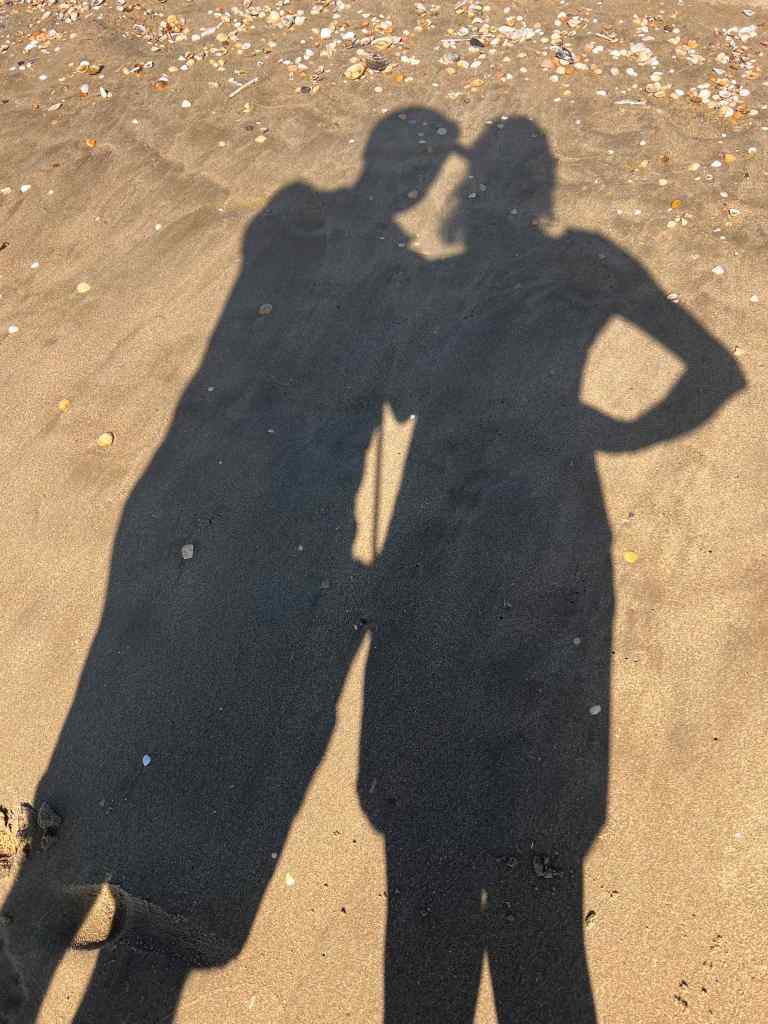
Our first beach coming walk
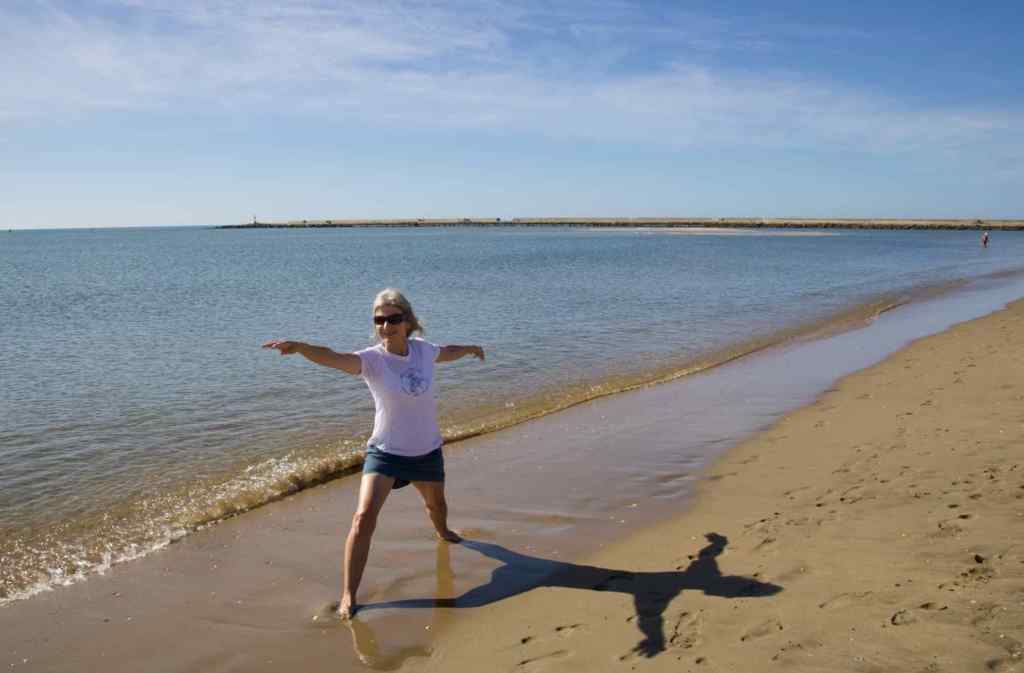
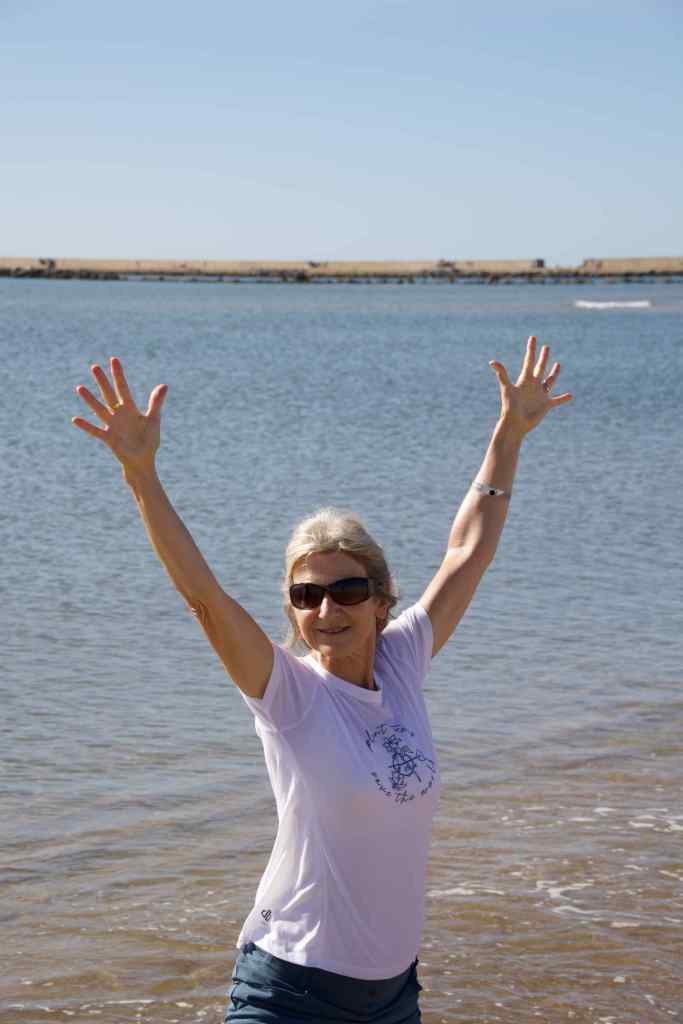
Lyn never misses an opportunity to show off her yoga skills, and what better place than on a beach in the warm morning sun…………
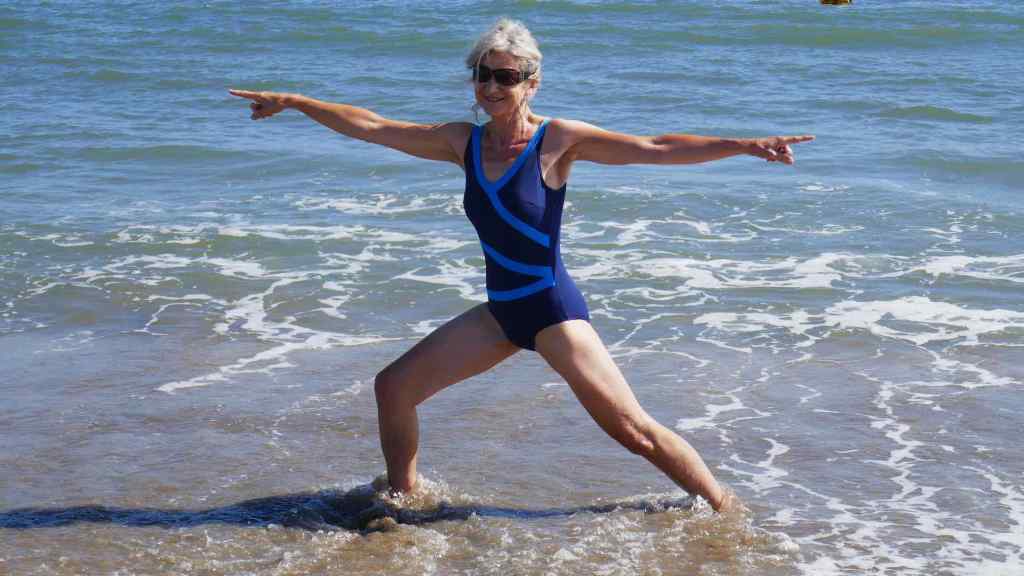
………….or before an afternoon swim!
On our last day we went out again to say goodbye to the beach. We love beaches and the sound of the waves gently lapping around our feet.
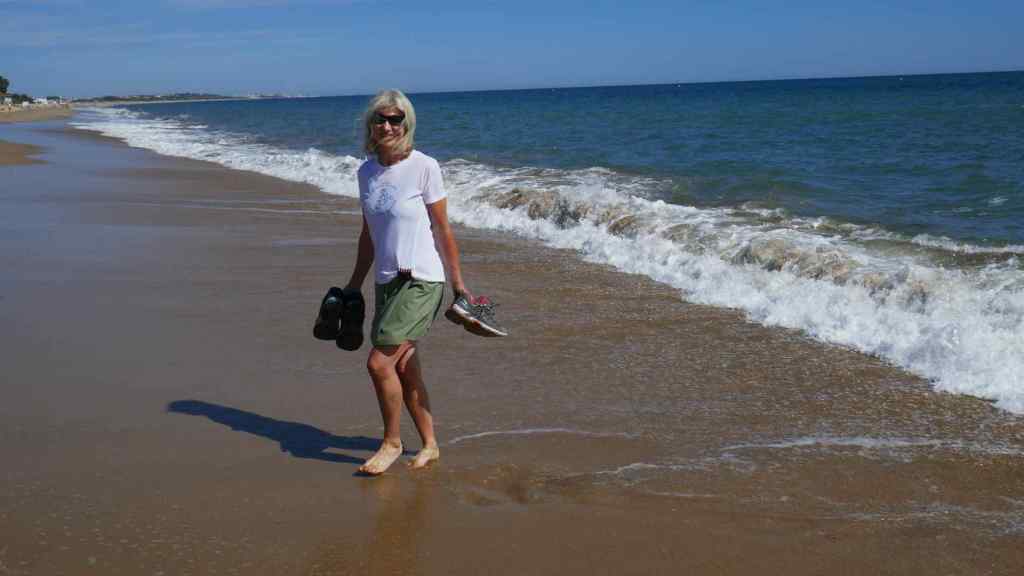
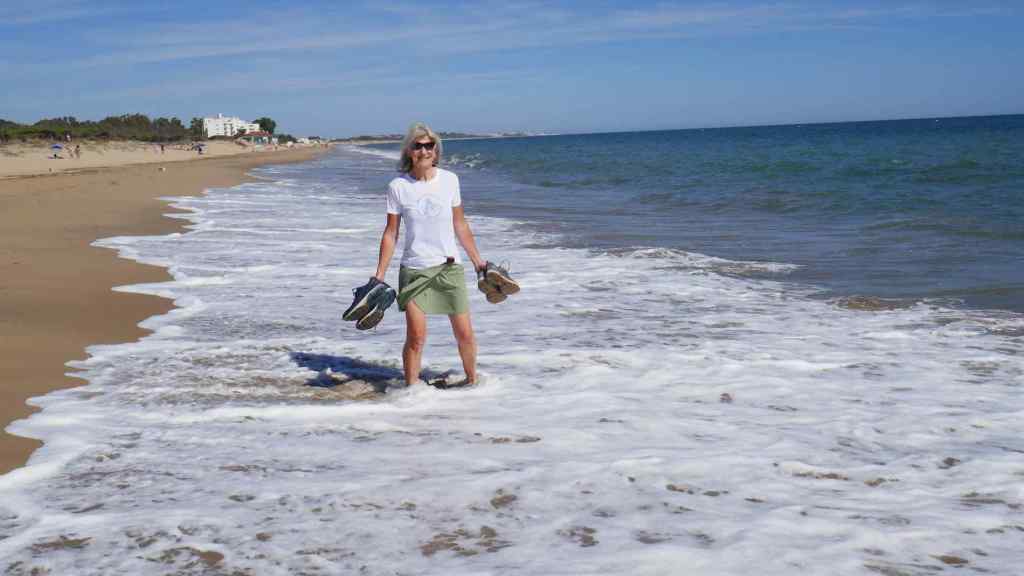
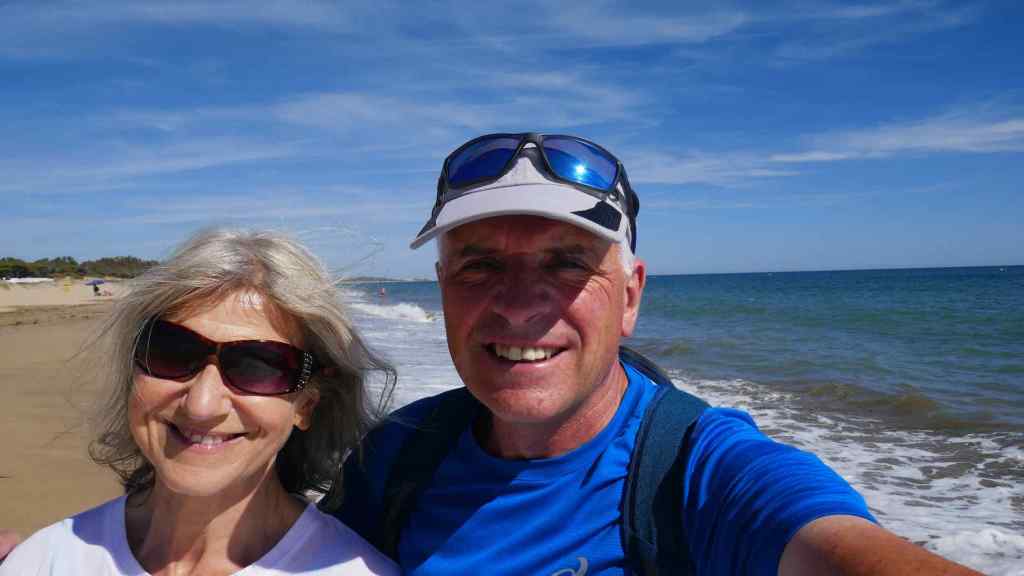
Top and Centre: Paddling. Bottom: Us on the beach
All in all it was good week. Great hotel, good company with our fellow travellers and lovely, warm weather. What is not to like?

